
Shiro Wat — Ethiopian Chickpea Stew
A quick, velvety Ethiopian stew of spiced chickpea flour — ready in half an hour and eaten straight from the pot with injera.
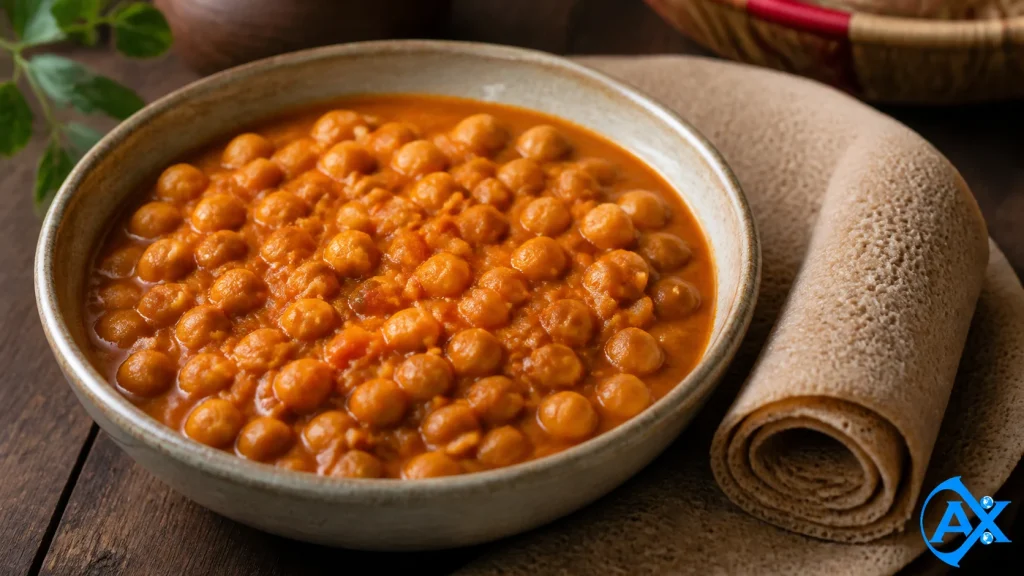
Method
- Cook the onion in a dry pot over medium-low heat for 10 minutes, stirring, until soft and golden and the moisture has cooked away.
- Add the oil and the garlic and cook for 2 minutes more until fragrant.
- Stir in the berbere, if using, and the chopped tomato. Cook for 4 to 5 minutes until the tomato breaks down and the mixture darkens.
- Pour in the water and bring it to a rolling boil. Shiro powder is always added to boiling liquid, never cold.
- Sprinkle the shiro powder over the surface in a thin, steady stream while whisking continuously. Whisking as it goes in is the only way to avoid lumps.
- Reduce the heat to low and simmer for 12 to 15 minutes, stirring every minute or two with a wooden spoon and scraping the base, which catches easily.
- The stew is ready when it is smooth and thick enough to coat the spoon, and no longer tastes chalky or raw.
- Season with salt, then let it stand for 5 minutes; it thickens noticeably as it rests, so loosen with hot water if needed.
- Serve bubbling, traditionally in a clay dish, with injera for scooping.
How to make Shiro Wat — Ethiopian Chickpea Stew
Shiro is Ethiopian comfort food: a smooth, savoury stew built from a flour of ground chickpeas or broad beans, already blended with spices at the mill. Because the flour cooks in minutes, it is the dish that appears when a meal is needed quickly, and it is equally at home in a restaurant’s fasting platter.
Buying shiro powder
- Advertisement -
Shiro is sold ready-spiced in Ethiopian and Eritrean shops, usually in two styles: mitin shiro, which already contains berbere and aromatics, and nech shiro, a milder white version. Check the packet before adding extra berbere, or the dish can end up punishingly hot.
The lump-free method
Everything depends on how the flour meets the liquid. The water must be at a full boil, the flour must go in slowly, and the whisk must not stop. Adding the powder to cool liquid, or dumping it in at once, produces lumps that never dissolve.
Thickness and timing
Shiro thickens both as it simmers and as it cools. Aim for a texture slightly looser than you want to serve, and keep hot water nearby. Fifteen minutes of simmering is usually enough to cook out the raw flour taste; longer makes it richer but demands more stirring.
Variations
Some cooks finish the pot with a spoon of niter kibbeh, a sliced green chilli, or chopped tomato stirred through at the end. Bozena shiro adds small pieces of cooked meat and is served outside fasting periods.
Traditional Ethiopian cookery; shiro is among the most frequently cooked dishes in Ethiopian homes. Editorially researched from widely documented preparations, and not kitchen-tested by Axadle.
Shiro powder is made from chickpeas or broad beans; broad bean versions are unsuitable for anyone with favism. Naturally gluten-free unless the blend contains wheat, and dairy-free when made with oil.

Join the conversation