
Muufo — Somali Corn Flatbread
A soft, open-crumbed Somali corn flatbread, baked on a hot griddle and torn into stews, suqaar or sweet tea.
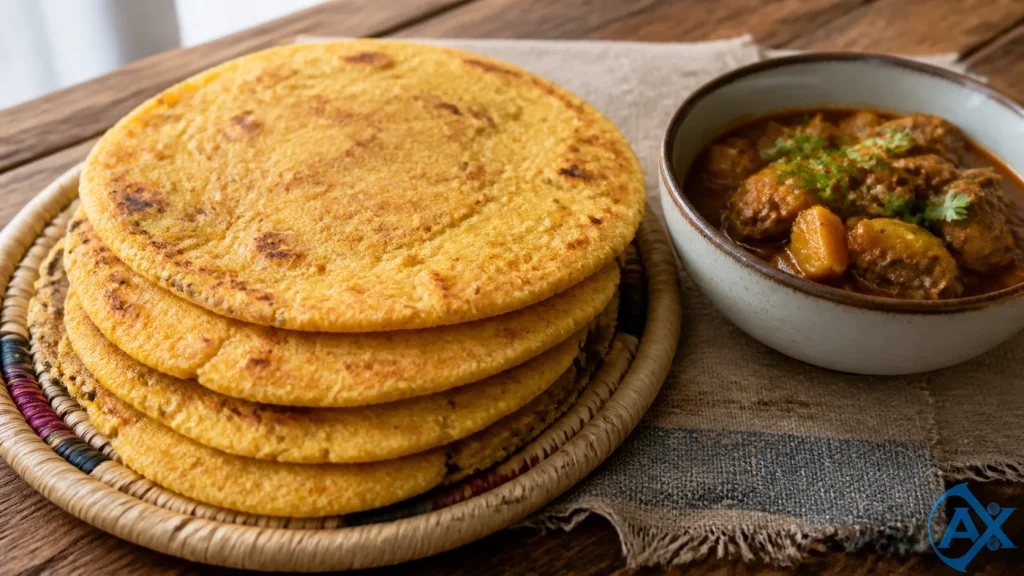
Method
- Whisk the cornmeal, flour, yeast, sugar and salt together in a large bowl so the yeast is evenly distributed before any water is added.
- Pour in 1¾ cups of the warm water while whisking. Beat for 2 minutes until the batter is smooth and thick enough to coat a spoon but still pourable, like a loose pancake batter. Add the remaining water only if it feels stiff.
- Cover the bowl with a cloth and leave in a warm place for 3 to 4 hours, or overnight in a cool kitchen. The batter is ready when the surface is domed and covered in small bubbles and it smells faintly sour.
- Stir the risen batter once, gently, to knock out the largest bubbles. It should fall from the ladle in a thick ribbon.
- Heat a heavy frying pan or flat griddle over medium heat for 3 to 4 minutes, then wipe it with a lightly oiled cloth. The pan is hot enough when a drop of batter sets within 2 seconds without browning instantly.
- Ladle about ½ cup of batter into the centre and spread it outwards with the back of the ladle into a round roughly 18cm across and 1cm thick.
- Cook undisturbed for 3 to 4 minutes, until the top loses its shine, the surface is covered in open holes and the edges lift from the pan. Cover the pan for the last minute so the top steams through.
- Flip only if you want a lightly coloured second side, giving it 30 to 60 seconds. Traditionally muufo is cooked mainly on one side so the holed top stays soft.
- Stack the breads in a cloth-lined basket as they come off the heat so they steam and stay pliable. Repeat with the remaining batter, re-oiling the pan between breads.
How to make Muufo — Somali Corn Flatbread
Muufo is the everyday bread of many Somali kitchens: a corn-based flatbread with a soft, holed top that soaks up sauce better than any loaf. It is torn, never sliced, and used to scoop maraq, suugo suqaar or stewed goat. In the morning it is just as likely to appear with sesame oil and sugar alongside a glass of shaah.
Why the rest matters
- Advertisement -
The long rest is what separates muufo from a plain corn pancake. As the batter ferments it produces the gas that creates the open holes on top, and it develops a gentle tang that balances rich, spiced stews. Rushing this stage gives a flat, dense bread, so judge by the look of the batter rather than the clock: it should be domed and visibly bubbly.
Getting the texture right
Two things decide the texture. The first is batter thickness: too thin and the bread spreads into a crepe, too thick and the holes never open. The second is heat. Medium heat lets the bread rise and set through while the base colours slowly; high heat seals the base before the top can bubble.
Variations
Many households replace part of the cornmeal with sorghum or millet flour for a darker, earthier bread. Some add a spoonful of plain flour extra for a softer crumb. In parts of Somalia the bread is baked against the wall of a clay oven, which gives a crisper base than a griddle can.
Serving and storage
Muufo is at its best within an hour of cooking. Keep the stack wrapped in a clean cloth so it does not dry out, and reheat briefly in a dry pan. Cooled breads freeze well; separate them with baking paper and warm them straight from frozen.
Traditional Somali home baking, as commonly prepared in Somali households and bakeries. Editorially researched from widely documented preparations rather than one family recipe, and not kitchen-tested by Axadle.
Contains gluten from wheat flour. Naturally dairy-free and egg-free; check your yeast if you avoid additives.

Join the conversation