
Moroccan Vegetable Couscous
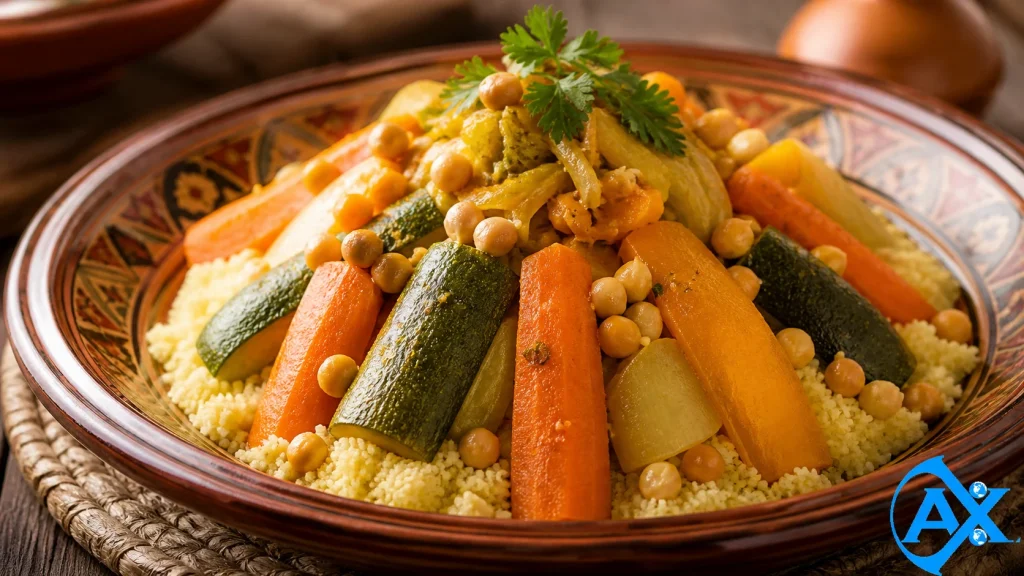
Moroccan couscous steamed over a saffron-scented broth, served under a mound of seven vegetables and chickpeas.
Method
- Put the onions, carrots, turnips, chickpeas, tomatoes, saffron, ginger, turmeric, cinnamon stick, olive oil and herb bunch in the base of a couscoussier or a large stockpot. Add the water and season.
- Bring to a boil, then reduce to a steady simmer. The broth must keep producing steam throughout, since that steam cooks the grain.
- Meanwhile, put the couscous in a wide tray. Sprinkle over 1 cup of lightly salted water and 2 tablespoons of olive oil, then rub the grain between your palms for 3 to 4 minutes until every grain is separate and damp, with no clumps.
- Tip the couscous into the steamer basket, set it over the simmering broth without a lid, and steam for 15 minutes from the moment steam rises through the grain.
- Return the couscous to the tray and break it up with a fork, then with oiled hands. Sprinkle over another cup of water, work it through, and leave to swell for 10 minutes.
- Add the pumpkin and courgette to the broth, return the couscous to the basket, and steam for a further 15 minutes.
- Repeat once more: fluff, add a little more water if the grain still feels firm, and steam for a final 10 to 15 minutes. Three steamings is the traditional method and gives a light, separate grain that boiling cannot match.
- Check the vegetables are tender, then remove the herb bunch and taste the broth for seasoning.
- Pile the couscous on a large platter, make a well in the centre, arrange the vegetables in it, and moisten with ladles of broth. Serve the rest of the broth and the harissa separately.
How to make Moroccan Vegetable Couscous
Couscous is the Friday dish in Morocco, cooked for the family meal after midday prayers and served on a single wide platter. The grain is not boiled but steamed, repeatedly, over the broth that will later moisten it.
Why steam three times
- Advertisement -
Each steaming cooks the grain a little further while the rubbing and resting between them separates every grain and lets it swell evenly. The result is light and fluffy in a way that instant couscous, hydrated in a bowl, never achieves. It takes about an hour in total, most of it unattended.
Working the grain
The rubbing stage matters as much as the steaming. Use oiled or wet hands, work in a wide tray, and break every clump. If the grain clumps in the basket, steam escapes around it rather than through it.
Seven vegetables
The traditional version uses seven, often carrot, turnip, pumpkin, courgette, cabbage, tomato and onion, with chickpeas. Use what is in season; the method does not change. Adding the softer vegetables later keeps them from disintegrating.
Serving
Serve the broth in a separate bowl so each person can moisten their own portion, with harissa on the side for heat. Any leftover grain reheats well with a sprinkle of water in a covered steamer.
Traditional Moroccan cookery; couscous is the Friday dish shared after midday prayers. Editorially researched from widely documented preparations, and not kitchen-tested by Axadle.
Contains gluten; couscous is made from wheat semolina. Dairy-free unless finished with butter.

Join the conversation