
Koshari — Egyptian Lentils, Rice and Pasta
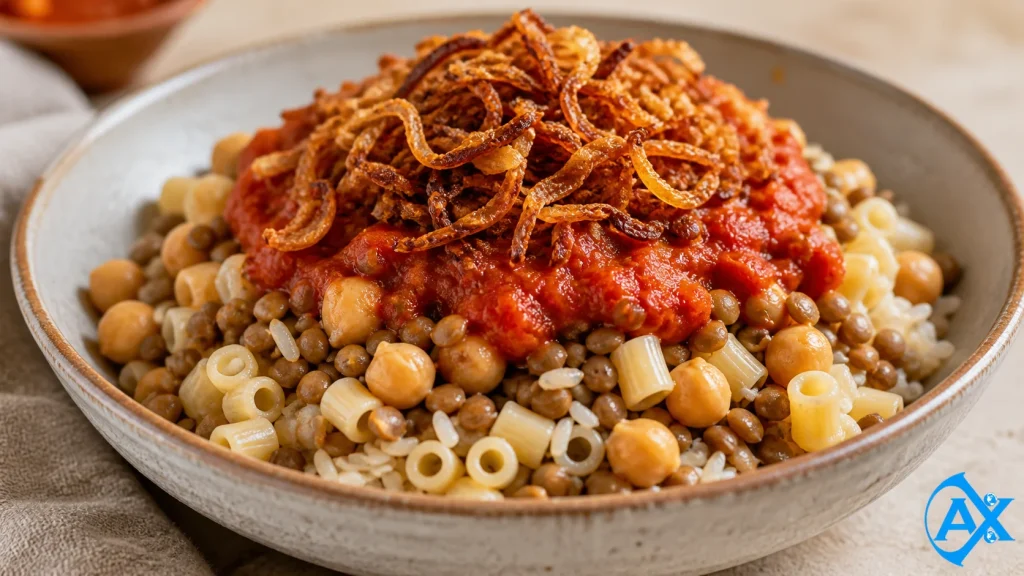
Egypt's national street dish: rice, lentils and pasta layered with spiced tomato sauce, garlic vinegar and crisp fried onions.
Method
- Fry the onions first. Heat the oil in a deep pan over medium heat, add the sliced onions in two batches and fry for 15 to 20 minutes, stirring often, until deep brown and crisp. Lift out with a slotted spoon onto a rack and salt lightly. Reserve 3 tablespoons of the onion oil.
- Simmer the lentils in plenty of unsalted water for 20 to 25 minutes, until tender but still holding their shape. Drain, season with salt and the cumin, and keep warm.
- Cook the rice in the reserved onion oil: stir the rinsed rice in the oil for 2 minutes, add 2¼ cups of hot water and a teaspoon of salt, boil for 5 minutes, then cover and steam on the lowest heat for 15 minutes. Rest 10 minutes off the heat.
- Cook the pasta in salted boiling water until just tender, then drain and toss with a spoonful of oil so it does not stick.
- For the sauce, heat the oil, fry the garlic for 30 seconds, add the tomato paste and cook for 2 minutes, then the cumin and chilli. Add the passata and simmer for 20 minutes until thick, then stir in the vinegar and season. The vinegar is essential and goes in at the end.
- For the daqqa, mix the crushed garlic, salt, vinegar and lemon juice and leave to stand; it should taste sharp enough to make you blink.
- Warm the chickpeas through in a little of the sauce.
- Assemble in layers in each bowl: rice first, then lentils, then pasta, then chickpeas.
- Ladle over the hot tomato sauce, spoon on the daqqa to taste, and finish with a generous handful of crisp onions. Serve immediately, while the onions are still crunchy.
How to make Koshari — Egyptian Lentils, Rice and Pasta
Koshari is Egypt’s great street dish, built from cheap store-cupboard staples and assembled to order in shops that make nothing else. Its combination of carbohydrates, acid and crisp onion is unlike anything else in the region, and it is entirely plant-based by tradition rather than design.
Three sauces, three textures
- Advertisement -
What looks like one bowl is really a careful assembly: soft rice and lentils, chewy pasta, firm chickpeas, a thick spiced tomato sauce, a sharp garlic-vinegar daqqa, and the crunch of fried onions on top. Leave out the daqqa or the onions and it falls flat.
Fry the onions properly
Slice them thinly and evenly, fry over moderate heat with patience, and drain them on a rack rather than paper so they stay crisp. The oil they leave behind is used to cook the rice, which carries the flavour through the whole bowl.
Vinegar is not optional
Both the sauce and the daqqa are sharpened with vinegar. It is what keeps a bowl of starch from feeling heavy, and the amount is a matter of personal taste; koshari shops leave a bottle on the table.
Cooking ahead
Every element can be made in advance and reheated separately, which is how shops operate. Fry the onions last, or re-crisp them briefly in a dry pan, and assemble only at the moment of serving.
Traditional Egyptian street food, sold from dedicated koshari shops across Cairo and beyond. Editorially researched from widely documented preparations, and not kitchen-tested by Axadle.
Contains gluten from the pasta. Naturally dairy-free, egg-free and nut-free; use gluten-free pasta to adapt.

Join the conversation