
Kenyan Pilau
Coastal Kenyan rice, browned with onions and pilau masala and steamed with beef until every grain is dark, separate and fragrant.
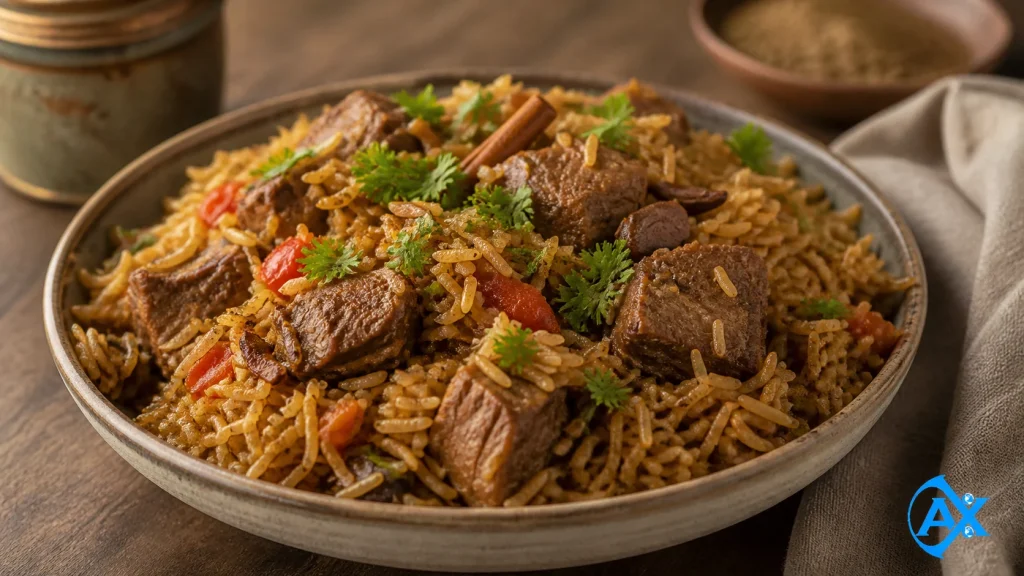
Method
- Rinse the rice until the water runs clear, then soak in cold water for 20 minutes and drain thoroughly.
- Put the beef in a pot with water to cover, a pinch of salt and half the garlic. Simmer for 40 to 45 minutes until tender, then strain, reserving the stock.
- Heat the oil in a large heavy pot over medium heat. Add the sliced onions and cook for 15 to 20 minutes, stirring often, until deeply browned — well past golden, close to the colour of strong tea. This browning is what gives pilau its colour; pale onions give pale rice.
- Add the remaining garlic, the ginger and the pilau masala and stir for 1 minute until intensely fragrant.
- Add the cooked beef and the chopped tomato and fry for 5 minutes so the meat takes on the spice and colour.
- Add the potatoes, if using, then pour in 5 cups of the reserved stock, topping up with water if short. Add the salt and bring to a boil. Taste the liquid now: it should be slightly saltier than you want the finished rice.
- Stir in the drained rice and boil uncovered for 6 to 8 minutes, without stirring, until the liquid drops to the level of the rice and small craters form on the surface.
- Cover with a tight lid, reduce to the lowest heat and steam for 25 minutes. Do not lift the lid.
- Rest off the heat for 10 minutes, then fold through gently with a fork and serve with kachumbari and plain yoghurt.
How to make Kenyan Pilau
Pilau travelled to the Kenyan coast with Indian Ocean trade and settled there completely. It is the dish of weddings, Eid and Sunday lunches from Mombasa to Nairobi, distinguished from Somali or Tanzanian versions mainly by its masala blend and the depth of its onion browning.
The onions decide the colour
- Advertisement -
Kenyan pilau is brown, and that colour comes entirely from onions cooked far longer than feels comfortable — fifteen to twenty minutes until they are genuinely dark. Stir often near the end: there is a narrow window between deeply browned and burnt, and burnt onions make the whole pot bitter.
Liquid ratio and the lid
Measure the stock rather than guessing, and taste it before the rice goes in, because the rice will absorb all the seasoning. Once the lid goes on, leave it alone for the full twenty-five minutes; each peek releases the steam that is cooking the grains.
Pilau masala
Ready-made pilau masala is sold everywhere in Kenya, but a home blend of cumin, coriander, cardamom, cinnamon, cloves and black pepper, toasted and ground, is noticeably more aromatic. Some cooks add a whole cinnamon stick to the pot as well.
Serving
Kachumbari is the standard partner, its raw onion and lime cutting through the richness. Plain yoghurt, pickles and a chilli sauce complete the plate.
Traditional Kenyan coastal cookery, shaped by Swahili, Arab and Indian influence along the Indian Ocean trade routes. Editorially researched from widely documented preparations, and not kitchen-tested by Axadle.
Naturally free from gluten, dairy, egg and nuts when cooked in oil. Check stock cubes and masala blends for wheat.

Join the conversation