
Hummus bi Tahini
Lebanese hummus made the long way: dried chickpeas cooked soft with bicarbonate of soda, then whipped with tahini and ice water.
Method
- Drain and rinse the soaked chickpeas. Put them in a pot with the second teaspoon of bicarbonate of soda and cover with plenty of fresh water.
- Bring to a boil and skim off the foam and loose skins that rise. The bicarbonate softens the skins, which is what makes hummus smooth.
- Simmer for 45 to 60 minutes until the chickpeas crush easily between finger and thumb with no resistance at all. Undercooked chickpeas are the main cause of grainy hummus, so go further than feels necessary.
- Drain, reserving a cup of the cooking water, and set aside a few whole chickpeas for the top.
- Blend the garlic with the lemon juice and a pinch of salt for 30 seconds, then strain out the solids. This removes the raw garlic burn while keeping the flavour.
- Add the warm chickpeas, tahini, cumin and salt to a food processor and blend for 2 minutes, scraping down twice.
- With the motor running, pour in the lemon-garlic liquid, then add the ice water a tablespoon at a time. The mixture will lighten in colour and loosen into a pale, airy cream.
- Blend for a full 3 to 4 minutes in total. This long whipping is what gives restaurant-smooth hummus; stop too soon and it stays dense.
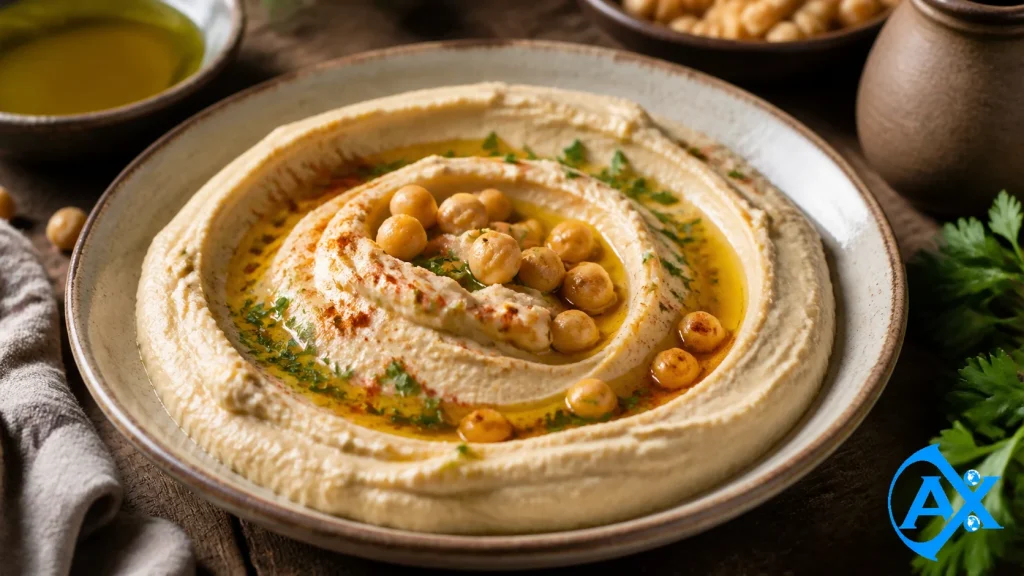
- Taste for salt and lemon, spread onto a plate with the back of a spoon in a swirl, and finish with olive oil, the reserved chickpeas and a dusting of paprika.
How to make Hummus bi Tahini
Hummus is a daily food across Lebanon, eaten at breakfast as often as on a mezze table, and judged on texture above all. The difference between a dense paste and a light, airy cream is almost entirely technique.
Cook the chickpeas too far
- Advertisement -
Firm chickpeas make grainy hummus. Cooked with bicarbonate of soda until they collapse under light pressure, the skins soften and break down in the processor. Canned chickpeas work if you simmer them for a further fifteen minutes with a pinch of bicarbonate.
Ice water is the trick
Cold water added gradually while the machine runs emulsifies the tahini and aerates the mixture, turning it visibly paler. Warm water will not do the same thing, and more tahini only makes it heavier.
Tame the garlic
Blending garlic with lemon juice and straining it out leaves a clean garlic flavour without the harsh afterburn that builds as hummus sits. One or two cloves is plenty.
Serving
Serve at room temperature, never fridge-cold, with warm flatbread. Hummus keeps three days refrigerated; stir and let it come back to room temperature before serving, adding a splash of water if it has stiffened.
Traditional Lebanese and wider Levantine cookery, served as part of a mezze table. Editorially researched from widely documented preparations, and not kitchen-tested by Axadle.
Contains sesame from tahini. Naturally gluten-free, dairy-free and egg-free; bread served alongside contains gluten.

Join the conversation