
Hilib Ari — Somali Spiced Goat
Somali spiced goat — simmered until tender, then fried in its own spices until the edges crisp and caramelise.
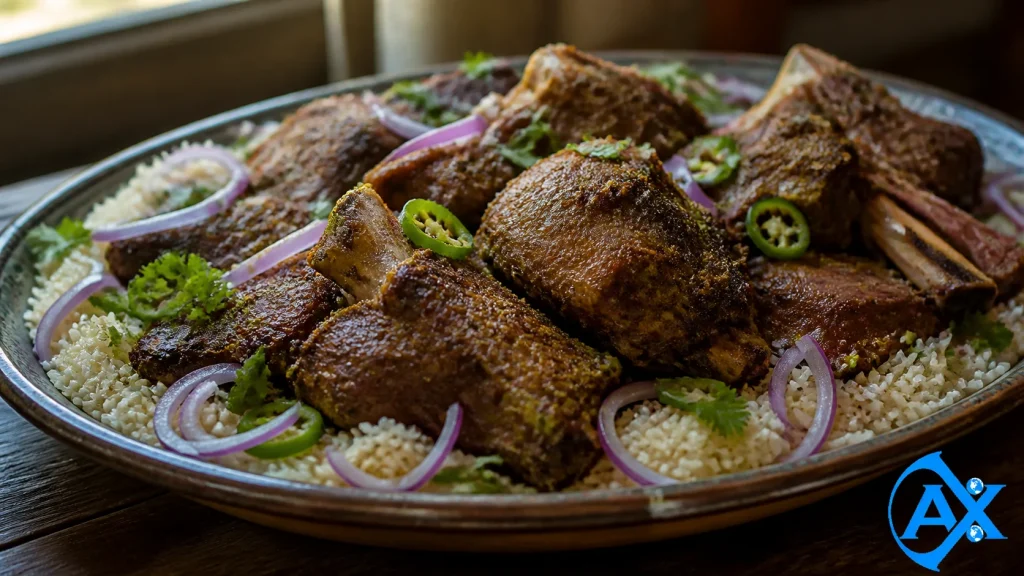
Method
- Rinse the goat and pat it thoroughly dry. Season generously with salt and pepper.
- Put the meat in a large pot with the quartered onion, half the garlic, the ginger, cinnamon stick, cardamom and cloves. Add water to come three-quarters of the way up the meat.
- Bring to a boil, skim the surface, then cover and simmer gently for 60 to 80 minutes, until a knife slides into the thickest piece with no resistance. Goat varies widely by age, so test rather than trusting the clock.
- Lift the meat out and let it drain. Strain the cooking liquid and keep it; it becomes an excellent base for maraq or for cooking rice.
- Heat the oil in a wide frying pan over medium-high heat. Add the sliced onion and cook for 8 minutes until golden at the edges.
- Add the remaining garlic, the xawaash and turmeric, and stir for 1 minute until the spices bloom and smell toasty.
- Add the drained goat and increase the heat. Fry for 10 to 12 minutes, turning the pieces every few minutes, until the meat is browned and crisp in places and coated in the spice paste.
- Add the chopped tomatoes and 2 or 3 tablespoons of the reserved cooking liquid, scraping the pan. Cook for 5 minutes more, until the sauce clings tightly to the meat rather than pooling.
- Finish with lime juice and coriander off the heat. Serve with bariis, muufo or flatbread, banana and basbaas.
How to make Hilib Ari — Somali Spiced Goat
Hilib ari is goat cooked the way it is served at Somali celebrations: boiled first until genuinely tender, then fried hard in spices so the outside crisps. The two-stage method is what makes it distinctive, and it is far more forgiving than roasting a cut that can easily turn tough.
Why boil, then fry
- Advertisement -
Goat is lean and full of connective tissue. A long, gentle simmer breaks that tissue down into gelatine and leaves the meat soft, while the fry stage adds the browned, caramelised surface that simmering alone can never produce. Skipping the first stage gives chewy meat; skipping the second gives pale, flat flavour.
Do not waste the broth
The strained cooking liquid is a prize in its own right. Use it as the stock for bariis iskukaris, as the base of a maraq, or simply season it and drink it as a clear soup alongside the meat.
Judging doneness
Age matters more than weight. Young goat may be tender in an hour, older animals can need two. Test with a knife tip in the thickest piece: it should meet no resistance and the meat should part from the bone with light pressure.
Serving
Traditionally this is a shared platter: the meat piled over spiced rice, with banana, lime wedges and basbaas, eaten with the right hand. Leftovers are excellent chopped small and folded into suqaar the next day.
Traditional Somali cookery for goat, the meat most associated with celebration and hospitality. Editorially researched from widely documented preparations, and not kitchen-tested by Axadle.
Naturally free from gluten, dairy, egg and nuts when cooked in oil. Ghee adds dairy.

Join the conversation