
Chicken Tagine with Preserved Lemon
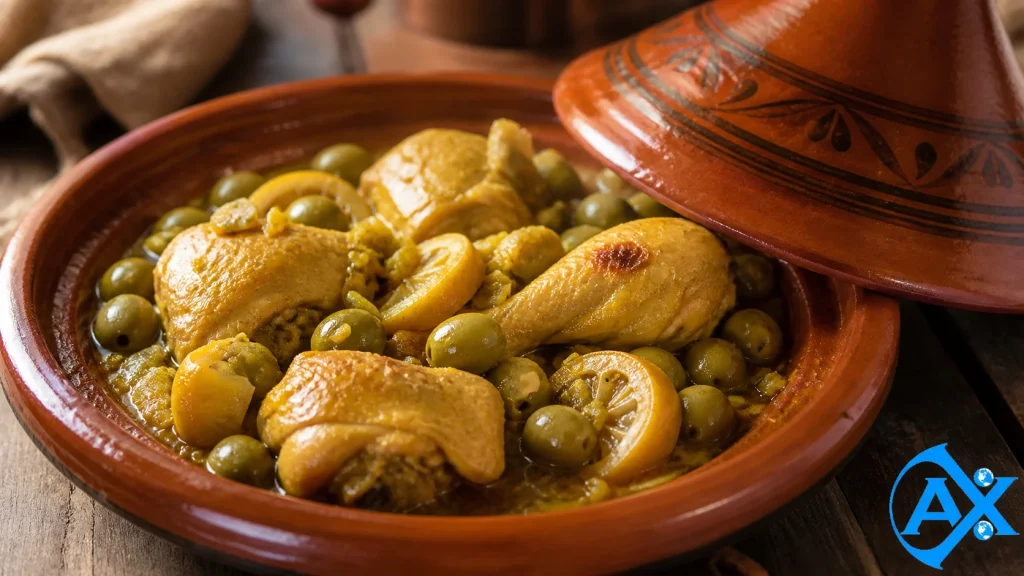
Moroccan chicken slow-cooked with preserved lemon, green olives and saffron until the sauce is thick and golden.
Method
- Mix the grated onion, garlic, ginger, turmeric, pepper, cumin, half the saffron water and the olive oil into a paste. Rub it thoroughly into the chicken and leave to marinate for at least 1 hour, or overnight in the fridge.
- Scatter the sliced onion over the base of a tagine or heavy casserole and lay the marinated chicken on top, skin-side up, with any remaining marinade.
- Add the water and the tied herb bunch, cover, and bring to a gentle simmer over low-medium heat. A tagine should never boil hard; the lid is designed to return condensation slowly.
- Cook covered for 45 minutes, turning the chicken once halfway and basting with the sauce. The onions underneath will melt into the liquid and thicken it.
- Rinse the preserved lemon rind to remove excess salt, then add it with the olives. Cook for a further 15 minutes.
- Lift the chicken onto a plate and remove the herb bunch, squeezing it against the side of the pot to release its flavour.
- Raise the heat and reduce the sauce for 8 to 10 minutes, uncovered, until it is thick, glossy and coats a spoon. This is the step that separates a good tagine from a watery one.
- Stir in the remaining saffron water and the lemon juice, taste carefully for salt — the preserved lemon and olives are already salty — then return the chicken and warm through.
- Serve from the dish with bread for scooping the sauce, or with couscous alongside.
How to make Chicken Tagine with Preserved Lemon
A tagine is both the conical clay pot and the dish cooked in it, and this lemon-and-olive version is the one most associated with Moroccan home cooking for guests. The flavours are built on preserved lemon and saffron rather than heat, and the result is fragrant rather than spicy.
Preserved lemon is not optional
- Advertisement -
Fresh lemon cannot replace it. Preserving in salt for weeks transforms the fruit into something softer and more savoury, with none of the raw acidity. Use the rind, not the pulp, and rinse it first unless you want the dish markedly saltier.
Low and slow, then reduce
The cooking is gentle throughout: a bare simmer under the lid for an hour. The final uncovered reduction is what concentrates everything, and it is the stage most often skipped. Judge by the spoon, not the clock.
If you do not have a tagine
A heavy casserole with a tight lid works well. Keep the heat lower than feels necessary and check that the liquid is barely moving. The clay pot adds gentle, even heat but changes nothing about the method.
Serving
Bread, not couscous, is the everyday partner in Morocco: rounds of khobz torn and used to scoop directly from the dish. Couscous is more usual on Fridays and for larger gatherings.
Traditional Moroccan cookery; djaj mqualli is among the best known of the slow-cooked tagines. Editorially researched from widely documented preparations, and not kitchen-tested by Axadle.
Naturally free from gluten, dairy, egg and nuts when cooked in olive oil. Butter, if used, adds dairy.

Join the conversation