
Atakilt Wat — Ethiopian Cabbage and Potatoes
A gentle, turmeric-yellow Ethiopian stew of cabbage, carrot and potato — the mild counterweight to berbere-hot dishes.
Method
- Heat the oil in a wide, heavy pot over medium heat and cook the onions for 8 to 10 minutes until soft and translucent but not browned; this stew should stay pale and sweet.
- Add the garlic, ginger, turmeric and cumin and stir for 1 minute, until the turmeric colours the oil a deep yellow.
- Add the carrots and stir to coat them thoroughly in the spiced oil. Cook for 5 minutes.
- Add the potatoes and the water, cover the pot and cook over low heat for 10 minutes, shaking the pot occasionally rather than stirring, so the potatoes keep their shape.
- Pile the cabbage on top, season with salt and pepper, and cover again. The cabbage will steam down in volume within a few minutes.
- Cook covered for 15 minutes, folding everything together gently twice during that time.
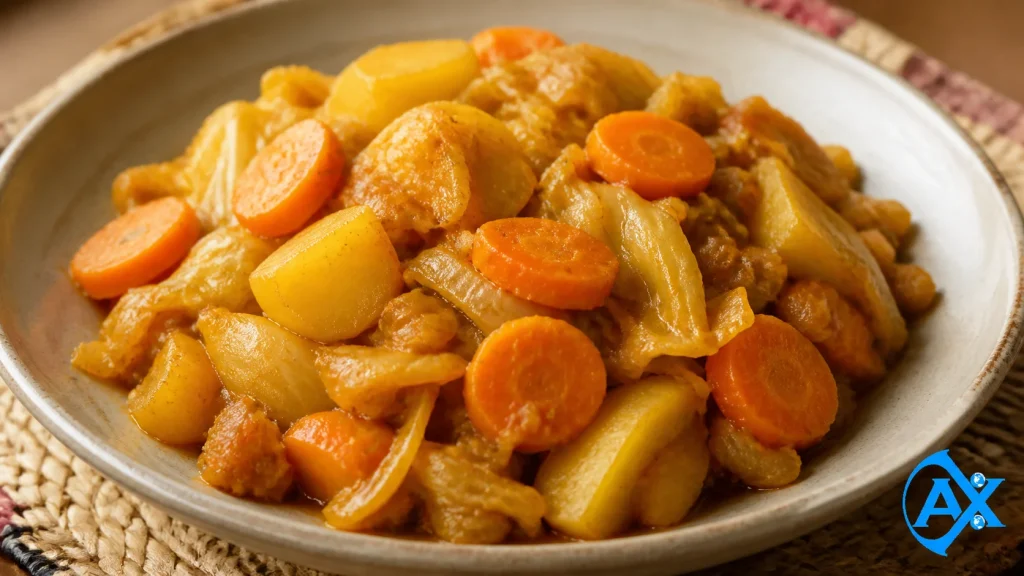
- Uncover and cook for a final 5 to 10 minutes to drive off excess moisture. The vegetables should be tender but still distinct, and the pot should look glossy rather than watery.
- Taste and adjust the seasoning, then serve warm or at room temperature with injera and a spicier wat alongside.
How to make Atakilt Wat — Ethiopian Cabbage and Potatoes
Atakilt wat is the quiet dish on an Ethiopian platter, and the one that makes the rest work. Mild, sweet and coloured gold with turmeric, it gives the palate somewhere to rest between mouthfuls of berbere-heavy stews.
No berbere here
- Advertisement -
Unlike most dishes called wat, this one contains no chilli blend at all. Turmeric provides the colour, ginger and garlic the depth. Adding berbere turns it into a different dish and removes its role on the platter.
Layer, do not stir
The vegetables go in by cooking time: carrots first, then potatoes, then cabbage on top. Shake the pot instead of stirring, especially once the potatoes are in, so they stay in pieces rather than breaking into the sauce.
Getting the texture right
Cabbage releases a lot of water. The final uncovered few minutes matter: they concentrate the flavour and stop the dish turning into soup. You are looking for vegetables that hold their shape, lightly coated in spiced oil.
Serving
Serve it as part of a larger spread with misir wat, gomen and shiro, or on its own with injera or rice. It is just as good at room temperature the next day, which makes it a practical dish to cook ahead.
Traditional Ethiopian cookery; atakilt wat appears on nearly every Ethiopian combination platter. Editorially researched from widely documented preparations, and not kitchen-tested by Axadle.
Naturally free from gluten, dairy, egg and nuts when cooked in oil.

Join the conversation