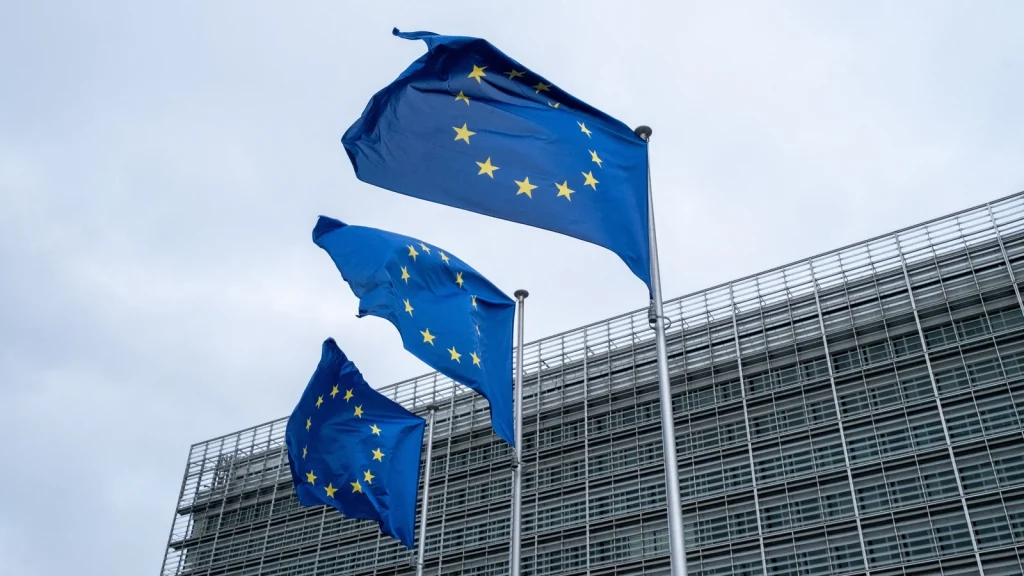
Future countries seeking European Union membership will face tougher demands to align their policies with the bloc before accession, under plans from the European Commission prompted by years of rule-of-law disputes involving newer members such as Hungary.
The proposals, which still require approval from EU governments, would introduce stronger safeguards before a candidate joins, designed to prevent democratic standards from eroding after accession.
- Advertisement -
The EU is preparing for the possible membership of Montenegro, Albania, Ukraine and Moldova in the coming years, while seeking to reassure current members that enlargement will not impose unacceptable political or economic costs.
The renewed drive to expand the bloc, strongly backed by the Irish Government, follows Russia’s 2022 invasion of Ukraine and Kyiv’s ambition to join the EU as part of a peace settlement.
The plans also include restrictions on financial support for Ukraine’s large agricultural sector, including its grain industry.
The commission wants to expand an existing policy of gradually bringing aspiring members into EU programmes and economic areas, including energy, transport, digital services and defence.
Participation would not be automatic, however. Countries would need to meet the requirements for each programme while also aligning themselves with the EU’s broader strategic priorities.
The Irish Government hopes Montenegro will conclude its accession negotiations before Ireland’s EU presidency ends in December.
Albania, Moldova and Ukraine are also regarded as leading candidates, although all are likely to remain at least several years from membership.
“As enlargement countries advance on their path of reform, the EU must be ready to welcome them,” European Commission President Ursula von der Leyen said in a written statement.
“This means preparing our institutions, adapting our policies for new realities, and ensuring our budget reflects our shared ambitions.”
During the increasingly authoritarian tenure of former Hungarian prime minister Viktor Orban, Budapest repeatedly clashed with other member states and the European Commission over what they described as an anti-democratic drift and repeated violations of the EU’s rule-of-law commitments.
Under the proposed system, monitoring of the rule of law would begin before a country entered the bloc and continue after accession.
Safeguards relating to the economy, the EU internal market, and justice and home affairs could remain in force for longer. A new measure would also be available in cases involving “serious breaches” of EU values and the principle of sincere cooperation.
Earlier this year, Mr Orban angered fellow member states by refusing to back a €90 billion loan for Ukraine, despite having agreed to the package at an EU summit in December last year.
A country that breaches EU treaty obligations can, in the most serious circumstances, have its voting rights in the Council suspended under Article 7 of the Lisbon Treaty. Such action has never been imposed, however, because it requires the backing of all other member states.
The new proposals would add a safeguard alongside Article 7. New members would pledge not to block EU decisions on future enlargement or bilateral disputes for a limited period during their first years inside the bloc.
The plans received a cautious response. “The European Commission wants stronger safeguards against democratic backsliding after enlargement,” said Corina Stratulat, Associate Director and Head of European Politics and Institutions Programme at the European Policy Centre.
“It has good reasons. But its proposed institutional safeguard, lasting 15 years after accession, raises a question that reaches beyond the next entrants: If the Union’s ordinary enforcement mechanisms need supplementing when a country joins, what will make them sufficient fifteen years later?”
Additional reporting Reuters