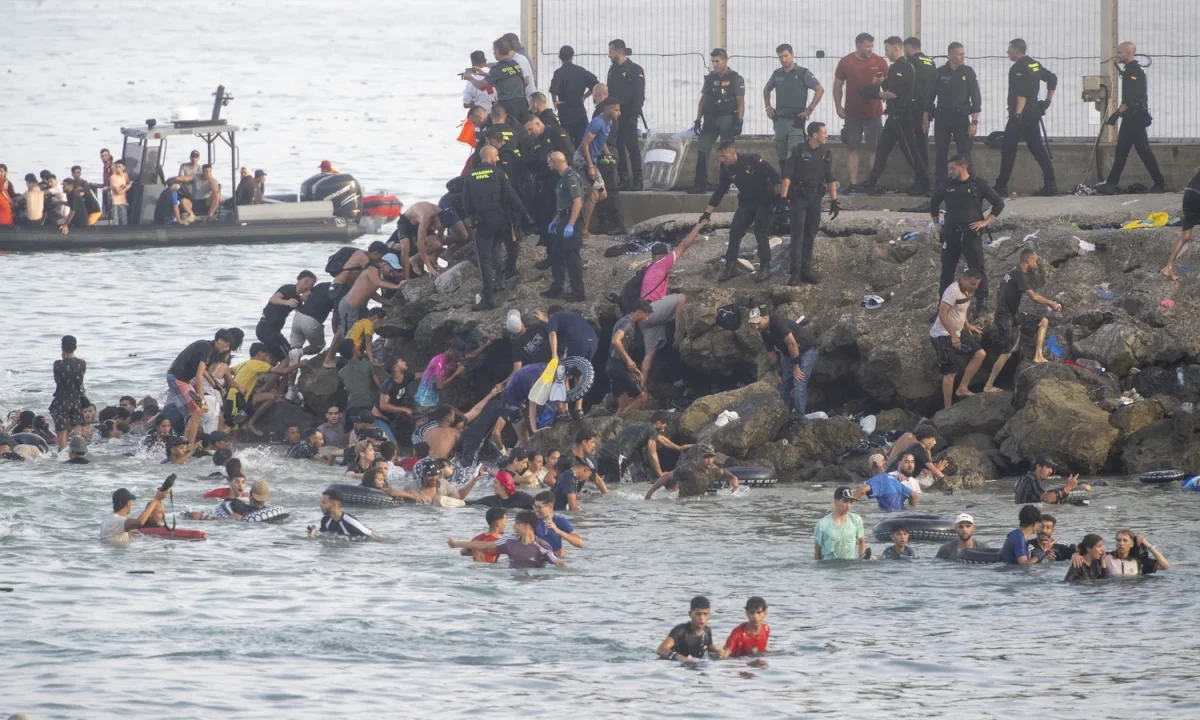
EU interior and justice ministers have held an emergency meeting on the migrant crisis in Ceuta, praising Spain’s response to last week’s mass border crossing.
The meeting was convened by Ireland’s Minister for Justice Jim O’Callaghan, as Ireland holds the EU Presidency.
France’s interior minister said ministers had unanimously backed Spain’s actions, adding that 70,000 people had been returned to Morocco following the crossing.
Laurent Nuñez said the ministers also condemned efforts to exploit the incident to create divisions within the EU.
Spain has blamed social media disinformation for encouraging mostly young men to cross the border, saying the majority were swiftly sent back to Morocco.
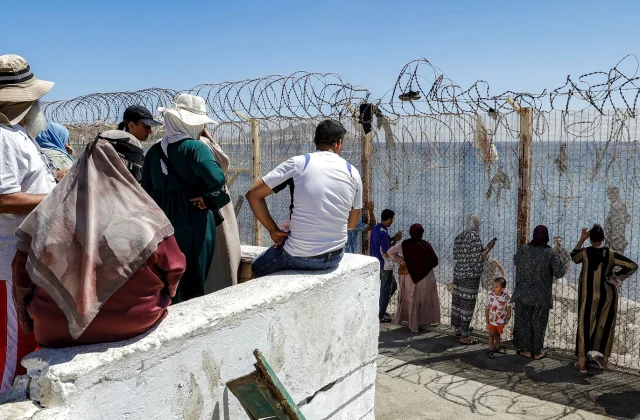
However, accounts of the number of people who entered Ceuta have varied. AFP reported that 50,000 migrants streamed into the Spanish enclave from Morocco, with almost all subsequently leaving.
Reuters, meanwhile, said Spain estimated that around 69,500 migrants had returned from Ceuta to Morocco, while Moroccan authorities put the number who entered the territory at about 40,000.
Migrants on Ceuta beach as thousands remain in enclave after border rush
Italy and Denmark have been among the loudest voices calling for a tougher response. Danish Prime Minister Mette Frederiksen warned that “uncontrolled immigration poses a threat to Europe”.
Last week, both countries backed suspending Spain from the Schengen free-travel area over the crisis. Madrid rejected the proposal, which is also legally impossible under EU rules.
The calls to exclude Spain from Schengen prompted Spanish Prime Minister Pedro Sánchez to protest to the EU and request today’s meeting.
Mr Sánchez’s government supports a comparatively open migration policy, including a major initiative to give legal status to undocumented migrants already living in Spain. In a letter to the heads of the EU institutions on Saturday, he pushed back against criticism from other member states.
He condemned what he described as the “selfish” conduct of fellow EU countries and became the first leader to call for an emergency meeting aimed at developing a “common response” to similar crises.
Spanish Prime Minister Pedro Sánchez called for today’s meeting (file pic)
Within hours, 22 countries led by Italy, Denmark, Germany and Hungary issued a counter-letter calling for urgent talks, although their objective was different: to maintain pressure for a tougher immigration policy.
France, one of the EU’s most influential members, kept its distance from the initiative, arguing that it risked turning the situation in Ceuta into a political tool. Paris also pointed out that the overwhelming majority of migrants who entered Spanish territory had already gone back to Morocco.
That tension was evident in preparatory discussions among EU ambassadors yesterday, when Spain’s envoy expressed “frustration” over what one EU diplomat described as a lack of support from other capitals.
At the same time, the diplomat said that while every member state had assured Madrid of its “solidarity”, some governments “are asking themselves if recent policies adopted by Spain have not sent the signal that the doors are open”.
European Commission President Ursula von der Leyen welcomed the meeting as an opportunity to draw “lessons” and shape a “common European response” to irregular migration.
Yesterday, the commission chief urged EU governments to “double down” on five priorities: preventing irregular migration through cooperation with partner countries; tightening external borders; introducing early warning systems; breaking up smuggling networks; and increasing returns.
Describing today’s meeting as a “first step”, Ms von der Leyen said she expected EU leaders to revisit the issue at their next summit, which is currently scheduled for October.
Spain said yesterday that it would use today’s talks to seek wider use of controversial return hubs approved by the European Parliament this year.
Under the proposal, rejected asylum seekers would be transferred to third-party countries while arrangements were made for their deportation to their countries of origin.
Mr O’Callaghan has said he would not rule out the use of return hubs, although Taoiseach Micheál Martin said last month that Ireland currently had no plans to introduce them.
Additional reporting AFP, Reuters