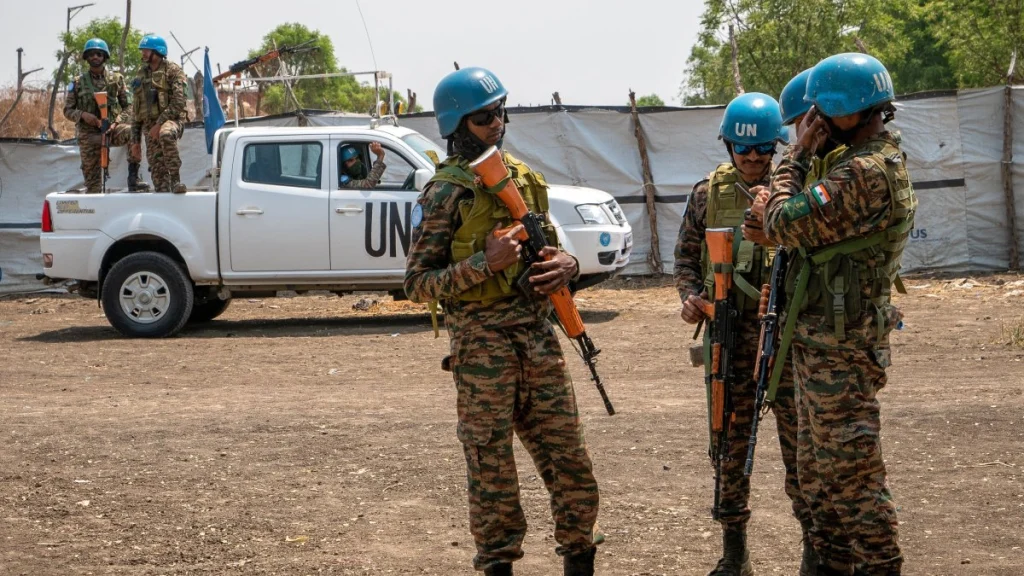
South Sudan’s planned December elections could trigger a new outbreak of violence and increase the threat of atrocities, a United Nations human rights commission warned Thursday.
The warning follows the government’s pledge to proceed with the country’s first national elections, nearly 15 years after South Sudan gained independence.
- Advertisement -
Yet violence has been rising between forces aligned with President Salva Kiir and those loyal to his longtime rival, opposition leader Riek Machar, who is imprisoned. The escalation threatens to dismantle a 2018 peace agreement that ended years of civil war.
In a report, the U.N.-appointed Commission on Human Rights in South Sudan said “multiple risk factors for atrocity crimes are converging” as the vote approaches.
“Elections held without a strategy for democratic consolidation and preventing national schisms could instead fuel renewed conflict,” the commission said.
South Sudan has already postponed the elections twice, first in 2022 and again in 2024, as corruption, insecurity and the absence of functioning institutions hindered preparations.
The commission described the country as being “at one of its most dangerous points,” citing a deteriorating political, security, humanitarian and human rights environment.
Yasmin Sooka, the commission’s chair, said South Sudan’s people had a right to a credible election — but not to a vote that endangers their lives.
After independence in 2011, Kiir and Machar led opposing sides in a civil war that lasted from 2013 to 2018 and killed an estimated 400,000 people.
The power-sharing deal that brought the conflict to an end has largely unraveled. Machar and several of his allies were jailed last year.
Rather than addressing the causes of the conflict, elections could end up “reinforcing, rather than resolving, the underlying drivers of conflict,” the report said.
South Sudan, one of the world’s poorest countries, is also confronting reductions in aid from Western donors. Earlier this month, the U.N. warned that it could be forced to halt food assistance for refugees within weeks.