
KHARTOUM – A new Ethiopian effort to end Sudan’s war has been rejected by the authorities based in Port Sudan, underscoring the widening divide between those calling for negotiations and the army-backed Islamist camp insisting that the conflict must continue.
Addis Ababa unveiled the initiative in recent days as Sudanese civilians endure what the United Nations calls the world’s worst humanitarian crisis. The proposal seeks to reduce tensions and bring the fighting to an end, but the response from Port Sudan was immediate and unequivocal.
Another Rejection
The Sudan News Agency (SUNA), which is affiliated with the Port Sudan authorities, said the government had categorically rejected Ethiopia’s proposal. It accused Addis Ababa of lacking neutrality in the war, which began in mid-April 2023.
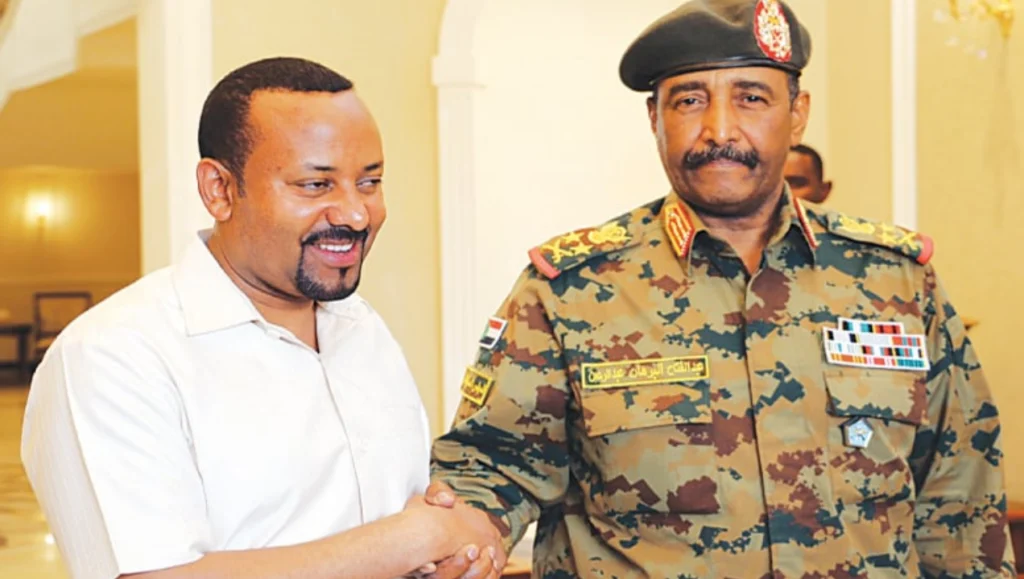
Army chief Abdel Fattah al-Burhan, who also heads the Sovereignty Council in Port Sudan, has turned down a series of peace initiatives since the conflict erupted. Ethiopia’s proposal has now joined that list, as al-Burhan continues to present the military option as the only path forward.
The Peace Initiative
Ethiopian Prime Minister Abiy Ahmed proposed hosting and sponsoring a broad, open Sudanese dialogue in Addis Ababa, with invitations extended to all parties involved in the country’s military and political conflict.
The initiative calls for an end to the war, the fighting and the divisions that have torn Sudan apart, while seeking a national consensus to underpin lasting and comprehensive peace. It also envisions an inclusive national process for the post-war period, including the creation of a widely accepted national unity government. That administration would be responsible for restoring state institutions, protecting Sudan’s sovereignty and territorial integrity, and rebuilding a country devastated by war.
Anticipating the accusations of bias later made by al-Burhan, Abiy said he was ready to maintain an equal distance from all sides. He also pledged to use Ethiopia’s regional and international relationships, along with its diplomatic capabilities, to help establish conditions for meaningful negotiations and dialogue aimed at ending the Sudanese people’s suffering.
Tasis Welcomes the Initiative
Unlike al-Burhan and the Port Sudan authorities, the government of the Sudan Founding Alliance, known as Tasis, gave the initiative a clear and positive welcome and said it was prepared to join a dialogue focused on Sudan’s future.
Khalid Ahmed Danaa, spokesperson for Tasis’s Ministry of Information, said: “We welcome the invitation announced by Abiy Ahmed and commend Ethiopia’s solidarity, both government and people, with the Sudanese people, as well as its commitment to Sudan’s unity, sovereignty and stability and its respect for the right of Sudanese people to determine their future through their own free will.”
He said the Tasis government “reaffirms its determination to pursue a path towards comprehensive, just and sustainable peace, and its readiness to engage positively with the invitation and discuss it in ways that contribute to creating the conditions for ending the war and addressing its root causes. It recognises the importance of the initiative in opening the way for Sudanese forces to participate in a dialogue addressing the historical roots of the crisis, the questions surrounding state-building and the formulation of a new national social contract.”
Tasis said it was fully prepared to take part in a serious process to end the war and establish a state based on “equal citizenship, justice and sustainable peace”. The civilian Somoud coalition, led by Abdalla Hamdok, also endorsed the proposal and called for the dialogue to be convened.
Former Sudanese Prime Minister Abdalla Hamdok, speaking to Sudan Tribune about the initiative, said: “I consider the initiative an expression of the deep historical ties between the Sudanese and Ethiopian peoples.”
Hamdok praised Ethiopia’s support for Sudan’s unity, territorial integrity and stability, and welcomed the proposal’s emphasis on ending the conflict through dialogue and national consensus. He urged regional and international actors to coordinate behind a peace process led exclusively by Sudanese people, while recalling Ethiopia’s earlier support for Sudan’s democratic transition after the December 2018 Revolution.
Mahmoud Ali Youssouf, chairperson of the African Union Commission, also backed the Ethiopian initiative, calling it significant to wider efforts to promote dialogue among Sudan’s competing parties.
He reiterated the African Union’s commitment to a “peaceful and comprehensive solution to the Sudanese crisis through dialogue and negotiations”, while stressing that any political process must remain wholly under Sudanese leadership and control.