
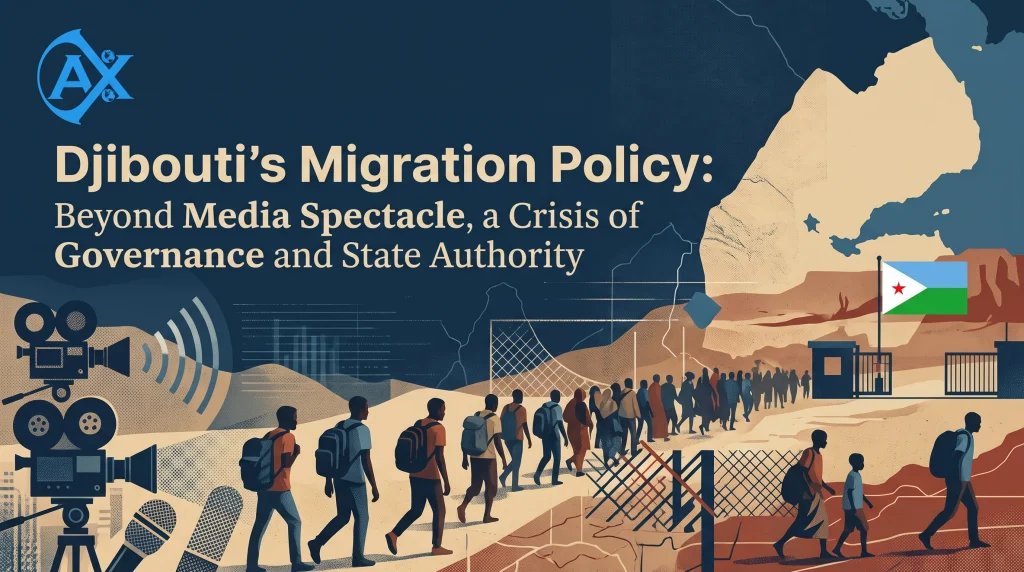
The immaculate uniforms, the vehicles ordinarily associated with the June 27 national celebrations, and the almost theatrical choreography of the operation all raise questions about the message the authorities intended to convey. The video circulated publicly appears to reflect a failure of strategic communication: an attempt to project control over irregular migration without adequately addressing the structural weaknesses that allow the phenomenon to persist.
Let me be clear: this is not an accusation against the Djiboutian National Police. Rather, it is a criticism of the institutional constraints under which the force operates, and of the apparent use of law enforcement as a public-relations instrument to obscure shortcomings in government policy.
- Advertisement -
Djibouti’s migration challenge cannot be addressed through carefully staged operations or isolated raids designed primarily for public consumption. It demands a coherent national strategy, effective border management, consistent enforcement of immigration law, and a serious assessment of the socioeconomic pressures confronting communities across the country. The scale of irregular migration, particularly from neighbouring Ethiopia, remains a subject of considerable public concern. Any estimate of its magnitude, however, must be supported by credible data rather than political assertion.
The central issue is not simply the presence of undocumented migrants in two restaurants in a residential district of the capital. It is the broader question of whether the state possesses the institutional capacity, operational resources, and political will to enforce its laws consistently throughout the national territory.
For many residents of working-class neighbourhoods, concerns about irregular migration extend beyond border control to questions of public safety, economic insecurity, access to services, and the effectiveness of local administration. These concerns deserve to be addressed through evidence-based policy, effective policing, and responsible public debate—not through episodic operations that generate publicity without demonstrating lasting results.
The state cannot restore public confidence through spectacle alone. It must demonstrate, consistently and transparently, that the law applies throughout the country.
PK12 and the Question of Effective State Authority
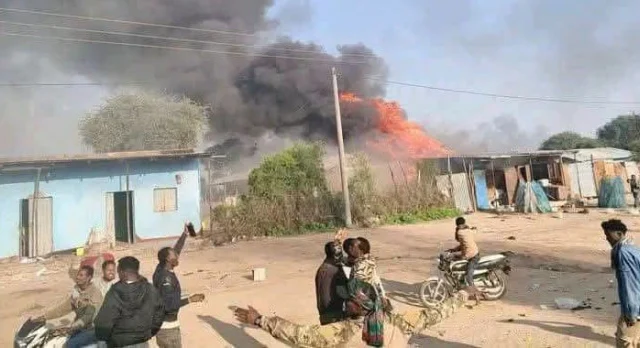
The situation in PK12, as described by residents and critics of the authorities, raises broader questions about the effective exercise of public authority. Reports of informal economic activity, suspected drug trafficking, alleged arms sales, and transactions conducted in Ethiopian currency warrant serious attention from the relevant institutions. Such allegations must be investigated and substantiated through lawful procedures, rather than treated as established facts without supporting evidence.
Nevertheless, the underlying governance question is legitimate: what happens when a locality is widely perceived to operate beyond the effective reach of public institutions?
State sovereignty is not demonstrated merely through uniforms, official vehicles, or occasional security operations. It is sustained through the continuous application of the law, accountable public administration, functioning judicial institutions, and the ability of security services to protect residents without discrimination.
If PK12 is experiencing persistent problems involving illicit trade, public security, or gaps in administrative oversight, the appropriate response is not a temporary show of force. It is a sustained institutional presence, coordinated law enforcement, and a clear commitment to restoring public order while respecting the rights and dignity of all residents.
The distinction is fundamental: a state that intervenes only when cameras are present risks creating the appearance of authority without establishing its enduring reality.
A Security Apparatus Undermined by Institutional Neglect
The condition of police facilities and the material circumstances in which officers perform their duties raise another important issue: the relationship between the state’s security ambitions and its willingness to invest in the institutions expected to fulfil them.
A police force cannot be expected to deliver effective public security indefinitely while its personnel face inadequate working conditions, insufficient resources, and a perceived lack of institutional recognition. The dignity of those who serve in uniform is not a secondary consideration. It is an essential component of professional policing, institutional morale, and public confidence.
The deterioration of police infrastructure and the difficulties confronting security personnel must therefore be examined within the broader framework of public expenditure, institutional priorities, and political accountability. Where deficiencies exist, the responsibility to address them rests with the authorities charged with governing and allocating national resources.
The same principle applies to the armed forces and other institutions responsible for safeguarding the Republic. Their effectiveness depends not only on discipline and operational capability, but also on adequate funding, professional independence within the law, and a clear understanding of their constitutional responsibilities.
The Political Legacy of December 2000
Since the attempted coup d’état of December 2000, questions surrounding the relationship between political power and the security institutions have remained relevant to discussions of Djibouti’s governance. The extent to which that episode reshaped the state’s approach to its security apparatus deserves careful historical and institutional examination.
The central concern is the possibility that the protection of the political establishment has, at times, taken precedence over the long-term strengthening of public institutions. This is an interpretation that must be assessed against the historical record, policy decisions, institutional reforms, and the treatment of security personnel over time.
The broader principle, however, is clear: when political authorities regard their own security as more important than the institutional health of the state, they risk weakening the very structures upon which national stability depends.
A professional security sector must serve the Republic and its population under the authority of the law. It must not be reduced to an instrument of political convenience. Nor should legitimate efforts to maintain public order come at the expense of institutional accountability, professional dignity, or the rights of citizens.
A state that distrusts or neglects the institutions responsible for protecting its population risks creating a dangerous contradiction: weakening the very capacity it needs to preserve stability and uphold the law.
Defending Police Officers Means Defending Institutional Dignity
My support for the women and men of the Djiboutian National Police is unequivocal. They should not be made scapegoats for the shortcomings of migration policy or for failures of political and administrative leadership. Police officers operate within a framework established by the state, and they cannot reasonably be expected to compensate for every deficiency in border management, immigration administration, or public governance.
They deserve adequate equipment, appropriate working conditions, fair remuneration, respect for their legal rights, and recognition of their service to the nation. These are not privileges to be granted at the discretion of political authorities; they are essential conditions for building a capable, accountable, and professional police institution.
I therefore urge police personnel to defend their professional dignity and lawful rights through appropriate institutional channels, in accordance with the law and the constitutional order. Their interests and the interests of the public are not inherently opposed. On the contrary, a respected, properly equipped, and professionally independent police force is better positioned to protect communities and enforce the law impartially.
Ultimately, Djibouti’s migration challenge cannot be resolved through theatrical displays of authority, nor can the weaknesses of public administration be concealed indefinitely behind carefully choreographed security operations.
The country needs a comprehensive migration policy, credible information, effective border controls, sustained law enforcement, and investment in the institutions entrusted with maintaining public order. It also needs a political culture in which public institutions are strengthened rather than instrumentalised, and in which accountability extends beyond the officers on the ground to those responsible for setting policy and providing resources.
The real test of state authority is not the spectacle of a raid, but the consistent application of the law. The real measure of public security is not the image projected by the government, but the confidence citizens can place in their institutions. And the dignity of the Republic cannot be separated from the dignity of those who serve it.