
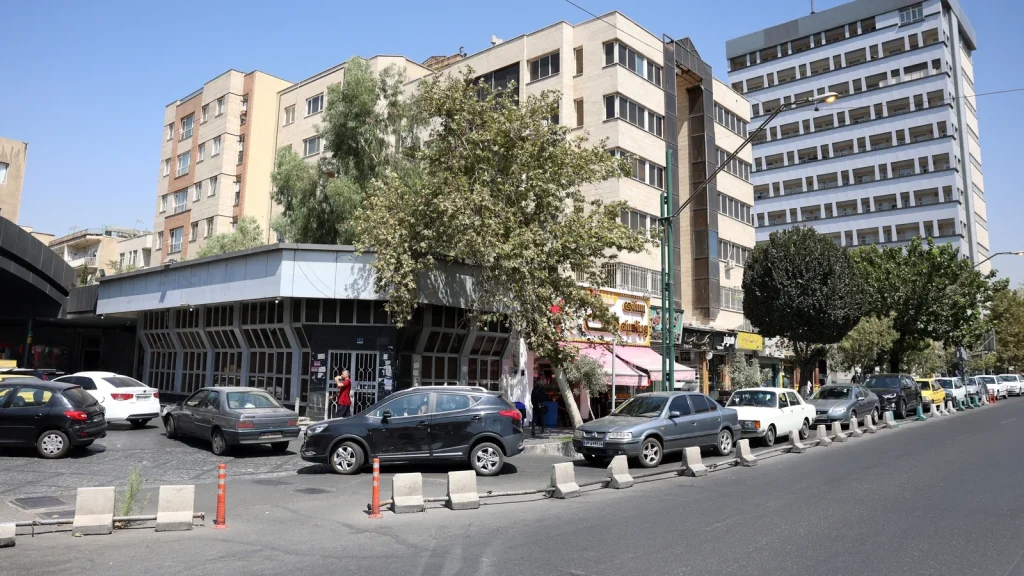
Iran is struggling to bring in enough petrol to cover a shortfall in domestic production because a US naval blockade is preventing imports, a senior Iranian official said.
“Domestic petrol output is not sufficient, and the US naval blockade means we are unable to import the fuel,” Vice President Mohammad Jafar Ghaempanah told the official IRNA news agency.
- Advertisement -
His comments came as long lines formed at petrol stations across Iran in recent days, adding to signs that the war with the United States is placing growing pressure on Tehran’s economy.
On Monday, Iranian President Masoud Pezeshkian’s chief of staff, Mohsen Haji-Mirzaei, said fuel quotas would be reassessed but provided no further details.
Mr Ghaempanah also attacked Iran’s system of distributing heavily subsidised petrol, arguing that it rewards people who own several vehicles while excluding those without cars.
“Petrol is not distributed fairly across the country. People with multiple vehicles benefit from the subsidies, while those who do not own a vehicle receive nothing,” he said.
Iran is one of the world’s largest oil producers and has some of the cheapest fuel prices anywhere, but decades of generous petrol subsidies have made any attempt to change the system politically fraught.
Qatar’s prime minister is due to travel to Tehran as part of an effort to revive diplomacy aimed at ending the war.
Qatar, Iran’s Gulf neighbour and a US ally, has acted as a back-channel intermediary between the opposing sides. It also helped secure the June ceasefire, which briefly halted the fighting.
Oil traffic through the Strait of Hormuz has dropped to its lowest level in three months, with only five million barrels per day passing through on Monday, according to the latest ship-tracking data.
Before the war, approximately 20 million barrels per day of crude oil moved through the strait.
Iran’s Revolutionary Guards said on Tuesday that Iran and Oman had agreed on how to divide control of the waterway and its revenues. But a senior Iranian source later said the countries were still negotiating the details of any agreement.
Qatari Prime Minister Sheikh Mohammed bin Abdulrahman al-Thani
US Treasury Secretary Scott Bessent outlined plans on Monday for the “economic asphyxiation” of Iran. Iranian President Masoud Pezeshkian, however, said on Tuesday that the latest sanctions “will not achieve anything”.
Although air strikes earlier in the war severely weakened Iran’s conventional military forces, Tehran has retained enough missile and drone capacity to target Gulf states that host US military bases and threaten oil tankers travelling through the strait.
Qatari Prime Minister Sheikh Mohammed bin Abdulrahman al-Thani will discuss the continuation of Doha’s mediation efforts and other developments in the region during his visit to Tehran, Iranian Foreign Ministry spokesperson Esmaeil Baghaei said.
US Treasury Secretary Scott Bessent promised the ‘toughest sanctions in history’ on Iran last week
A spokesperson for Qatar’s Foreign Ministry said on X that the talks would also cover freedom of navigation in the Strait of Hormuz and the need to restore the situation that existed before 28 February. He said the discussions would include efforts with Iranian officials to “de-escalate tensions and create the conditions conducive to dialogue.”
“An agreement with Oman regarding the Strait of Hormuz has not been finalised,” the senior Iranian source told Reuters, saying negotiations were continuing over the terms of a possible accord.
The account appeared to conflict with remarks from Brigadier General Hossein Mohebbi, a spokesperson for the Islamic Revolutionary Guard Corps, who said Iran and Oman had “reached results that are acceptable to both sides” on managing the strait and its revenues.
Mr Mohebbi said the waterway would remain closed unless Washington met Tehran’s demands under the interim ceasefire, or memorandum of understanding, signed by the two countries in June before it collapsed.
Those demands include the lifting of the US blockade on Iranian ports, compensation and the removal of sanctions.
Latest Middle East stories
Tanker hit by ‘unknown projectile’
An “unknown projectile” hit a tanker in the Strait of Hormuz this week, sparking a fire that was later extinguished, according to a British maritime agency.
“Local authorities have reported a tanker has been hit by an unknown projectile causing fire to the vessel which has since been extinguished,” the United Kingdom Maritime Trade Operations (UKMTO) said.
The incident took place near the Omani coastal city of Khasab and was reported to UKMTO on Tuesday, the agency said.
No crew members were injured, and the incident caused no reported environmental damage, it added.
Authorities are examining what caused the strike, the agency said.
The online notice did not identify the tanker’s nationality or say where it was headed.
The United Nations’ International Maritime Organization has recorded 70 incidents in the Strait of Hormuz since 28 February, with 19 seafarers killed.
Thousands of other people have also died, mainly in Iran and Lebanon, since the US and Israel launched attacks on Iran. The stated aims of the operation were to prevent Tehran from obtaining a nuclear weapon, help Iranians overthrow their government and destroy the country’s missile programme.