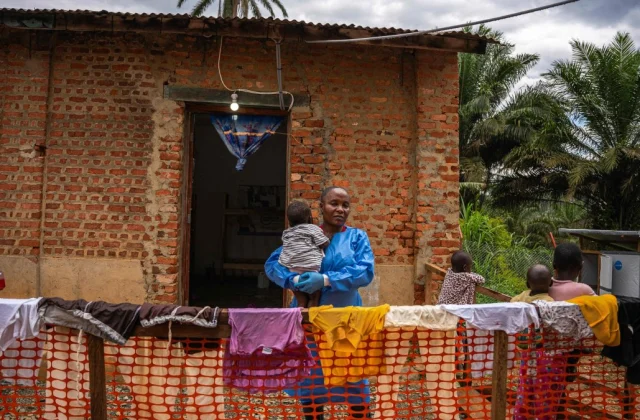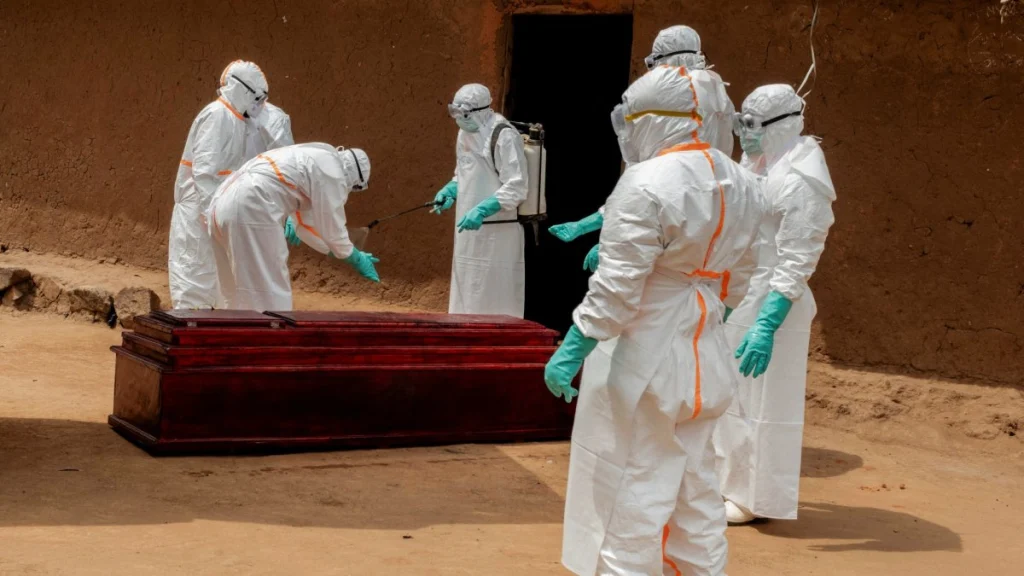
An Ebola outbreak in the Democratic Republic of Congo has become the country’s deadliest on record, with more than 2,300 people killed in just three months, officials said Monday.
The United Nations has described the crisis as Ebola’s “fastest growing on record,” saying the disease is claiming one life every 30 minutes in the DRC.
- Advertisement -
The current surge is being driven by the Bundibugyo strain, for which no specific vaccine or treatment exists. The virus spreads through contact with bodily fluids and causes hemorrhagic fever.
The DRC formally declared its 17th Ebola outbreak on May 15, although health officials believe transmission had already been underway for several weeks.
The outbreak has reached northern and eastern areas where government authority is limited, medical infrastructure is scarce and armed groups have operated for decades.
The previous deadliest outbreak in the DRC, which lasted from 2018 to 2020, killed 2,299 people among 3,381 confirmed cases, according to World Health Organization (WHO) figures based on Congolese data.
In the latest figures released Monday, Congolese authorities reported 2,325 deaths from 4,945 confirmed cases in the current outbreak.
The largest Ebola outbreak ever recorded struck West Africa between 2013 and 2016, killing more than 11,300 people, primarily in Liberia, Sierra Leone and Guinea.
The WHO said last week that it hoped to bring the spread of the disease under control in the DRC within three months.
Fighting mistrust
The outbreak was first detected in Ituri, a conflict-affected province in the northeast, and has since expanded to five additional provinces across the central African nation, whose population exceeds 100 million.
In Bunia, Ituri’s capital and the area reporting most of the cases, public health precautions remain difficult to see.
Municipal authorities instructed shopkeepers to place hand-washing stations outside their businesses. Yet shoppers still crowd the markets, with many paying little attention to safety measures, an AFP correspondent reported.
“Community engagement in the response is still far too weak,” said Mohamed Janabi, the WHO regional director for Africa.
He said more than 70% of patients die in their communities rather than in health facilities.
“People prefer to be treated at home, thinking it is a case of poisoning or some other illness,” said Jean-Paul Malo Lotsima, a civil society official in Ituri’s Djugu area.
“It’s often at the last minute, when the family realises that the situation is getting worse, that patients are taken to hospital. And sometimes, they die on the way,” he said.
Flavier Ngurima, a resident of Nizi, one of the outbreak’s hotspots in Ituri, said his brother died before he could reach a treatment center.
“We had called on a nurse from the family to treat him at home because the patient and the family members were afraid to go to the ETC (treatment centre),” he said.
“They said that over there, a lot of people die.”
Challenges
Armed groups operating in some affected areas have further restricted access to communities, aid organizations said.
North Kivu and South Kivu remain divided by front lines separating the Congolese army from the anti-government M23 armed group, which is backed by Rwanda and has captured large areas of territory.
Although international organizations have mounted a response, the effort has drawn criticism over delays and a lack of coordination.
In recent weeks, local workers, including nurses and teams responsible for safe burials, have staged demonstrations or gone on strike at several hospitals in Ituri, demanding payment of bonuses.
The International Council of Nurses on Friday called on DRC authorities to ensure that health care workers responding to the outbreak receive adequate pay and protection.
Several vaccines are currently being tested against the Ebola strain responsible for the outbreak.