
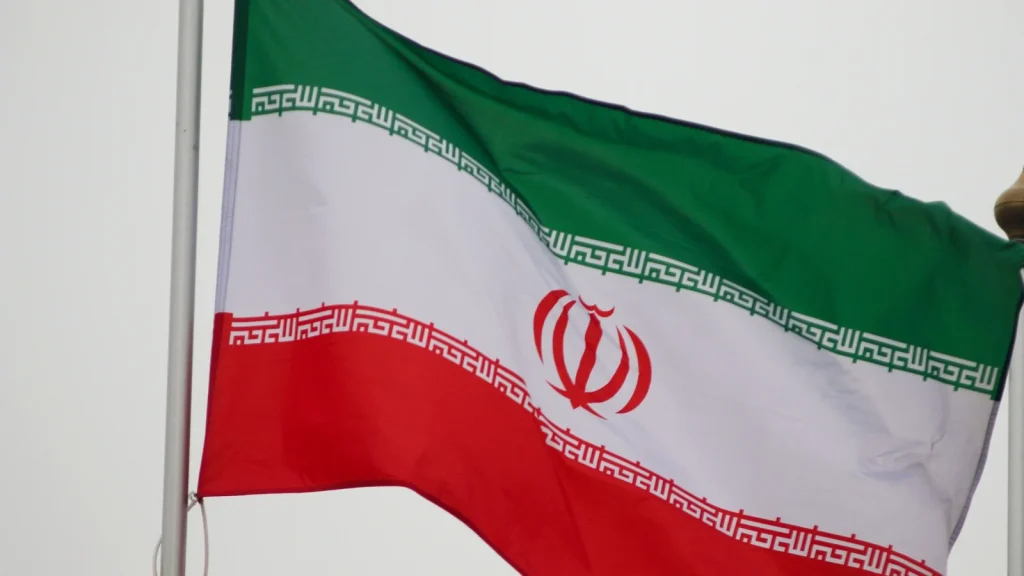
More than 30 countries, including Ireland, Britain and Canada, have denounced Iran’s execution of protesters, accusing the Islamic republic of using the death penalty to suppress dissent.
In a joint statement backed by the European Union’s top diplomat, the nations “condemn in the strongest terms the ongoing executions of protesters and use of the death penalty” in Iran.
- Advertisement -
“The use of capital punishment to silence dissent, intimidate communities and punish individuals exercising their human rights can never be justified,” the statement said.
“The people of Iran must be free to exercise their rights to freedom of expression and peaceful assembly without fear,” it added.
Iran’s Foreign Minister Abbas Araghchi rejected the criticism
Australia, New Zealand, France, Italy, Germany and a host of other European countries called on Iran “to immediately end the use of the death penalty and release all those arbitrarily detained”.
Iranian Foreign Minister Abbas Araghchi dismissed the criticism, saying: “Countries like France should stop lecturing the world about ‘human rights’ and international law.
“The hypocrisy is blatant and embarrassing.”
In a post on X, Mr Araghchi added: “Your backing of Israel’s genocide in Gaza – and aggression against Iran – has destroyed whatever moral high ground you imagined you had.”
UN rights chief Volker Türk said the death penalty was being used by Tehran to ‘instil fear’
The statement reflects mounting alarm from the United Nations and human rights organisations over a sharp rise in executions in recent months, following nationwide anti-government protests in Iran earlier in the year and the outbreak of the Middle East war in February.
Earlier in August, UN rights chief Volker Türk said Tehran was using the death penalty to “instil fear”.
The United Nations said at least 56 people had been executed since 19 March on national security-related charges, including 27 people whose cases were connected to the protests.
More than 100 others face the risk of execution on similar charges, Mr Türk said.
The UN and rights groups have also raised concerns about unfair trials and confessions obtained under force.
In late December last year, a protest movement initially driven by the rising cost of living turned into broad anti-government demonstrations.
Iranian authorities reported more than 3,000 deaths, but blamed the violence on “terrorist acts” allegedly organised by the United States and Israel.
Rights groups based outside Iran reported a substantially higher death toll and said security forces had opened fire on demonstrators.
“Seven months after the mass atrocities committed against the Iranian people, who rose up to demand justice and dignity, the regime continues to shed blood by carrying out a growing number of executions,” French Foreign Minister Jean-Noël Barrot said in an X post accompanying the statement.
The United States and Israel launched a joint attack on Iran on 28 February, setting off the Middle East war.
Since then, arrests and executions have increased across the country, with cases linked both to the conflict and to the protests.
Iran executed more than 2,150 people last year, according to Amnesty International, once again making it by a wide margin the world’s most prolific executioner after China.