Sunday July 26, 2026
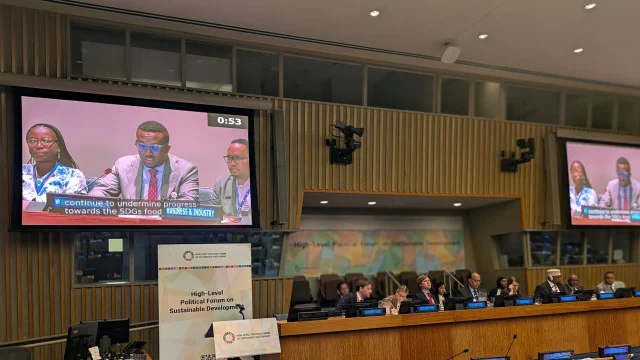
Mogadishu (AX) – Somalia’s efforts to meet the Sustainable Development Goals (SDGs) took centre stage at the 2026 United Nations High-Level Political Forum (HLPF), held from July 7 to 15, as the federal government presented the country’s Second Voluntary National Review (VNR).
Somalia’s trade union movement also contributed to the review through the UN-recognized Major Groups and Other Stakeholders (MGoS).
The annual UN forum serves as the leading global platform for assessing implementation of the 2030 Agenda, bringing together governments, UN agencies and other stakeholders to measure progress and determine what action is needed to advance the SDGs.
The Federation of Somali Trade Unions (FESTU) was among those invited to participate. It joined the global trade union delegation coordinated by the International Trade Union Confederation (ITUC), with support from the European Union.
FESTU said its presence gave Somalia’s organized labour movement a direct voice in international sustainable development discussions while underscoring the importance of trade unions as partners in national development.
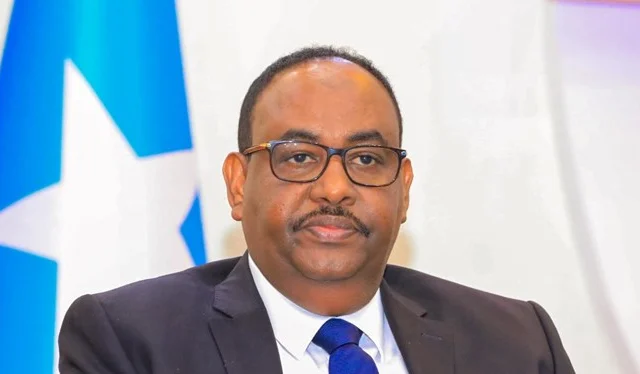
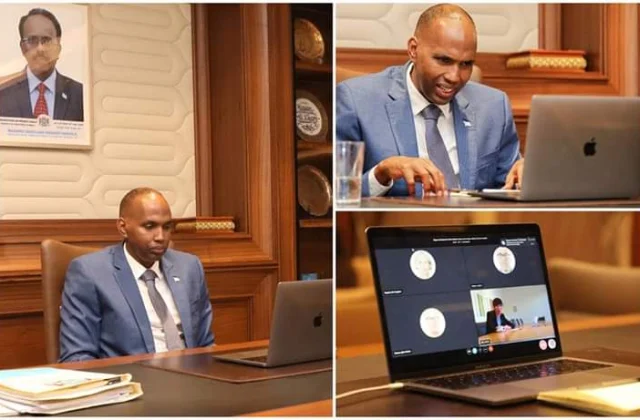
Planning, Investment and Economic Development Minister Mahmoud Abdirahman Sheikh Farah Beenebeene presented Somalia’s Voluntary National Review, detailing the country’s progress in carrying out the 2030 Agenda.
He set out the gains made so far, the challenges that persist and the need for stronger partnerships to speed up delivery of the SDGs.
Dr. Abdisalam Abdirahman Mohamed, director general of the Somalia National Bureau of Statistics (SNBS), joined the minister and presented the statistical evidence underpinning the review. He also explained the consultation process that shaped the national report.
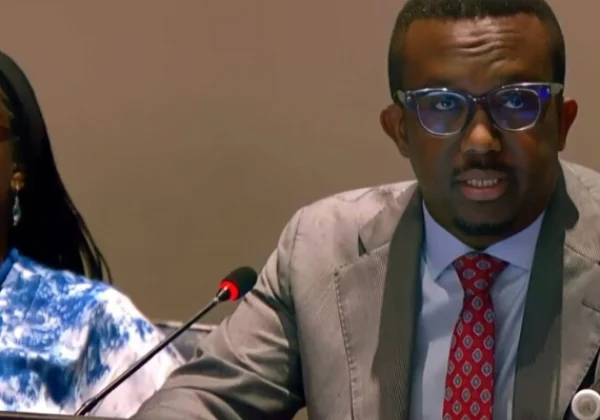
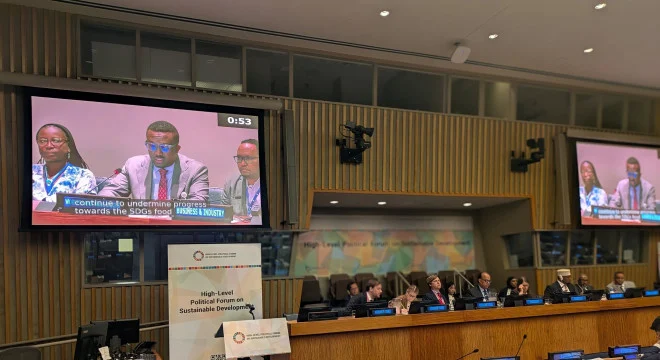
During Somalia’s national review, FESTU General Secretary Omar Faruk Osman addressed the forum on behalf of the Workers and Trade Unions Major Group at the invitation of the president of the UN Economic and Social Council (ECOSOC).
“Sustainable development cannot be achieved without full respect for fundamental human rights and internationally recognized labour rights. I call for stronger protection of journalists and decisive action to end impunity for crimes committed against them,” Osman said.
He further called for increased action to promote decent work, widen universal social protection and support peacebuilding through inclusive social dialogue.
Osman said those goals are fundamental to sustainable development and to ensuring economic growth reaches every segment of society.
FESTU’s appearance at the forum came after months of participation in Somalia’s national process for monitoring, implementing and reviewing the SDGs.
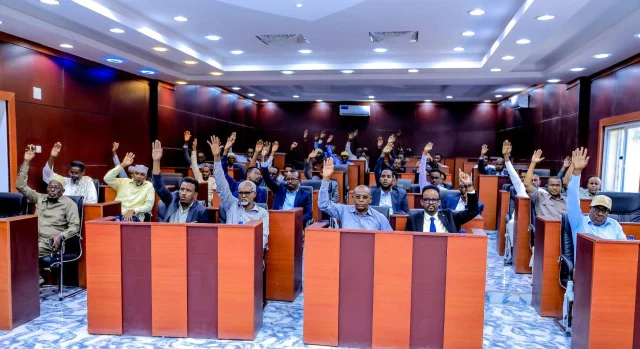
Working with its 12 affiliated trade unions, the federation joined consultations used to prepare the review. The Somalia National Bureau of Statistics (SNBS), operating under the Ministry of Planning, Investment and Economic Development, led the process.
FESTU said it put forward recommendations representing workers’ priorities, including decent work, human and labour rights, social protection, social dialogue, a just transition and other issues tied to national development.
“Many of our inputs were incorporated into the final review report, which demonstrated the value of an inclusive process grounded in social dialogue,” FESTU added.
Ahead of Somalia’s presentation, FESTU and the International Trade Union Confederation ITUC launched Somalia’s Country Profile on the Realisation of the Sustainable Development Goals.
The document sets out the priorities of Somali workers and urges a new social contract that puts workers at the heart of national development. It names decent work, labour rights, social dialogue and social protection as core pillars for delivering the 2030 Agenda.
It also calls for effective implementation of Somalia’s Decent Work Country Programme and closer coordination with the National Transformation Plan (NTP). The report records advances made through social dialogue and details the priorities and demands of Somalia’s trade union movement, which it describes as the country’s largest membership-based social movement.
Alongside the main forum sessions, the FESTU delegation took part in thematic discussions and bilateral meetings with senior UN officials, government representatives and civil society organizations.
Those talks examined ways to strengthen the role of workers and trade unions in the global sustainable development agenda, expand decent work, safeguard fundamental workplace rights and reinforce social dialogue. They also covered journalist safety, democratic freedoms and civic space.
“Somalia’s trade union movement had made significant contributions not only to the country’s Second Voluntary National Review but also to the preparation of the new UN Sustainable Development Cooperation Framework for Somalia. We remain committed to working with the UN, the federal government, federal member states and other partners to promote social justice, decent work, human and labour rights and progressive labour legislation,” it noted.
FESTU said Somalia had also made visible progress between its first and second Voluntary National Reviews, pointing to wider participation and deeper engagement by workers and other stakeholders throughout the national review process.
“Achieving the Sustainable Development Goals requires the full and meaningful participation of workers and their representative organizations,” the trade union underscored.
The federation vowed to maintain cooperation with partners at the national, regional and international levels, keeping Somali workers’ voices at the centre of sustainable development and their priorities firmly embedded in the country’s national agenda.