US President Donald Trump said he would speak with Russian President Vladimir Putin “very soon” about the reported plague death of a laboratory technician, as Washington pressed Moscow to provide a clearer account of the incident.
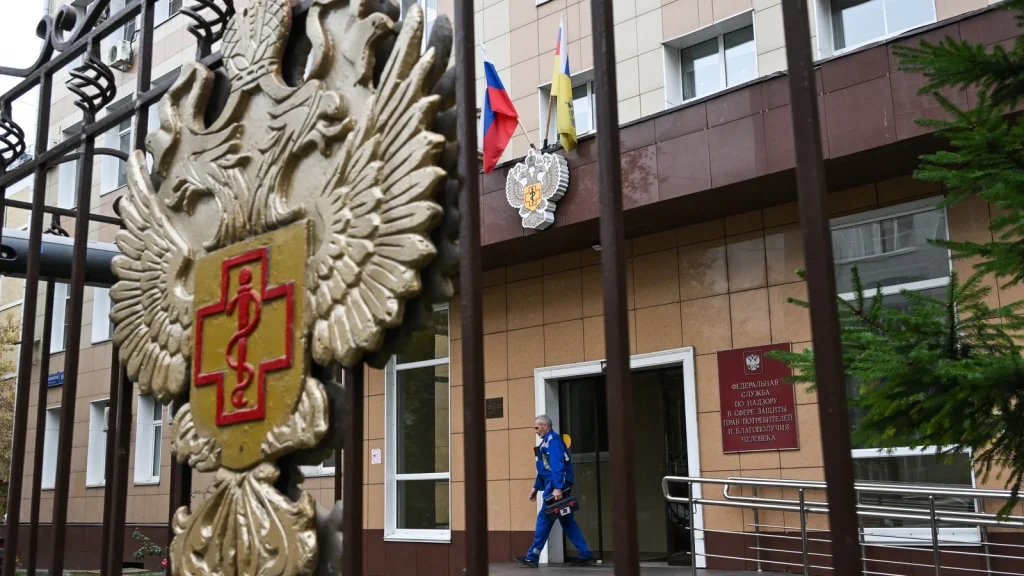
Russian officials have rejected claims that anti-plague measures were being imposed and sought to play down reports of an incident at an anti-plague institute in Siberia’s Irkutsk region last week.
- Advertisement -
But concern in the United States has intensified, with Secretary of State Marco Rubio urging Russia to disclose more information.
“We encourage Russia to be transparent and share more information with the world so that all of us could react accordingly and appropriately,” Mr Rubio said during a visit to Iceland.
The head of the World Health Organization also called on Moscow to provide a full account.
“Timely, complete and transparent information sharing under the International Health Regulations is essential to clarify conflicting reports and enable an accurate assessment of potential public health risks,” WHO chief Tedros Adhanom Ghebreyesus wrote on X.
Russian authorities played down reports of an incident at an anti-plague institute in Siberia’s Irkutsk region last week
Mr Trump later confirmed that he planned to discuss the matter with Mr Putin.
“I have a call scheduled, yes,” President Trump told reporters at the White House when asked whether he had already spoken to Mr Putin about the issue. He said the conversation would take place “very soon.”
The Wall Street Journal reported that the US State Department had sent Russia a confidential diplomatic message, known as a demarche, warning that withholding details would breach its international health obligations.
Cause of death ‘undetermined’
Russian news outlet People of Baikal reported on Friday that the deceased woman, identified as 28-year-old Darya Shipilova, may have contracted pneumonic plague from a broken test tube.
Other reports suggested her death could have been connected to an accident inside the laboratory.
People of Baikal also reported that as many as 200 people who may have come into contact with her had been placed under quarantine.
Russian authorities, however, said the cause of death had not been established. Health watchdog Rospotrebnadzor also rejected claims in an online document that special measures had been introduced.
“We wish to clarify that the document and information in question do not originate from official sources and are untrue,” the watchdog said on Telegram.
Officials said post-mortem testing had found no evidence of the disease.
Irkutsk Regional Governor Igor Kobzev said a Rospotrebnadzor inspection had concluded that the woman died from pneumonia, while the cause remained “undetermined”.
The World Health Organization said there was a “moderate to low” risk for Irkutsk based on the available information
“No microorganisms linked to the young woman’s professional work were found in her biological samples,” he said, adding that no other employees at the institute had sought medical care since her death.
The WHO said an update it received yesterday from Russia stated that “no case of this dangerous disease has been recorded in the city of Irkutsk.”
According to the update, Russia had opened an epidemiological investigation into a “case of community-acquired pneumonia” involving an employee of the Irkutsk institute. Authorities had identified contacts and arranged medical monitoring and laboratory testing.
“Test results showed no presence of dangerous infectious disease pathogens in any of the contacts,” the update said, according to the WHO.
‘Moderate to low’ risk
The United Nations health agency said the available information pointed to a “moderate to low” risk for Irkutsk. WHO spokesman Christian Lindmeier told reporters in Geneva that the organisation was continuing to monitor developments closely.
Plague is a bacterial disease that can take several forms. Pneumonic plague is the most contagious and can spread through respiratory transmission, while bubonic plague is carried by infected fleas.
Pneumonic plague attacks the lungs and can be fatal without early treatment, according to the WHO.
Mr Trump had said the United States was prepared to help Russia if assistance was needed.
In an apparent reply to that offer, Russia’s health watchdog said Moscow was ready to help the United States tackle its own infectious disease outbreaks.
It pointed to a “significantly worsened” measles situation in three US states, as well as a “fatal case of plague” recorded in New Mexico in June.
Measles cases have risen under the Trump administration, during which vaccine sceptic Robert F Kennedy Jr serves as health secretary.
An international conference on plague and other infectious diseases is also scheduled to take place in Irkutsk on 21 and 22 October. Organisers said the event was “unrelated to the recent death of an employee of the anti-plague institute.”