In April 2021, Somalia stood perilously close to a constitutional rupture. Hassan Sheikh Mohamud was then among the loudest opposition voices pressing President Mohamed Abdullahi Mohamed, widely known as Farmaajo, to respect the constitution. The Lower House had approved a resolution extending Farmaajo’s mandate by two years, arguing that deteriorating security made elections impossible. Hassan Sheikh and his allies saw something else: a power grab cloaked in procedure. Under intense international pressure, and facing the genuine prospect of armed confrontation in Mogadishu, parliament retreated. For the moment, democracy had prevailed.
Five years on, one of the men who helped defend that principle has become
its most consequential threat.
In March 2026, Somalia’s parliament approved constitutional
amendments extending parliamentary and presidential mandates from four years to
five, and President Hassan Sheikh signed them into law, postponing elections
until 2027. The move was especially striking because, as recently as September
2025, Hassan Sheikh had repeatedly and publicly denied planning any extension.
Speaking to the BBC Somali Service, he said unequivocally that no politician
could veto the electoral timetable and that only the independent electoral
commission had authority to seek a delay. Yet there
was no formal address explaining the reversal and no presidential press
conference setting out what the extension would mean for Somalis.
The government’s rationale emerged quietly and only after
the decision. Its argument was that the new constitution had displaced the
previous four-year timetable, parliament’s approval provided sufficient
legitimacy, and an extra year was needed to deliver credible one-person, one-vote
elections. The opposition coalition, the Somali Future Council, rejected that
case and described the move as a constitutional coup. When Hassan Sheikh’s
four-year constitutional mandate formally ended on 15 May, no transition
framework existed and no election was in view. The extension had become a
reality through institutional silence and legal manoeuvring.
Procedural Cover
Farmaajo relied on a blunt parliamentary resolution whose
legality was disputed. Hassan Sheikh has taken a more methodical route. He
revived the Independent Constitutional Review and Implementation Commission and
presented his programme as the responsible completion of a constitutional
review that had stalled for fourteen years. The destination, however, was
familiar: 222 lawmakers from the Lower House and Senate, out of 329 in total,
voted by acclamation to lengthen their own mandates as well as the president’s.
Whether an extension is secured through a blunt instrument or procedural
cover, the consequence for Somali democracy remains the same. An incumbent
deploys state institutions to withhold from citizens the right to choose their
leaders.
The contradiction is sharper when set against the slogan
that carried Hassan Sheikh back to the presidency in 2022: Somalia at Peace
with Itself and the World. It was an ambitious vision, promising diplomatic
normalisation with Ethiopia, reconciliation with regional neighbours and an end
to the internal feuds that had shaped Somali politics for a generation. There
was genuine movement on the external front. Peace at home, however, requires
something the president appears reluctant to guarantee: a level political
playing field.
Deadly Clashes
The danger moved beyond political argument on the nights of
June 3 and 4. Government troops and opposition-aligned militia fought across
three main Mogadishu districts- Kaaraan, Abdiaziz and Howlwadaag, producing the
capital’s worst street violence in years. UNHCR reported that 13 people were
killed and 12,500 displaced as families fled homes in residential areas swept
by gunfire. The Federal Government strongly contested that account, reporting
one death and saying nothing about displacement. The gulf between the two
versions is more than a routine dispute over figures. It suggests a government
unprepared to confront publicly the human toll of the political crisis.Though tensions are in
resolving process Somali governance system fragility remains at higher risk
unless authorities re-build and establish a more grounded and sustainable
governance system
The warning signs appeared much earlier. After the
opposition boycotted the Banadir Regional Administration elections over alleged
procedural irregularities, Hassan Sheikh did not stop to engage with its
complaints. Instead, he swiftly filled the vacant field with candidates from
his party- JSP, converting a disputed contest into an uncontested
consolidation. Southwest State has since seen the same pattern repeated.
FMS Influence
During a closed-door, late-night meeting at the
presidential palace on 15 April, the president personally selected Federal
Parliament Speaker Adan Mohamed NurMadobe as the ruling party’s sole candidate
for the Southwest State presidency. There was no internal contest and not even
the appearance of a democratic party process. Hussein Sheikh Mohamud, once
viewed as a formidable contender, quietly stepped aside after appearing
publicly with the president and Madobe. Other influential figures in the party
were persuaded, by unspecified means, not to stand. A handshake cleared the
field where a ballot did not.
Madobe’s selection is hardly incidental. In his role as
speaker, he was instrumental in guiding the president’s disputed constitutional
amendments through parliament, despite critics’ claims that the measures failed
to secure the required majority. His prospective reward is leadership of a
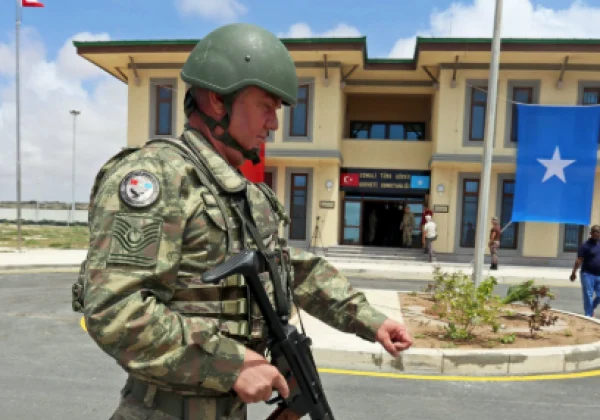
federal member state whose autonomy Mogadishu had recently overridden by force,
reportedly using Turkish air support, in an operation officials described as an
effort to restore democratic order. The federal government then installed its
preferred contender to lead the state it had just subdued, a sequence that
speaks for itself.
The episode also lays bare a central inconsistency in the
president’s programme of democratic reform. Hassan Sheikh is right, in
principle, to advocate one-person, one-vote elections, a change Somalia has
needed for years. Every administration operating under the clan-delegate system
has manipulated it. But the president appears to be constructing a new
electoral apparatus that his party can control before voting begins, placing
loyalists in regional administrations while portraying the process to
international partners as democratic advancement. Banadir, Southwest State and
the federal parliament now point less toward democratic pluralism than toward a
Somalia where institutional space is being steadily constricted.
International Pressure
Mogadishu’s recurring confrontations are not merely a
source of frustration. They are a warning built into the political system, and
the events of June 3 and 4 showed how quickly that warning can become deadly.
Somalia’s state-building effort stands on foundations more brittle than
official assurances acknowledge. The army has made meaningful progress toward
a unified command and professional force in recent years, although clan-based
loyalties continue to influence recruitment and cohesion in some units.
Al-Shabaab controls extensive rural areas and can still attack major cities.
Puntland State and Jubbaland have suspended recognition of federal institutions in
response to the March amendments. If the centre can retain its periphery only
through military action and late-night political bargains, Somalia’s federal
structure is under profound pressure.
Those advances will soon face a critical test without their
main external support system. On 1 July, Washington told the African Union that
it would block any extension of UN logistical assistance, provided through the
UN Support Office in Somalia, for the AU force fighting with Somali troops after
the mission’s current mandate ends in December. AU official have called the
decision irreversible. The loss of the mission’s primary supply of fuel,
rations, medical support and troop transport, while the government remains
absorbed by a succession crisis, will place greater responsibility for the
fight against Al-Shabaab on a national army whose progress has not been tested
on that scale. It will also increase reliance on bilateral partners including
Turkey, whose forces are already involved on other fronts in Somalia’s
political turmoil.
The confrontation of 2021 was a narrow escape. Armed groups
gathered in Mogadishu, leaving Somalia one miscalculation away from open civil
conflict. Disaster was avoided because international pressure remained firm and
Farmaajo eventually backed down. The present crisis is more dangerous in at
least one measurable way: lives have already been lost, thousands have fled
their homes and no political settlement is visible. At stake is more than a
constitutional deadline. The deeper casualty is the founding principle that
power in Somalia changes through elections and that electoral rules bind
everyone, including those responsible for writing them.
Talks, But Not With Everyone
After the deadly clashes in early June, international
partners assigned Turkey to mediate when their own initiatives failed to gain
traction. A Turkish delegation opened talks with government and opposition
representatives, but the effort broke down almost at once amid disagreement
over the membership of joint technical committees. Negotiations resumed in the
first week of July with an expanded mediation team comprising the UK, US, EU
and UNSOS alongside Turkey. Mediators met separately with government officials
and three different opposition blocs.
A clear pattern had taken shape by mid-July. The Federal
Government appeared to reach agreement with two groups, NabadiyoNolol, headed by
former president Farmaajo, and the Somali Unity Council, led by former prime
minister Omar AbdirashidSharmarke. They settled on broad plans for direct,
multiparty elections administered by the IndependentNational Elections and
Boundaries Commission. The Somali Future Council advanced a fundamentally
different proposal: a two-tier electoral commission jointly managed by the
federal government and member states. Its ranks include some of the country’s
most prominent opposition leaders, among them former president Sharif Sheikh
Ahmed, AbdirahmanAbdishakur, and former prime ministers Hassan Ali Khaire and
Mohamed Hussein Roble. They are joined by the presidents of Puntland State and
Jubaland, the two federal member states that no longer recognise Mogadishu.
The makeup of that alliance is significant. It is not a
marginal regional grouping bargaining its way toward the centre, but a
coalition of the president’s former peers and predecessors, strengthened by the
two states most directly affected by his accumulation of power. Hassan Sheikh
has reached common ground most quickly with factions centred on individual
former leaders rather than groups carrying institutional influence. Turkey’s
credibility as a mediator has done little to bridge the divide with the
Council. Puntland State and Jubaland have both publicly rejected Ankara as a neutral
intermediary, pointing to its expanding political and security relationship
with the federal government, the same partnership that reportedly provided air
support for the operation that installed Madobe in Southwest.
Dialogue is preferable to the silence that followed the
March amendments. But an accord with the factions least capable of restraining
the president’s authority does not show that the core dispute, control of the
machinery governing the next election, has been settled. Rather, it shows that
the president has identified a way to proclaim consensus without reaching an
agreement with the coalition most capable of challenging his grip on power.
Hassan Sheikh Mohamud made that case with force and
conviction in 2021. The international partners who supported him at the time
owe it to Somalia to insist that he abide by the same principle today.
By UistaagDadkaiyoDalka platform
Abdirahman Yusuf Ali – Director of
UistaagDadkaiyoDalka, social and peace activist and former adviser of Youth
development at Federal Ministry of Youth and sports and
Federal member states