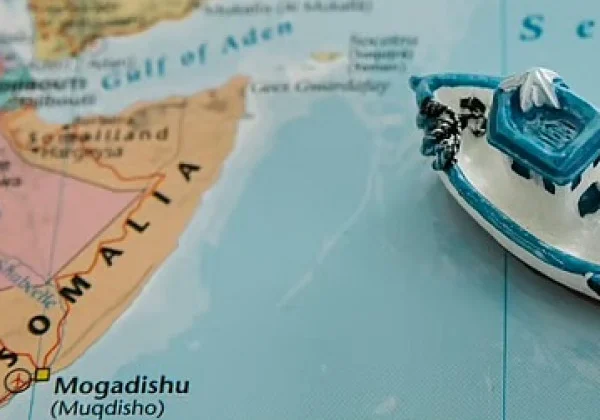

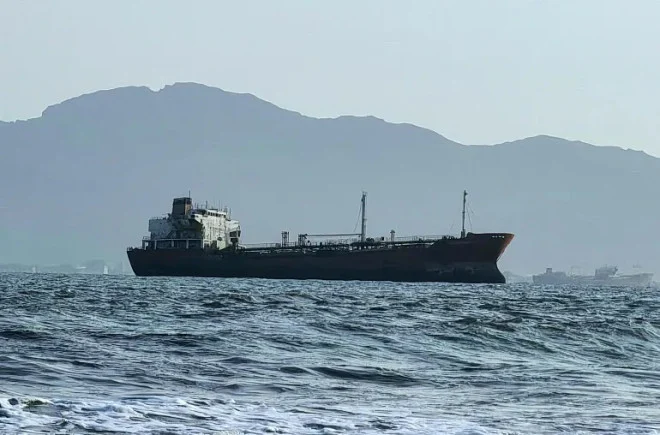
Six armed men seized control of the Seamull tanker and turned it toward Somalia after boarding the vessel off Yemen, according to the United Kingdom Maritime Trade Operations (UKMTO) centre.
Shipping traffic through the Gulf of Aden has remained steady despite Houthi drone attacks and a renewed piracy threat following more than a decade of relative calm [File: Reuters]
- Advertisement -
UKMTO said on Thursday that it was investigating an incident reported 136 nautical miles (252km) east of Yemen’s Al Mukalla. The tanker, also known as SIBU 1, issued a distress call after an unauthorised vessel approached it as it travelled west through the Gulf of Aden.
“UKMTO have received confirmation that the tanker has been boarded by six armed persons who are now in control of the vessel and redirecting to Somalia,” UKMTO said in a statement.
“Authorities are investigating. Vessels are advised to transit with caution and report any suspicious activity to UKMTO.”
The maritime security monitor released no additional information and did not say whether the tanker or its crew were safe.
The United States sanctioned the Seamull last December, identifying it as part of Iran’s “shadow fleet”, which the US Treasury accused of exporting Iranian oil through “deceptive shipping practices”.
The vessel is one of four operated by UAE-based Qatrat Alnada Almasi Ship Management that have repeatedly transported Iranian petroleum products, including naphtha and gasoil, and called at Houthi-controlled ports in Yemen.
The seizure took place along one of the world’s most important commercial shipping routes. The Gulf of Aden links to the Red Sea and the Suez Canal, the quickest maritime route between Asia and Europe. The canal carries roughly 12 to 15 percent of global trade by value each year, as well as about 30 percent of the world’s container traffic.
Maritime disruptions
Somali piracy surged during the 2000s, reaching a peak in 2011 before international naval patrols and tougher security procedures for commercial vessels brought the threat under control.
The latest incident comes amid a sharp increase in Somali piracy since April. The attacks had been largely dormant for more than a decade before this year’s resurgence.
Five cargo vessels are currently being held hostage, including an oil tanker captured in July about 26 nautical miles (48km) off Yemen’s Hadramout province.
Somali pirates were blamed for more than 1,000 attacks between 2005 and 2012, generating an estimated $400m in ransom payments. An international crackdown subsequently brought hijackings almost to an end in 2013.
Analysts have warned that naval forces are under pressure from conflicts in the Red Sea and the Strait of Hormuz. That strain has encouraged international vessels to alter their routes and travel closer to Somali waters. Continuing instability in the East African country has added to the region’s renewed piracy risk.
Amid the disruption, Yemen announced on Thursday that it would establish a National Maritime Security Committee to protect shipping lanes and safeguard navigation in the Red Sea, the Gulf of Aden and the Bab al-Mandeb Strait, Transport Minister Mohsen Haidara Al-Omari said.
The committee will work to protect Yemen’s “coasts, ports, ships, securing navigation and updating legislation”, the SABA news agency reported. The announcement follows Houthi missile and drone attacks on al-Makha port that killed Yemenis and damaged infrastructure.