
Spanakopita — Greek Spinach Pie
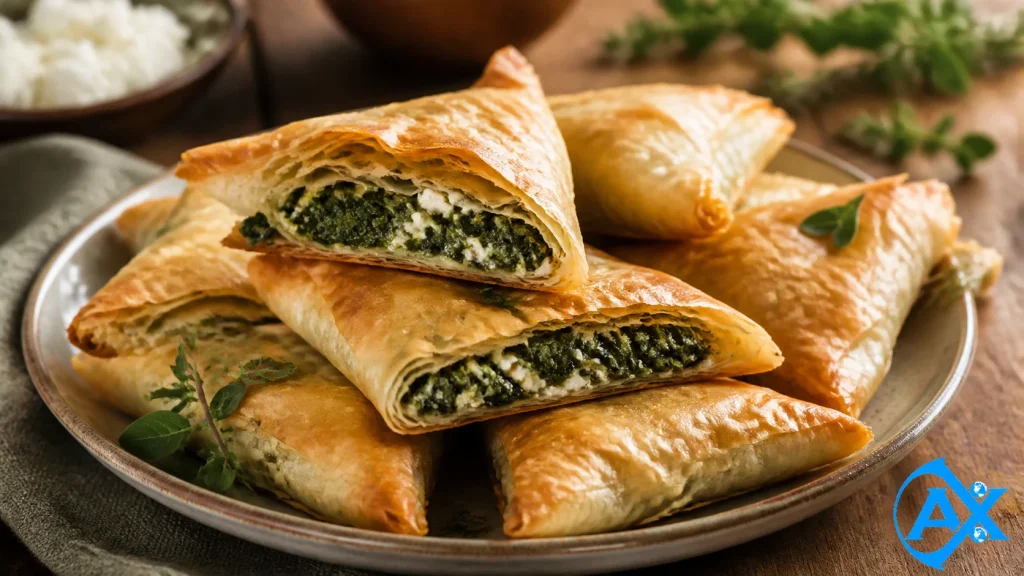
Greek spinach and feta pie in crisp olive-oil filo, with dill and spring onion through the filling.
Method
- Wilt the fresh spinach in a dry pan in batches, 1 to 2 minutes each, then tip into a colander. If using frozen, simply thaw it.
- When cool enough to handle, squeeze the spinach hard in your hands or in a clean cloth until no more water comes out. Do this more thoroughly than feels necessary; wet filling is the enemy of crisp filo.
- Chop the squeezed spinach roughly and put it in a bowl with the spring onions, dill, feta, eggs and 3 tablespoons of the olive oil.
- Season with pepper and nutmeg, then taste before adding salt — feta is already salty.
- Brush a 30cm baking tray with olive oil and lay in 6 sheets of filo one at a time, brushing each with oil and letting the edges overhang.
- Sprinkle the semolina over the base layer; it absorbs any moisture the filling releases and keeps the bottom crisp.
- Spread the filling evenly, then cover with the remaining 6 sheets, brushing each with oil. Tuck the overhanging edges in around the sides to seal the pie.
- Score the top into portions with a sharp knife, cutting through the upper sheets only, and brush the surface with a final layer of oil. Sprinkle with a few drops of water to help it crisp.
- Bake at 180°C for 45 to 50 minutes until deep golden and crisp. Rest for 15 minutes before cutting through the scored lines.
How to make Spanakopita — Greek Spinach Pie
Spanakopita is everyday Greek baking: a tray pie of greens and cheese in olive-oil filo, eaten warm from a bakery counter, packed for lunch, or served as part of a meze spread.
Squeeze, then squeeze again
- Advertisement -
A kilo of fresh spinach holds a remarkable amount of water. Whatever you think you have removed, there is more. Squeezing hard is the single step that separates crisp pastry from a soggy base.
Olive oil, not butter
Greek filo pies are brushed with olive oil rather than butter, which gives a different, slightly firmer crispness and a flavour that belongs with the feta and dill. Use a soft brush and a light hand; the sheets need coating, not soaking.
Dill is essential
A large bunch, not a garnish. Dill with spring onion is what makes the filling taste Greek rather than generic. Some households add a little mint or parsley alongside.
Serving and storage
Best eaten warm, an hour or two out of the oven. Reheat in a hot oven for ten minutes to bring the pastry back; never in a microwave. It also freezes well unbaked, assembled in the tray.
Traditional Greek cookery; spanakopita is made across Greece in regional variations, with and without pastry on top. Editorially researched from widely documented preparations, and not kitchen-tested by Axadle.
Contains gluten from filo pastry, dairy from feta, and egg.

Join the conversation