
Jollof Rice — West African Tomato Rice
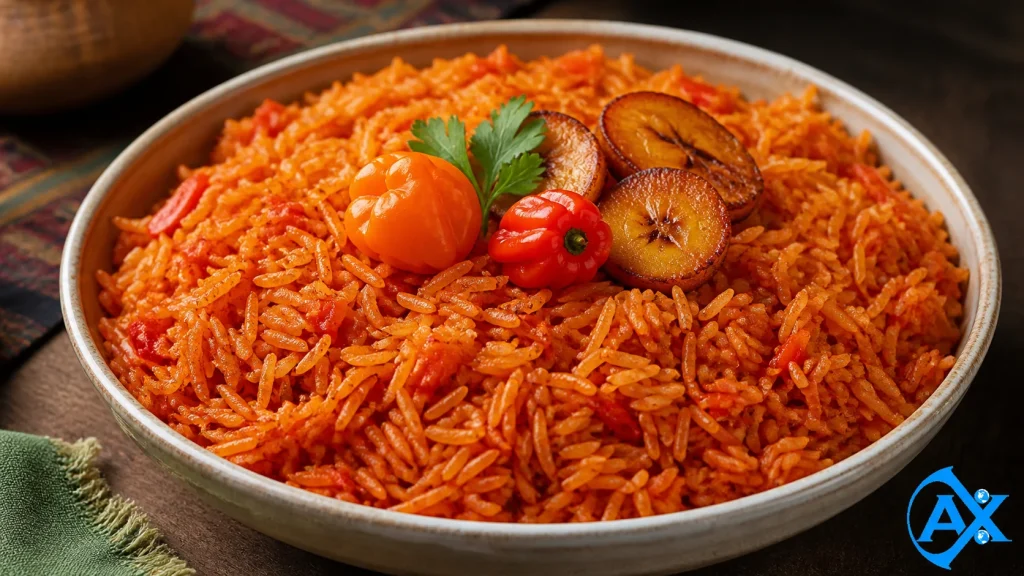
West African rice steamed in a reduced pepper and tomato base until every grain is red, fragrant and faintly smoky at the base.
Method
- Blend the tomatoes, bell peppers, scotch bonnet and one onion until completely smooth.
- Pour the blended mixture into a pot and boil it, uncovered, for 15 to 20 minutes until it reduces by about a third and loses its raw, sharp smell. Skipping this gives sour jollof.
- Meanwhile, rinse the parboiled rice until the water runs clear and drain it well.
- Heat the oil in a heavy pot and fry the sliced onion for 5 minutes, then add the tomato paste and fry for 4 to 5 minutes until it darkens to brick red.
- Add the reduced pepper base, curry powder, thyme, ginger and bay leaves. Fry for 10 minutes, stirring often, until the oil separates and floats at the edges — the sign the base is properly cooked.
- Add the stock and salt and bring to a boil. Taste it: the liquid should be slightly over-seasoned, as the rice will absorb all of it.
- Stir in the drained rice so it is fully submerged, then reduce the heat to the lowest setting.
- Cover the pot with foil and then the lid, to trap every bit of steam, and cook undisturbed for 30 minutes. Do not stir, which breaks the grains and makes it mushy.
- Check the rice; if still firm, sprinkle over a few tablespoons of hot water, re-cover and give it 10 minutes more. Let the base catch very slightly at the end for the smoky party-jollof flavour, then rest 10 minutes and fluff with a fork.
How to make Jollof Rice — West African Tomato Rice
Jollof rice is the centre of any West African celebration and the subject of a long, cheerful rivalry between Nigeria, Ghana and Senegal, whose versions differ in rice, spicing and method. What they share is rice cooked entirely in a reduced pepper and tomato base, never boiled separately and mixed.
Reduce the base
- Advertisement -
Blended fresh peppers and tomatoes carry a lot of water and a raw edge. Boiling the purée down before it meets the oil, then frying it until the oil separates, is what produces a deep, sweet base rather than a sharp one.
Parboiled rice, and no stirring
Parboiled long-grain rice holds its shape through a long steam, which is why it is preferred. Once the lid is on, leave it: stirring releases starch and turns jollof into porridge.
The smoky bottom
Party jollof gets its flavour from a slightly scorched layer at the base of the pot. Leave it on low heat a few minutes longer at the end, listening for a faint crackle, and stop well before it smells burnt.
Serving
Serve with fried plantain, grilled chicken or fish, and a simple salad or coleslaw. Jollof reheats well with a splash of water under a covered lid.
Traditional West African cookery, claimed with enthusiasm by Nigeria, Ghana, Senegal and their neighbours, each with its own method. Editorially researched from widely documented preparations, and not kitchen-tested by Axadle.
Naturally free from gluten, dairy, egg and nuts. Check stock cubes for wheat and celery.

Join the conversation