
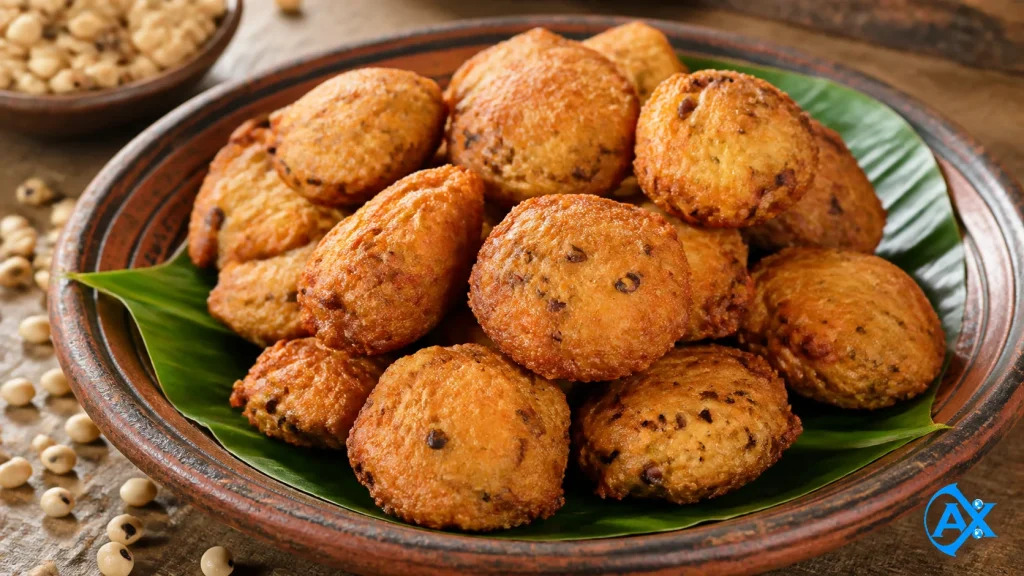
Akara — West African Bean Fritters
West African black-eyed pea fritters, whipped light and deep-fried until puffed — a street breakfast eaten hot from the pan.
Method
- Rub the soaked peas vigorously between your palms, a handful at a time, to loosen the skins. Cover with water, agitate, and pour off the floating skins. Repeat until the peas are clean and white — this is the slowest part and the one that decides the colour and lightness.
- Drain the skinned peas thoroughly.
- Blend the peas with the roughly chopped onion, the chilli and just 3 tablespoons of cold water. Add more only a teaspoon at a time; the paste must be thick and stiff, not pourable.
- Scrape the paste into a bowl and beat it hard with a wooden spoon or whisk for 4 to 5 minutes. It will lighten in colour and increase in volume as air works in.
- Test it: drop a small spoonful into a cup of cold water. If it floats, enough air has been beaten in. If it sinks, keep beating.
- Fold in the finely diced onion and the salt, mixing just enough to distribute them.
- Heat the oil to 170°C in a deep pan. A test spoonful should rise immediately and sizzle steadily.
- Drop in heaped tablespoons of batter, 4 or 5 at a time, and fry for 3 to 4 minutes, turning once, until deep golden and puffed. Do not flatten them.
- Drain on a rack and serve hot, with bread, pap, or a chilli sauce for dipping.
How to make Akara — West African Bean Fritters
Akara is street food across West Africa, fried fresh at roadside stalls in the early morning and eaten with pap or bread. The same fritter travelled with enslaved West Africans to Brazil, where it became acarajé, still sold on the streets of Salvador.
Skin the peas
- Advertisement -
The skins must come off. They darken the batter, weigh it down and leave a slightly bitter edge. Rubbing and rinsing takes fifteen or twenty minutes by hand, and a brief pulse in a food processor before soaking can speed it up.
Beat air into the paste
Akara rises because of air beaten in by hand, not because of any raising agent. Five minutes of hard beating transforms the paste, and the float test in cold water is the traditional check; it is reliable and takes seconds.
Keep the batter stiff
Too much water and the fritters spread, absorb oil and turn flat and greasy. Add water sparingly during blending, no more than a few tablespoons in total.
Serving
Eat them hot, within minutes of frying, when the outside is crisp and the inside still airy. In Nigeria they are often served with pap, in Ghana with a spiced pepper sauce, and they make an excellent filling for bread rolls.
Traditional West African cookery, sold at roadside stalls across Nigeria and neighbouring countries and carried to Brazil as acarajé. Editorially researched from widely documented preparations, and not kitchen-tested by Axadle.
Naturally free from gluten, dairy, egg and nuts.

Join the conversation