
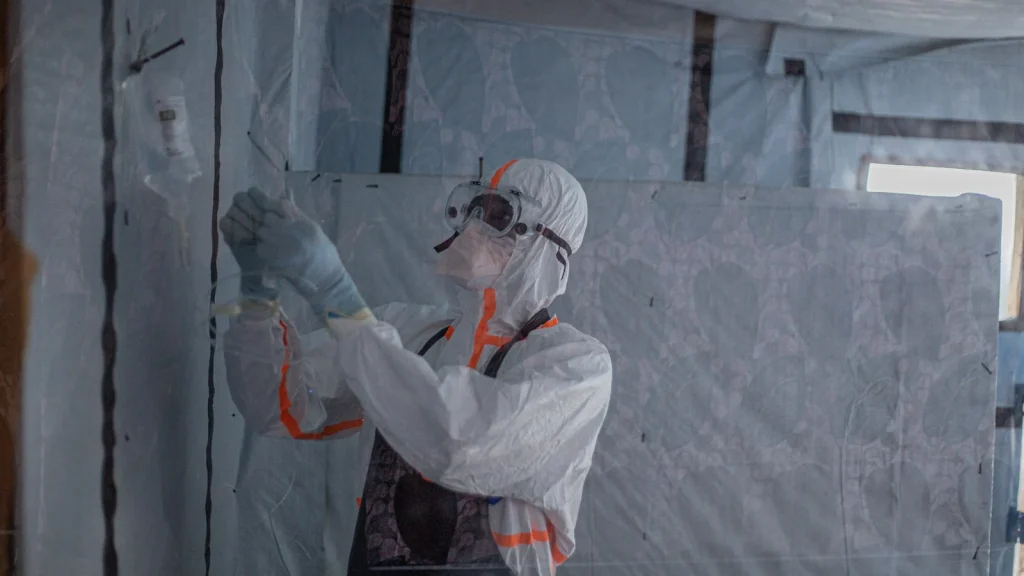
More than 2,500 people have died in the Democratic Republic of Congo’s Ebola outbreak, which Médecins Sans Frontières says is spreading “out of control”.
Congo’s 17th Ebola epidemic became the largest in the country’s history by case numbers in late July, overtaking the previous worst outbreak, which lasted from 2018 to 2020.
- Advertisement -
The outbreak is being driven by the Bundibugyo species of Ebola, for which there are no approved vaccines or treatments.
Jacob Burns, a project coordinator with Médecins Sans Frontières, also known as Doctors Without Borders, described the situation as “out of control”.
“In the first 100 days of this outbreak, we saw so many cases… compared to the outbreak in West Africa, which was the biggest up until now, but that outbreak only had a quarter of the number of cases that we’re seeing in the Democratic Republic of Congo,” he said.
Mr Burns said the disease was “moving very rapidly” after reaching several parts of the DRC.
“It has spread to six provinces, including provinces that weren’t touched in the last big epidemic here in 2018 to 2020 and what we’re seeing is that the epidemic is unfortunately out of control,” he said.
Recent conflict has made it harder for medical teams to reach areas where transmission is continuing, Mr Burns said. Ebola is also emerging alongside other serious health threats in the region, including malaria.
He said far greater investment was needed in surveillance systems capable of tracking and containing the outbreak.
“There is a lot of fear for people; this was an area that was affected by the last epidemic and a lot of people died here, so people do have the memory of the death that the last epidemic caused”.
Yesterday, Pope Leo XIV urged the international community to help limit the outbreak’s impact.
“In my prayers, I often remember the Democratic Republic of the Congo, particularly in light of the spread of the Ebola epidemic, which is sadly claiming many lives,” the pontiff said during Mass in Saint Peter’s Square.
“I urge the international community to respond in a way that also involves local communities in prevention efforts to save as many lives as possible,” he said.
More than 16,000 doses of the Ervebo vaccine arrived in the Democratic Republic of Congo late on Friday.
Merck developed the vaccine, which is approved for use against the Zaire strain of Ebola but not the Bundibugyo strain.
Experts at the World Health Organization have yet to establish whether Ervebo protects people from Bundibugyo Ebola. However, early evidence, particularly from animal trials, indicates that it may provide some protection.
Additional reporting AFP/Reuters