The Sudanese paramilitary unit, the Rapid Support Forces (RSF), has been accused of committing crimes against humanity and ethnic cleansing in their quest to capture el-Fasher between 2024 and 2025, according to a report by Amnesty International released on Wednesday.
Amnesty has singled out three senior RSF commanders for directing war crimes during the city’s siege and capture.
Agnes Callamard, Secretary-General of Amnesty International, emphasized during the report’s unveiling in Nairobi that the RSF engaged in heinous acts including murder, forcing people from homes, illegal imprisonment, torture, sexual violence, enslavement, mass extermination, and persecution in el-Fasher.
“It is a stain on the conscience of humanity,” Callamard remarked, reiterating her call for an immediate ceasefire and advocating for the deployment of a United Nations protection force to defend civilians.
Previously, the United Nations and aid organizations reported over 6,000 deaths in just three days during the RSF’s aggressive attack on el-Fasher in October 2025, with U.N. experts at the time claiming the offensive exhibited “hallmarks of genocide.”
The comprehensive report from Amnesty reveals that the RSF “systematically attacked settlements surrounding el-Fasher inhabited by the Zaghawa people, an ethnic group from western Darfur.”
Amnesty analyzed nine videos showing RSF commanders executing civilians, torturing detainees, and ordering additional torture.
The investigation further exposed “widespread and deliberate violence against children, including killing, abductions, forced recruitment, and rape.”
Even after residents fled, RSF fighters burned homes, indicating a possible intention to make these areas uninhabitable, consistent with “ethnic cleansing.”
During the RSF’s final assault on el-Fasher, Amnesty revealed that “hundreds were executed, and many others subjected to torture or detention” as they tried to escape.
Amnesty conducted interviews with 247 victims or eyewitnesses from North Darfur from early 2024 to October 2025. The report highlighted that these violations occurred “repeatedly and on a large scale,” suggesting “those in positions of authority knew, or should have known, about the events and failed to stop them or hold anyone accountable.” Amnesty stated it shared its findings with RSF leader Gen. Mohamed Hamdan Dagalo but received no response.
“This situation requires bolstering accountability by ensuring robust support for all existing mechanisms holding Sudan accountable, including the International Criminal Court and U.N. and African Union-backed fact-finding missions. Commanders named in the report should be investigated, and prosecuted if credible evidence exists,” Callamard urged.
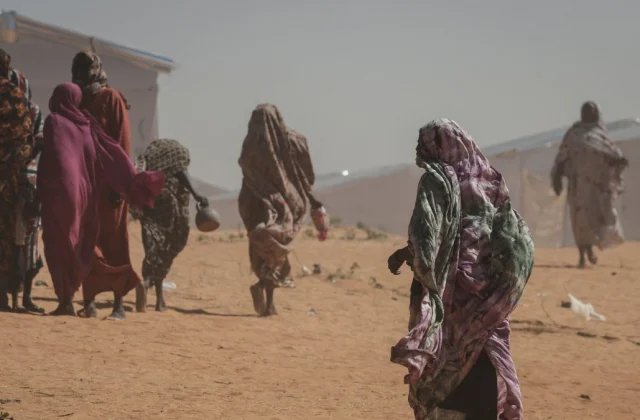
Sudan has been embroiled in civil conflict since April 2023, following rising tensions between the army and the RSF. The conflict has resulted in at least 59,000 deaths, displaced approximately 13 million people, and left over 30 million in desperate need of aid, plunging the country into famine as noted by the U.N.
Both combatant sides face accusations of atrocities, with a U.N. independent fact-finding mission in February affirming that the 2025 el-Fasher assault exhibited “hallmarks of genocide.” Amnesty asserts its investigation is ongoing and suggests that the findings in its report “may be pertinent to the crime of genocide.”
The release of this report coincides with a U.N. Human Rights Council session discussing the city of el-Obeid in North Kordofan, where fears of an imminent RSF assault persist following weeks of severe attacks.
Amnesty International is calling for immediate international measures to shield Sudanese civilians from further violence.