The Democratic Republic of the Congo is witnessing an alarming escalation in its Ebola outbreak, with confirmed cases now exceeding 1,800. The virus has expanded into a fourth northeastern province, posing a formidable challenge for health authorities despite concerted international efforts to contain it.
A report from the Congolese Health Ministry released Saturday confirms that the outbreak, which began on May 15, has now reached 1,830 cases. The virus has claimed 648 lives, and 780 individuals are currently receiving treatment, while 284 patients have recovered.
While most cases are concentrated in the eastern provinces of Ituri, North Kivu, and South Kivu, a significant development occurred last Friday. Authorities reported seven Ebola deaths in Haut-Uele province’s Wamba health zone, signaling the outbreak’s spread to another region.
National coordination efforts have been strengthened across affected areas, focusing on rapid infection detection, enhanced epidemiological surveillance, and engaging communities to curb the spread.
Amid this expansion, regional and international agencies have ramped up support. Global partners have committed $910 million for efforts in Congo and neighboring Uganda, where 20 cases have emerged.
On Friday, the Africa Centres for Disease Control and Prevention announced the deployment of multidisciplinary emergency teams to key health zones in Congo, which account for 83% of confirmed cases. The strategy aims to bring the outbreak response closer to those impacted.
Jean Kaseya, Director-General of Africa CDC, emphasized the urgency of timely action: “The rapid escalation in Congo is a stark reminder that every moment is crucial, and delays can be deadly,” he wrote on X.
Kaseya highlighted the importance of building Africa’s capacity to detect, respond, and contain health threats through community-based health workers, robust surveillance systems, and accessible funding.
Two days post-outbreak declaration, the World Health Organization classified the Bundibugyo strain incident as a Public Health Emergency of International Concern, citing its potential to affect the region.
Challenges in Response Efforts
Described by African health officials as Congo’s fastest-growing Ebola epidemic, the crisis unfolds amid armed conflict, poverty, and vulnerable healthcare infrastructures. Misinformation and distrust exacerbate the situation, leading some to shun treatment and incite violence against healthcare providers.
The human cost for health workers is stark. Of 1,759 cases recorded before the latest report, 112 involved health personnel, with 35 fatalities among them.
Preparing Frontline Responders
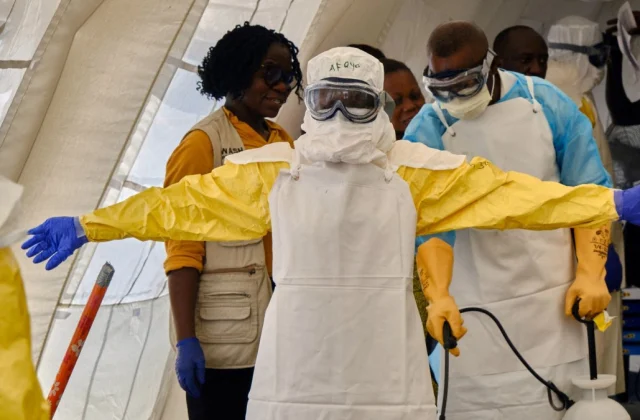
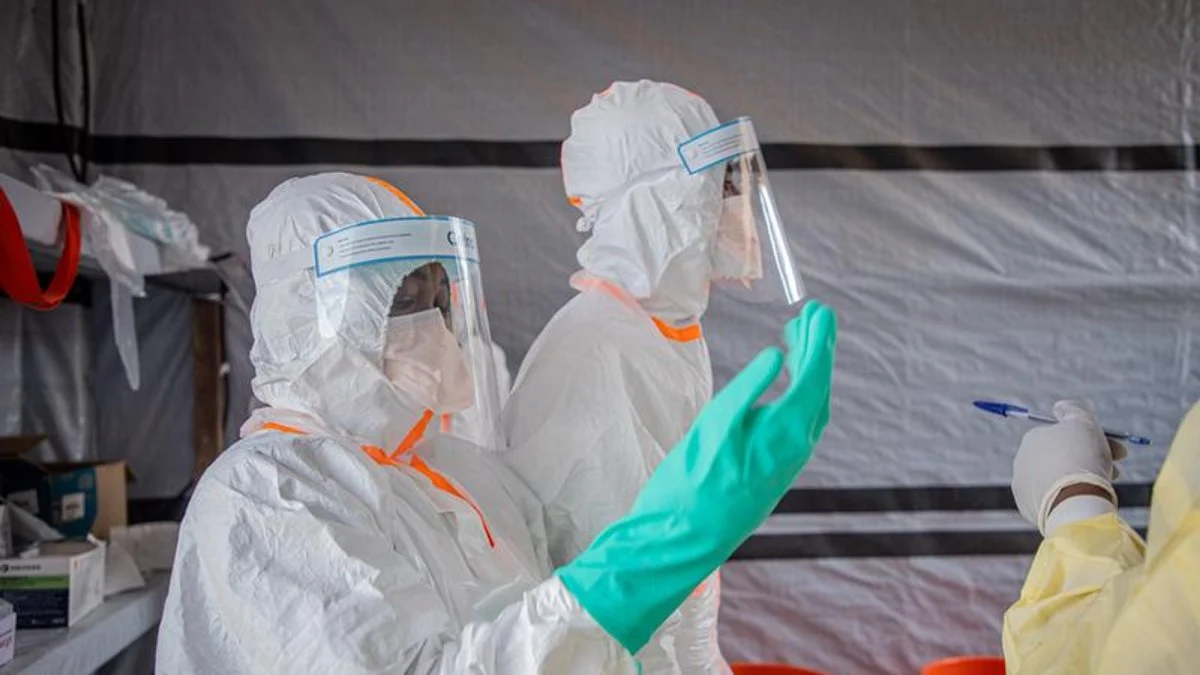
In response to the escalating situation, Doctors Without Borders (MSF) has launched a training facility outside Nairobi, Kenya. The center prepares medical teams for the challenging demands they will face, replicating outbreak conditions with hospital beds, mannequins, and full personal protective equipment.
“Having theoretical knowledge is one thing, but PPE changes everything,” says Cisse Papa Ndiaga, an MSF community health worker from Senegal, gearing up for his mission.
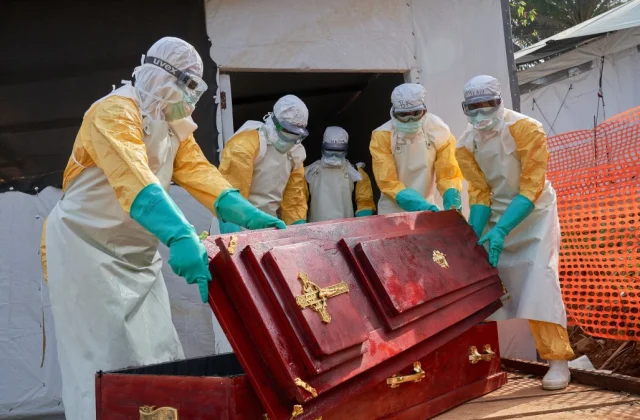
The training not only focuses on medical procedures but also emphasizes community engagement, aiming to bridge gaps in understanding and foster trust. Trainees practice communicating safety measures, organizing burials, and supporting survivors’ reintegration.
Diana Corben, an MSF doctor, stressed the importance of empathy and community acceptance: “Gaining community engagement is crucial. Understanding and sensitivity are key.”
The Nairobi center, operational since mid-June, plans to train 100 responders monthly. While primarily serving MSF staff, it also prepares officials from Kenya’s Health Ministry and other humanitarian agencies.
For Ndiaga, the training is easing uncertainties surrounding his deployment. “I may not feel fully ready, but the fear is lessening,” he shared.