
European Commission President Ursula von der Leyen has urged “united action” on border security after an unprecedented migrant surge into Spain’s North African territory of Ceuta sparked a bitter dispute between Madrid and several EU partners.
The call came as officials reported that the death toll from the mass crossing had risen to at least 72, following the discovery of five additional bodies along the North African coast.
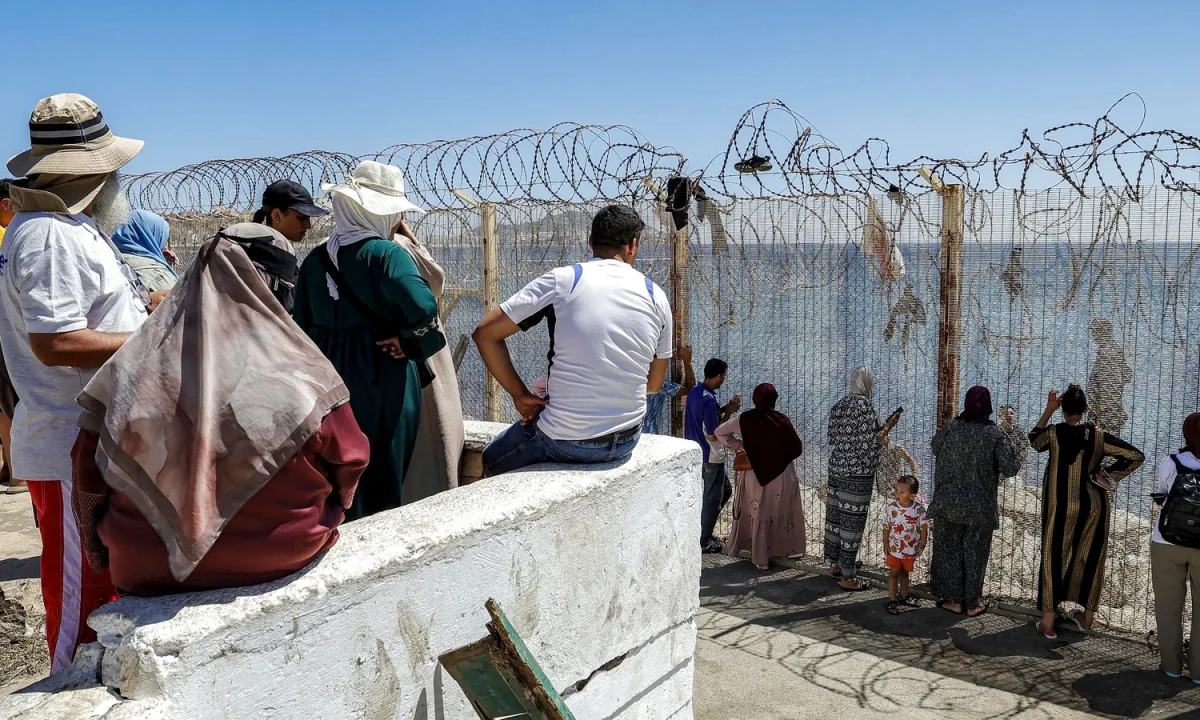
More than 50,000 people entered Ceuta by land and sea in a dramatic movement that began on Thursday at one of the European Union’s only two land borders with Africa, sending shock waves through the bloc.
“From this incident, it is clear that we must do more to further strengthen our borders at critical points,” Ms von der Leyen wrote in a letter to Spanish Prime Minister Pedro Sanchez.
Von der Leyen praised Sanchez for his “swift handling” of the crisis, which saw tens of thousands of people arrive from Morocco. Spanish officials said almost all of them have since departed.
Yet the scenes in Ceuta quickly exposed deep divisions among the EU’s 27 member states. Italy and Denmark, both known for taking a hard line on migration, called for Spain to be suspended from the Schengen free-travel area.
Madrid rejected the proposal as “selfish” and noted that such a move would be legally impossible under EU rules. Spain instead called for emergency discussions among EU interior ministers to determine a joint response.
The videoconference scheduled for tomorrow should allow member states to draw “lessons” from the Ceuta crisis, Ms von der Leyen said, warning that illegal immigration demanded “a common European response, united action and solidarity”.
Spanish authorities said more than 48,000 people returned to Morocco within 48 hours, with additional returns taking place over the weekend.
Miguel Angel Perez, the Spanish government representative in Ceuta, told reporters that health services had treated more than 1,000 people in addition to recording the 72 deaths.
He said conditions in the territory had improved significantly, although authorities still faced the task of restoring normal life.
Some migrants drowned, while others were crushed as they attempted to scale a breakwater and the border fence.
Moroccan authorities put the number of people involved in the crossing at 40,000, significantly below the figure cited by Spanish officials
Many of those who made the journey were driven by economic hardship and influenced by rumours circulating on social media.
Morocco’s Interior Ministry said 11 people had died, most of them by drowning while attempting to enter Spanish territory. It added that officials were checking reports of deaths on the opposite side of the border.
The ministry attributed the surge to misinformation spread on social media, human-trafficking networks and confusion over a Spanish court ruling that barred the immediate return of migrants intercepted at sea. Its explanation echoed comments made by Spain’s Foreign Ministry.
Moroccan authorities estimated that 40,000 people had taken part in the crossing, a figure far lower than Spain’s estimate, and said 1,135 others had been prevented from entering Melilla, another Spanish enclave.
The ministry repeated Morocco’s commitment to combating illegal migration while insisting that responsibility for managing migration flows must be shared.
“It pains me deeply that young people are dying at sea. It’s not right that, in the year 2026, women with children as young as two months old should be crossing the sea only to die,” Karima Abenaz, a French national living in Ceuta whose family is in Morocco, said through tears.
“In Morocco, there’s food, there’s everything we need,” she added. “If we don’t have a decent job, we should go on strike and demand our rights from the government. We shouldn’t be dying at sea, it’s not right.”
Ceuta’s leader, Juan Jesus Vivas, told El País that the city morgue had taken in 88 bodies. The total included people who died during smaller, dangerous night-time attempts to reach the territory over the previous two weeks.
He said Moroccan officials were also recovering bodies from the sea, though no official details had been released.
Authorities have increased police and army patrols, while a 500-metre floating barrier was installed off Ceuta on Saturday.