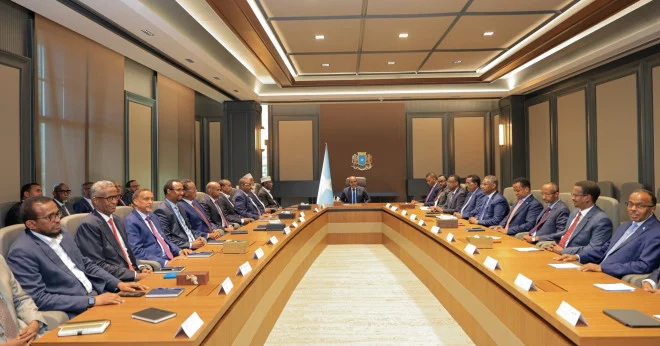
Somalia’s election test: dialogue over deadlock as May vote nears
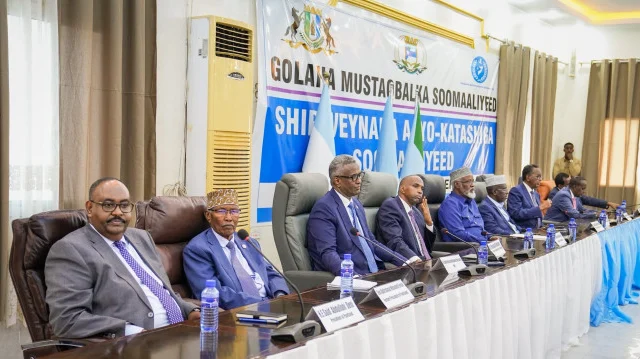
Somalia is not simply approaching an election. It is entering a three-month test of political maturity that will define its democratic trajectory well beyond 2026. On Feb. 26, President Hassan Sheikh Mohamud convened talks with the Somali Future Council to break a stalemate over the electoral framework and constitutional reforms ahead of the May elections. The talks failed, exposing a fragile consensus and the depth of disagreements that have simmered beneath the surface.
At the center is a question that is as symbolic as it is structural: how quickly should Somalia move toward one person, one vote? For the federal government, direct suffrage is both a method and a message — a definitive break from the clan-based negotiations that have long mediated power. For the opposition and several federal member states, the push is premature. In a country still confronting insecurity and uneven state capacity, they argue, an indirect, negotiated model is not anti-democratic; it is a necessary bridge to stability. Both sides invoke legitimacy. Neither can achieve it alone.
The danger is not disagreement but deadlock. Somalia knows the costs when dialogue collapses — uncertainty widens, parallel authorities harden, and a vacuum emerges that others can exploit. The Feb. 26 meeting, which included leaders from the federal government, Puntland State and Jubaland, demonstrated a willingness to engage. The task now is to turn engagement into agreement.
That demands a shared national framework — one strong enough to bind the center and the member states, yet flexible enough to respect regional autonomy. Federalism cannot remain a temporary compromise. It must function as a working system: balancing power, coordinating security, and enabling equitable development. That balance requires patience and political courage, qualities elections seldom reward yet the country urgently needs.
Somalia’s May elections should be a moment of collective learning, not merely a contest of personalities. Too often, campaigns default to clan arithmetic instead of policy. The antidote is not rhetoric but structure: civic education that inoculates against misinformation; public debates focused on education, jobs and security; and platforms grounded in practical proposals rather than patronage. Credible elections rest on informed citizens.
Somalia’s greatest advantage has always been its shared cultural foundation. “Qolo kali ah qaran ma dhisto” — no single group can build a nation. The challenge is to live by that truth. Clan identity, a social reality, becomes corrosive only when weaponized. When political loyalty follows lineage more closely than national interest, governance turns transactional and long-term planning withers. The result is a brittle state, vulnerable to manipulation and unable to deliver for its people.
Confronting tribalism requires honesty and resolve. It means leaders willing to trade short-term gains for national cohesion and citizens prepared to abstain rather than vote along clan lines. It also means investing in institutions and narratives that elevate citizenship over sub-clan affiliation. Shared values must be more than slogans; they must shape incentives and behavior across politics, media, schools and mosques.
Those values are not abstractions. They are operational principles that can be taught, measured and enforced:
- Justice and equal protection under law
- Honesty and accountability in public office
- Inclusivity across gender, generation and clan
- Dignity and service to the public as the core of leadership
- Individual rights safeguarded by the constitution
Economic inclusion is equally central to stability. Peace is hardest to defend where progress feels exclusionary. Education, employment and equal opportunity — regardless of background, gender or clan — are not just development goals; they are national security imperatives. Elections should, therefore, be contests of economic vision. Who has the clearest, most credible plan to expand livelihoods, lower barriers to opportunity and build markets that reach every region?
Somalia is not charting this path alone, nor must it settle for false choices. Other societies have navigated identity-based fractures and contentious elections. Rwanda’s post-1994 reforms and national dialogue, and Kenya’s post-2007 constitutional overhaul and coalition-building, offer lessons — imperfect, contextual, but instructive. The point is not to copy. It is to recognize that political will, inclusive frameworks and steady institution-building can move what once seemed immovable. Somalia need not wait for catastrophe to change course.
The way forward begins with returning to the table. The federal government and the Somali Future Council should negotiate an inclusive roadmap that does three things at once: sustains constitutional continuity, sets realistic timelines for expanding direct voting where conditions allow, and entrenches cooperative federalism as the organizing logic of the state. The 2012 Provisional Constitution should remain the anchor through ongoing review, providing a common legal language and protecting against abrupt, winner-takes-all redesigns.
Above all, strong institutions — not strongmen — must anchor Somalia’s future. Durable institutions restrain excesses, outlast electoral cycles and earn trust in uncertain times. That means independent courts empowered to arbitrate disputes; electoral bodies protected from partisan pressure; security forces accountable to civilian oversight; and fiscal compacts that make transparent who collects, allocates and audits public money.
Over the next 90 days, Somalia can reduce risk and build credibility by focusing on essentials:
- Reopen structured talks with binding timelines and independent facilitation acceptable to all sides.
- Agree on transitional mechanisms that expand one person, one vote where feasible while preserving stability elsewhere.
- Codify a federal-state coordination forum to manage security, finances and election logistics.
- Launch a nationwide civic education drive on voting, disinformation and citizen rights.
- Publish issue-based party platforms and hold public debates focused on education, jobs and security.
- Adopt cross-party pledges rejecting incitement along clan lines and committing to nonviolence and legal redress.
- Protect the integrity of the constitutional review by ensuring inclusive consultation and transparent drafting.
Somalia has a choice in this election season: escalate the cycle of brinkmanship or normalize the habit of compromise. The former leads to fragmentation; the latter to a slower, steadier consolidation of democracy that puts institutions, not individuals, at the center. As the Somali proverb reminds us, “Qaran waa wadajir, kala go’na waa halaag” — a nation is unity; division is destruction. The verdict leaders and citizens deliver in the months ahead will echo long after the ballots are counted.
By Ali Musa
Axadle Times international–Monitoring.