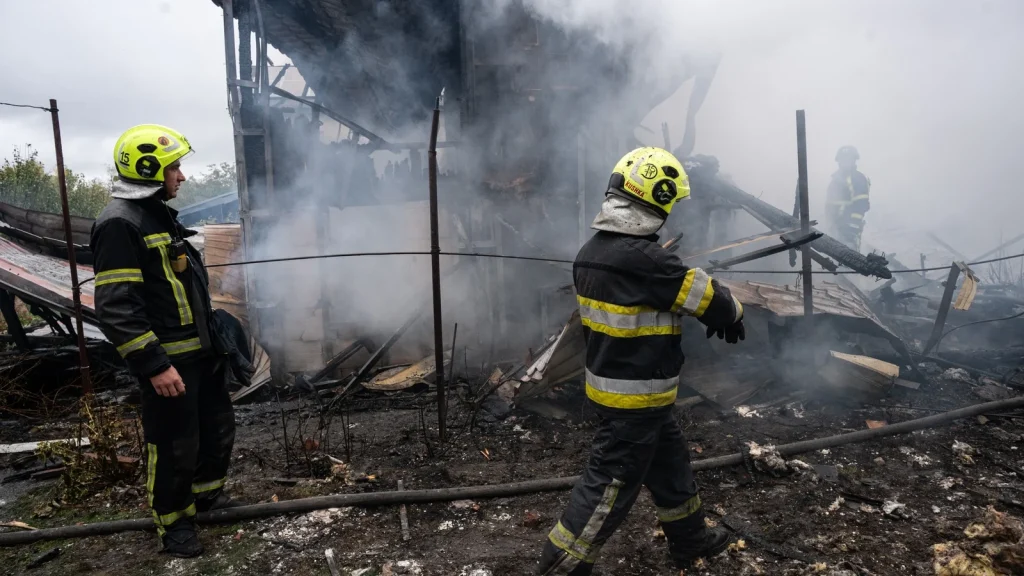
Russia struck at least six energy facilities in overnight and morning attacks across Ukraine, President Volodymyr Zelensky said, arguing that the barrage showed Moscow had no intention of honoring an energy ceasefire announced by US President Donald Trump.
Facing pressure over soaring energy prices before next month’s US midterm elections, Mr Trump said Ukraine and Russia had agreed to stop targeting each other’s energy infrastructure.
- Advertisement -
“It is increasingly evident that Russia is unwilling to accept an energy ceasefire proposed by the United States and intends to continue its terrorist air attacks against our people and communities,” Mr Zelensky said on X.
“This is what happens when Russia sees the prospect of higher revenues for its war machine,” he added.
Mr Trump announced the reported truce days after unveiling an agreement to purchase diesel from Russia. Mr Zelensky condemned the deal as a retreat from years of Western efforts to isolate the Russian economy.
Volodymyr Zelensky said Ukraine had carried out no attacks on Russian refineries overnight
The US president has also urged Ukrainians to remove Mr Zelensky through an election, issuing unusually forceful remarks that underscored the deterioration in relations between the two leaders since Mr Trump returned to power in 2025.
Minister for Foreign Affairs Helen McEntee called the comments “concerning”.
Ms McEntee was due to join other EU foreign ministers in Luxembourg as tensions between the Trump administration and Ukraine continued to escalate.
Mr Trump’s announcement marked the second time in several weeks that he had declared an energy ceasefire without confirmation from either of the two countries at war.
Ukraine’s European allies expressed doubts about the proposed agreement, reaffirmed their support for Kyiv and approved the EU’s largest package of sanctions since Russia launched its full-scale invasion in 2022.
Kyiv has stepped up long-range attacks on Russian oil refineries and logistics facilities in recent months, presenting them as a response to more than four-and-a-half years of relentless Russian strikes on Ukrainian cities. Moscow has repeatedly targeted Ukraine’s electricity and heating systems through successive winters.
Mr Zelensky said Ukraine had not attacked Russian refineries overnight and remained ready to support an energy ceasefire, provided Russia also respected the arrangement.
He said Ukraine could hold elections, which have been suspended during the war, if Moscow agreed to a complete 60-day ceasefire.
Kremlin Spokesperson Dmitry Peskov said Russia wants ‘long-term peace’
Russia said discussions over a possible energy truce were continuing, while Kremlin spokesperson Dmitry Peskov said more details would be released in due course.
He rejected Mr Zelensky’s call for a full 60-day halt to the fighting.
“In the Kremlin, both President (Vladimir) Putin and officials at other levels have repeatedly stated that we do not want a ceasefire,” said Mr Peskov.
“We want long-term peace and are prepared to do everything possible to achieve it,” he added.
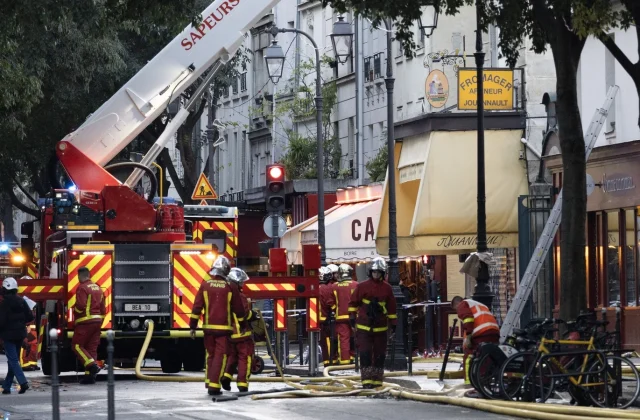
In Kharkiv, Ukraine’s second-largest city, emergency workers searched through the remains of buildings torn apart by the strikes.
Under the glare of floodlights, rescuers found the body of a civilian beneath the rubble as the city remained shrouded in darkness.
Nataliia Minka said she had only just reached a shelter when a missile landed nearby.
She said she and her child had seen what they believed was a missile hitting a nearby power station.
“Ten minutes had passed since they promised they wouldn’t target energy facilities,” she said.
“It’s so hard to describe how a child was lying there, already covered up and the father was running around her, crying and screaming,” she said.
“It’s so terrifying – it’s impossible to get through something like this,” she added.
Night-time attacks killed at least three people in Kharkiv, municipal officials said. Further strikes in the morning hit residential buildings and injured at least 22 more people.
At least three other people were reported killed yesterday in the western city of Ivano-Frankivsk.
Russia began its latest campaign against Ukraine’s power grid two weeks ago, triggering daily outages in Kyiv that have lasted for hours, disrupted the capital’s water and sewage systems and twice forced its underground trains to stop suddenly.
Germany’s Chancellor Friedrich Merz said Moscow ‘will only negotiate seriously under pressure’
Seeking to increase pressure on Moscow, EU foreign ministers added 1,569 individuals and companies to the bloc’s sanctions list.
“This is the single largest expansion of our sanctions list since Russia started its war. Europe is again showing a united front. More than half are connected to the production chain for ballistic missiles,” EU foreign policy chief Kaja Kallas said.
Germany’s Chancellor Friedrich Merz said Moscow “will only negotiate seriously under pressure, which is why we are sticking to our sanctions against Russia”.
“Following Moscow’s ruthless attacks on Ukraine’s civilian energy infrastructure, we must actually tighten them further,” he added.
Mr Trump has increasingly blamed Ukrainian attacks on Russian refineries for driving up global fuel costs, particularly diesel prices, which have reached record levels in the United States since he began his military campaign against Iran.
On Saturday, he said Mr Zelensky had “better damn well stop” attacking Russian refineries.
A person familiar with the situation said the US had threatened to halt intelligence-sharing with Ukraine and suspend weapons supplies. Washington no longer directly provides those weapons to Kyiv but permits European countries to purchase them on Ukraine’s behalf.