
Tuesday July 7, 2026
Mogadishu (AX) — Somalia’s Ministry of Defence has mounted a forceful rebuttal to an International Crisis Group assessment of the war against al-Shabab, denouncing the report as flawed, uneven and a misleading portrayal of the government’s counterterrorism efforts.
In a statement issued Monday, the ministry said the Crisis Group had minimized the toll borne by Somali troops and civilians, while casting al-Shabab’s battlefield adjustments as signs of better governance or a softer approach toward the population.
“The notion that al-Shabab has voluntarily become more responsive, more pragmatic, or somehow less coercive is not only false but an affront to the thousands of Somali civilians, soldiers, elders, religious leaders, women and children who have been murdered, maimed, displaced, and terrorised by this brutal terrorist organization,” the ministry said.
According to the ministry, any change in al-Shabab’s conduct reflects pressure from the Somali National Armed Forces, local communities and international partners, not a voluntary retreat from violence or intimidation.
“Every reduction in the group’s ability to extort businesses, terrorise communities, collect illegal extortion revenues, and operate freely is the direct result of sustained government operations and not a voluntary transformation by a terrorist movement,” the statement said.
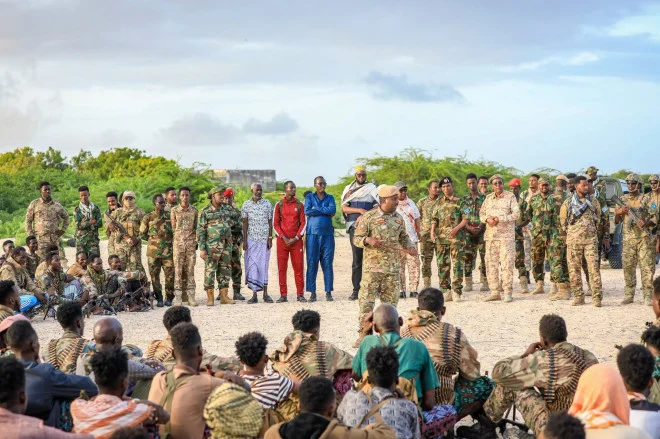
The ministry said Mogadishu’s improved security was achieved through combat by Somali forces, adding that soldiers had given their lives while freeing communities, breaking up militant networks, killing senior operatives and restricting the group’s movements.
It alleged that the report risked softening the image of one of Africa’s most lethal militant organizations by treating tactical shifts as proof of better administration or increased regard for civilians.
Such analysis, the ministry said, could serve al-Shabab’s propaganda by obscuring the record of a group it blamed for mass killings, suicide attacks, forced child recruitment, extortion, sexual violence and the ruin of livelihoods.
“Constructive analysis should never come at the expense of truth,” the ministry said. “Research institutions carry a responsibility to ensure that their publications do not inadvertently lend credibility to violent extremist groups or diminish the sacrifices of those fighting them.”
The ministry said the Federal Government of Somalia remains determined to defeat al-Shabab, commending the Somali National Armed Forces, security agencies, local communities and international partners for helping improve security across the country.
“History will remember that Somalia’s progress was earned through sacrifice and not granted by the goodwill of terrorists,” the ministry said.
The International Crisis Group report cautioned that political rifts and shrinking international support are placing growing strain on the Somali government and fueling doubts about its capacity to absorb future shocks.
The report said al-Shabab, which is linked to al-Qaida, recorded significant gains in 2025, recapturing much of the territory seized by the government during its 2022-2023 campaign in central Somalia.
Government troops have since reorganized and secured districts around Mogadishu, the report said, but much of central Somalia remains in militant hands, leaving the conflict in a stalemate where neither side can hold a decisive upper hand.
The Crisis Group said al-Shabab has modified its methods in territory it controls, including attempts to build better ties with local communities and rely less heavily on coercion. Those shifts, the report said, have bolstered the group’s influence.
The report also warned that the Somali government is contending with intensifying political infighting at a time when foreign assistance is falling.
It called on Mogadishu to revamp military training, strengthen recruitment and retention, and give federal member states a larger role in shaping plans to confront al-Shabab.
The Crisis Group further urged authorities to bolster state-level forces that can hold areas retaken from militants.
Beyond battlefield changes, the report proposed non-military steps, including encouraging humanitarian agencies to expand aid delivery in al-Shabab-controlled areas to reduce civilian suffering.
The organization said a political settlement remains the most viable route out of Somalia’s protracted insurgency and urged the government to keep seeking openings for dialogue with al-Shabab.
The report concluded that Somalia’s campaign against al-Shabab remains deadlocked, with the war swinging between government advances and militant counterattacks and no clear battlefield end in sight.