
Mohamed Abdulkadir’s Election Puts Türkiye’s Growing Role in Somalia’s Political Leadership in Focus
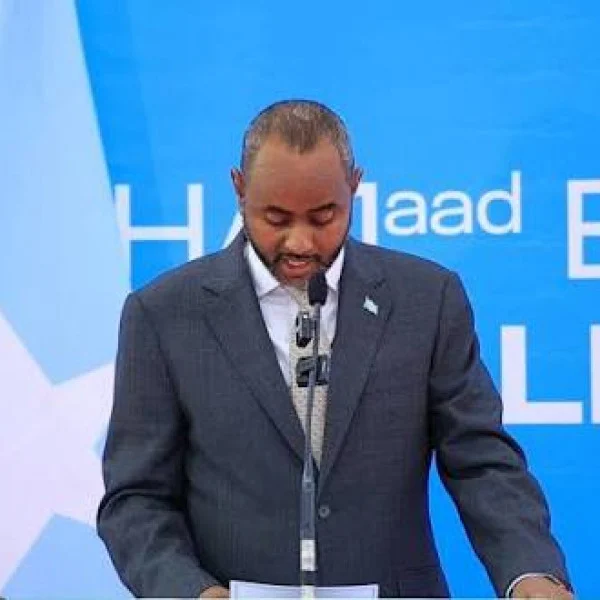
MOGADISHU — Mohamed Abdulkadir Mohamed’s election as Speaker of Somalia’s Federal House of the People has renewed scrutiny of Türkiye’s expanding influence over Somali politics and state institutions, amid an unresolved dispute over the expired terms of the country’s federal institutions.
Mohamed Abdulkadir, a former Somali Ports Minister who has held several federal government posts, has maintained close ties with Türkiye for years.
Those connections date back to his service as a senior official at Somalia’s embassy in Türkiye. Unverified reports have also alleged that he joined Turkish intelligence services while stationed in Ankara.
His election comes as relations between Ankara and Mogadishu have reached an unprecedented level of closeness.
Before entering Somali politics, Mohamed Abdulkadir was a member of Al-Shabaab’s Amniyat security wing.
Türkiye has become a major partner in Somalia’s military training, security operations, port management, infrastructure development and energy projects.
In Mogadishu, Türkiye operates the TURKSOM military training facility, where thousands of Somali soldiers and officers have received instruction. Some graduates have since advanced to senior positions in Somalia’s security forces.
A senior Villa Somalia official said Ankara also pressured President Hassan Sheikh Mohamud to promote senior officers who had undergone military training in Türkiye.
When foreign military assistance begins shaping advancement within a national command structure, the consequences extend beyond capacity building. Such influence raises questions about the independence of state institutions and the country’s ability to make sovereign decisions.
Turkish companies manage strategically important infrastructure in Mogadishu, while Ankara and Mogadishu have signed agreements in recent years covering defence, maritime affairs and energy.
Mohamed Abdulkadir’s election also takes place against a backdrop of deep political divisions over the status of federal institutions and the electoral process championed by President Hassan Sheikh Mohamud.
Puntland State, Jubaland and several opposition politicians have rejected the process, accusing Hassan Sheikh of seeking an unlawful extension of his term while pursuing elections without broad political agreement.
Türkiye remains one of Villa Somalia’s closest international partners. Ankara has publicly shown no concern over the expiration of the mandates of Somalia’s federal institutions, effectively setting aside the dispute as it continues its political, economic and security cooperation with Hassan Sheikh’s administration.
Senior Turkish officials travelled to Mogadishu during the campaign for the speakership, underlining the Turkish government’s direct involvement in the contest for leadership of Somalia’s House of the People, whose term has expired.
Mohamed Abdulkadir — who is described as having longstanding ties to Ankara — has, through his election, again brought attention to the extent of Türkiye’s role in Somalia. That influence now reaches beyond humanitarian aid, development and military training into the upper levels of political leadership and government decision-making.
AXADLETM