Ebola is advancing through the Democratic Republic of Congo at an unprecedented speed, the World Health Organization has warned, threatening to overwhelm efforts to contain the deadly virus.
More than 2,000 cases, including 796 deaths, have been confirmed in the DR Congo since authorities declared the outbreak two months ago. It is “now the third-largest Ebola outbreak on record”, WHO chief Tedros Adhanom Ghebreyesus told reporters.
In contrast, the major Ebola outbreak that struck the DRC between 2018 and 2020 “took more than 10 months to reach 2,000 confirmed cases”, Mr Tedros said, underscoring the extraordinary pace of the current spread.
“In the past month, it has expanded faster than any previous outbreak,” he warned.
WHO chief Tedros Adhanom Ghebreyesus warns that transmission chains remain undetected
Ebola, which is transmitted through close contact and infected bodily fluids, has been detected across five DRC provinces and in neighbouring Uganda. The overwhelming majority of cases, however, remain concentrated in Ituri.
Mr Tedros praised the swift expansion of the emergency response. Treatment capacity in northeastern DRC has reached 800 beds, while laboratory capacity has grown from just one facility to 16.
Yet those gains have not been enough to keep pace. “Despite the progress we have made, the outbreak in DRC is continuing to outpace the response”, he said.
80% of new cases found ‘outside known contact lists’
More than 80% of newly identified cases were being discovered “outside known contact lists, showing that transmission chains are still being missed”, the WHO chief said.
“About two-thirds of deaths are occurring in communities, among people who never receive care in a health facility,” he acknowledged.
The response faces another formidable obstacle: the outbreak involves the rare Bundibugyo species of Ebola, for which no vaccine or treatment has been approved.
Despite that challenge, Mr Tedros pointed to “encouraging progress on vaccines and therapeutics”.
Trials of two possible treatments for Bundibugyo patients — the monoclonal antibody MBP134 and the antiviral drug remdesivir — have been taking place in Ituri since 2 July.
Mr Tedros said the first safety trial of the ChAdOx1 vaccine, led by the University of Oxford, began on Monday.
A trial of the antiviral obeldesivir followed on Tuesday, examining whether it could work as post-exposure prophylaxis for people who had contact with confirmed Bundibugyo cases but had not developed the disease.
Even in the absence of approved vaccines and treatments, 377 people have recovered in the DRC. That figure, Mr Tedros said, is “showing that with early diagnosis and safe care, this disease can be survived and stopped”.
Treatment centre attacked in Ituri
Among the gravest challenges is “the complex environment in which the outbreak is happening”, Mr Tedros said, with most cases recorded in conflict-ravaged Ituri.
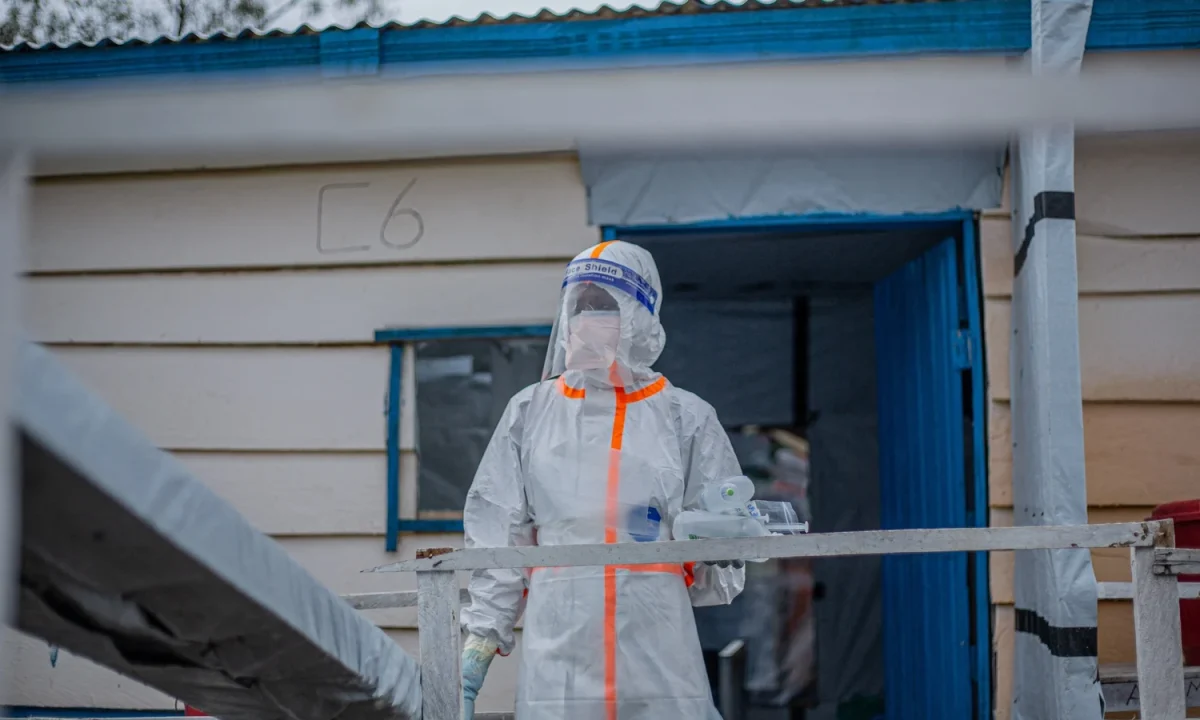
“Active armed conflict is hampering access to the affected areas, and hindering the response,” he said. A treatment centre in Bunia, the capital of Ituri, “was attacked” yesterday.
Mr Tedros said the central priorities were to curb transmission in Ituri by improving surveillance, ensure safe and dignified burials for the highly infectious bodies of Ebola victims, and strengthen clinical care for patients.
Meeting those goals will require urgent international assistance, he said, citing “a shortfall of more than $400m” in funding for a joint WHO and African Centres for Disease Control plan to confront the outbreak.