
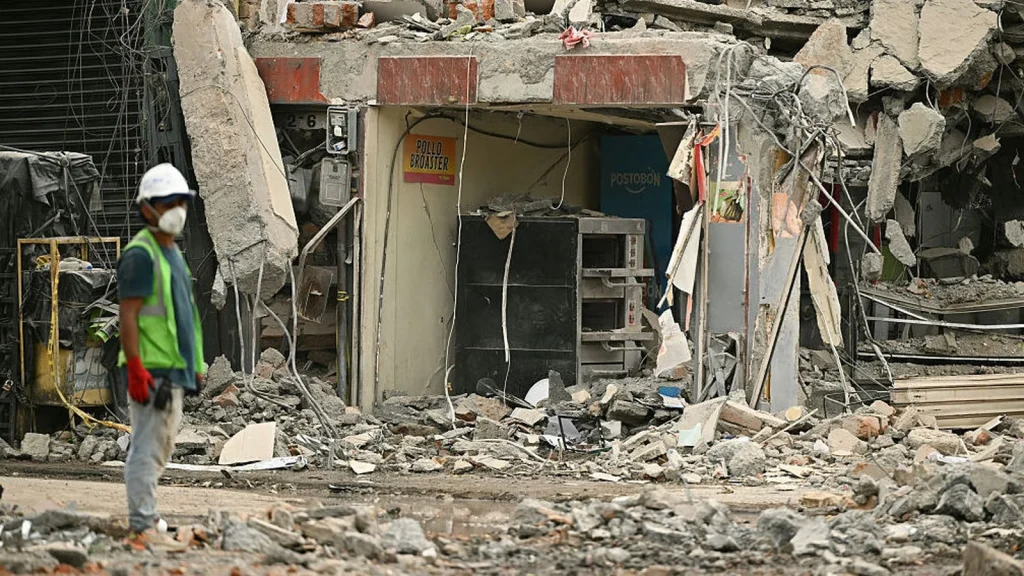
Five days after a 7.4-magnitude earthquake tore through western Colombia, the search for survivors is giving way to a grim recovery effort as rescuers pull more bodies from the ruins of collapsed buildings.
The quake struck San Jose del Palmar, bringing down apartment blocks and damaging schools, churches, hospitals and homes across the area stretching from the Pacific port of Buenaventura through Colombia’s coffee-growing region and into major western cities.
- Advertisement -
Colombia’s disaster management unit said at least 294 people had died, while another 320 remained missing and nearly 4,000 were injured.
More than two-thirds of the fatalities were reported in Cali and Pereira.
“At the other locations, we are unfortunately in the phase of recovering bodies.”
Home to more than 2 million people, Cali is Colombia’s third-biggest city.
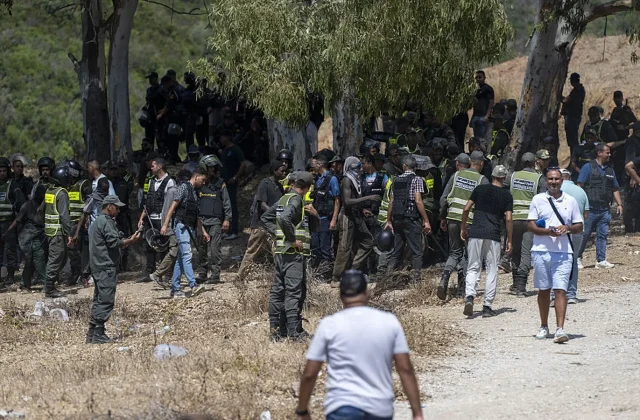
Rescue crews worked through the morning, picking their way across mountains of broken concrete, brick and twisted metal in search of the missing. Nearby, residents began clearing their neighbourhoods with brooms and shovels.
Mr Hernandez said the recovery of bodies would probably be completed by Sunday, allowing crews to bring in heavy machinery to remove the remaining debris.
Juana Catano, who leads a citizens’ action group, said the focus had shifted toward recovering victims and rebuilding communities.
“We are in a time of overwhelming mourning,” she said.
Hundreds sleep outdoors
In Pereira, deep in Colombia’s coffee-growing region, hundreds of residents spent the night on mats or in tents at a makeshift park shelter. Coordinators said supplies were running short, including blankets, tents, hygiene products and food.
A disaster management unit report said thousands of homes had been completely destroyed, forcing hundreds of people to sleep outside in shelters while they waited to learn whether their damaged apartment buildings were in danger of collapsing.
Since the earthquake, Colombia has recorded 269 aftershocks, adding to the dangers facing rescue workers and volunteers as they continue searching through unstable rubble.
The disaster has become the first major test for President Abelardo De La Espriella, a political newcomer who took office a week ago and must now direct relief and reconstruction efforts after one of Colombia’s worst natural disasters.
Mr De La Espriella has faced criticism over his response during the first hours after the quake, especially his decision not to accept offers of rescue teams from certain countries.
Authorities later received response teams from Israel and the US.
As the week progressed, the deaths of victims who had become national symbols further eroded hopes that more survivors would be found.
Daniela Largo, 32, died in hospital after spending 36 hours trapped beneath the rubble. Juan Felipe Giraldo, 24, was found dead following an intense search at a collapsed hotel.
Mr Giraldo’s father had spent days waiting outside the destroyed building for news. His son had been due to marry on Sunday and leaves behind a 2-year-old son.
In Medellin and Bogota, thousands gathered to donate food, clothing and medicine at collection centres, with supplies destined for communities devastated by the quake.