
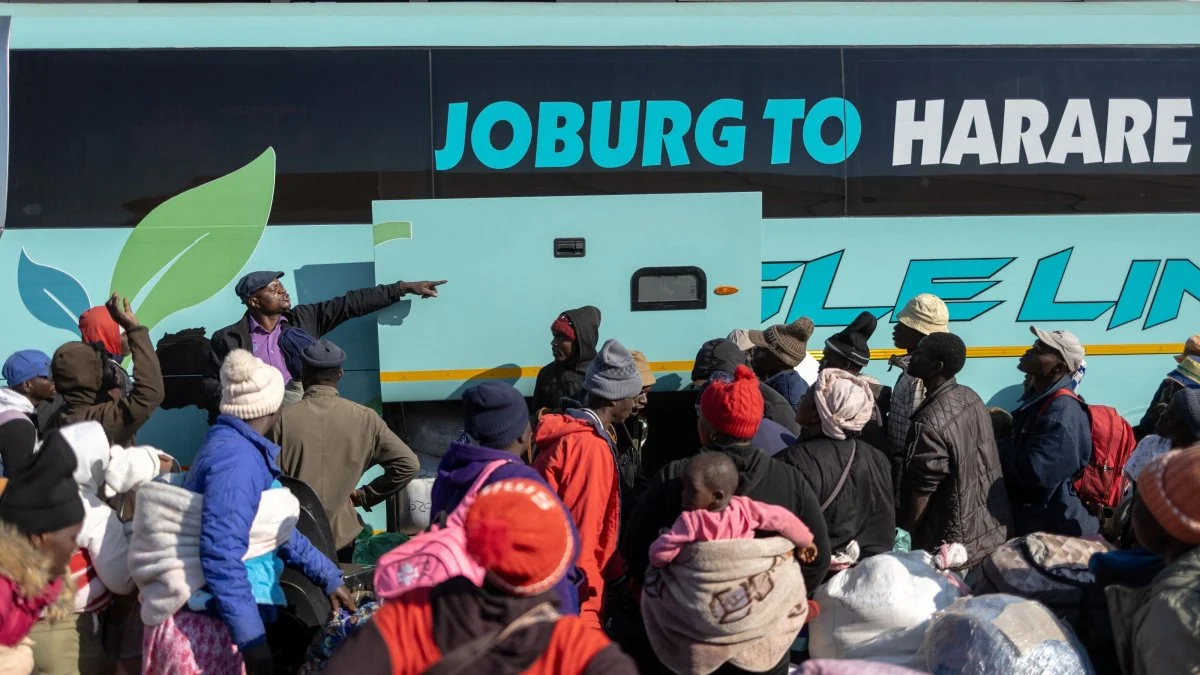
A sweeping outflow of migrants from South Africa has gathered pace in recent months, with more than 178,000 Africans leaving amid tougher government action against undocumented migration and a wave of anti-immigration protests that, in some areas, have turned violent and raised fears of further attacks.
The departures mark one of the largest migrant movements out of Africa’s most industrialized economy in years.
The totals have been reported by officials in the migrants’ countries of origin. Zimbabwe’s government says more than 115,000 of its citizens have gone back since late May, while Malawi has recorded the return of more than 56,000 nationals.
Nigeria, Ghana, Mozambique and Lesotho have each reported that more than 1,000 of their citizens have returned from South Africa.
Those leaving include migrants formally deported by South African authorities, as well as people who chose to go back through repatriation programs run by South Africa or by their home governments. Voluntary returns make up the overwhelming share of the departures.
South Africa said this week that roughly 19,000 people had been officially deported since April.
The sudden movement has alarmed advocacy organizations, which point to a range of humanitarian concerns, including thousands of children withdrawn from schools and people living with HIV who have lost access to lifesaving treatment.
The departures highlight the strains around migration within Africa, even as global attention often centers on routes from Africa to Europe. Earlier this month, more than 70,000 people rushed across the border from Morocco into Ceuta, the Spanish territory, triggering a separate migration crisis.
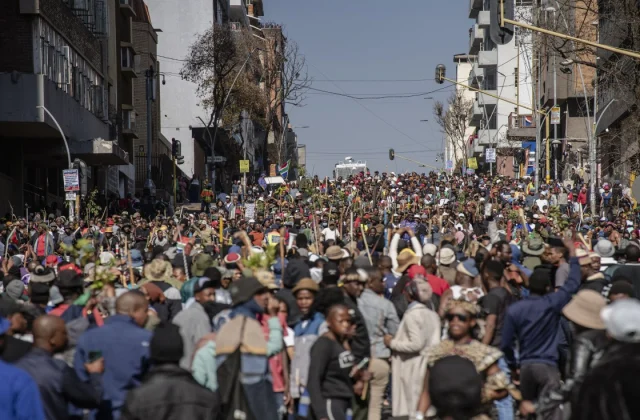
Inside South Africa, groups opposing illegal migration have organized repeated demonstrations this year. The campaign peaked with nationwide protests on June 30, which organizers described as a “deadline” for undocumented migrants to leave the country.
A woman reacts as protesters storm the Department of Home Affairs offices during a demonstration calling for the removal of undocumented immigrants, Alexandra township, South Africa, July 30, 2026. (AFP Photo)
The groups argue that undocumented migrants worsen South Africa’s severe unemployment by taking jobs and adding pressure to public services. For decades, South Africa, the region’s wealthiest country, has attracted millions of migrants from elsewhere on the continent, many working on farms, in restaurants, on construction sites and in other low-paid jobs.
According to South Africa’s most recent census, conducted in 2022, the country had 2.4 million foreign nationals within a population of 62 million. Protest groups insist the number of undocumented migrants is far higher.
The anti-illegal migration demonstrations have also been accompanied by door-to-door campaigns carried out by mobs. Rights organizations say migrants have been threatened and attacked, and that homes and businesses have been set on fire, including properties belonging to some migrants with legal status.
Mozambique’s government said 11 Mozambicans have been killed in attacks in South Africa. Nigeria and Ghana have also said some of their citizens were killed. South Africa has challenged those figures, saying some deaths were linked to crimes such as robberies rather than migration protests. Police are investigating some of the killings.
The unrest has strained South Africa’s relations with other African governments, which have accused it of xenophobia.
A protest leader addresses protesters after storming the Department of Home Affairs offices during a demonstration calling for the removal of undocumented immigrants, Alexandra township, South Africa, July 30, 2026. (AFP Photo)
Ghana sought to have what it described as South Africa’s anti-migrant and xenophobic policies added to the agenda of an African Union meeting in October. South Africa blocked the proposal but called instead for wider discussions on migration across Africa.
UNICEF and the U.N. Committee on the Rights of the Child said in a joint statement that they were deeply worried about children affected by the returns. The agencies warned that children face increased risks of violence, exploitation, family separation and psychological distress, “particularly when movements are sudden, undocumented and uncoordinated.”
Some governments have not published full figures. Malawi said, however, that nearly 4,000 children under the age of 5 were among those who returned from South Africa. The Zimbabwe Exemption Permit Coordinating Committee, a nongovernmental organization, estimated that more than 11,000 children had returned to Zimbabwe by mid-July. Zimbabwe’s government has told schools not to discriminate and to make efforts to accommodate returning children.
Health authorities and aid organizations say many migrants left South Africa without medicine or medical files, stoking concern that HIV treatment could be interrupted in a region with some of the world’s highest infection rates.
Doctors Without Borders, known as MSF, set up clinic tents at Zimbabwe’s Beitbridge border post to assist people “who are traumatized” after losing access to lifesaving HIV medicine and treatment for other chronic illnesses.
South African authorities said Friday that about 3,000 people were still waiting to be deported at a migrant detention center near Johannesburg. They also said around 6,300 inspectors had been deployed nationwide to determine whether workplaces were illegally employing undocumented migrants.
President Cyril Ramaphosa has denounced violence against migrants while acknowledging failures by the government in enforcing immigration rules. He has pledged additional technology and personnel to strengthen border security, new immigration courts to speed up deportations, and tougher penalties for employers who hire undocumented migrants.