Frail women and children lay across hospital beds in Ilorin, their emaciated bodies bearing the scars of six months in captivity in Nigeria’s remote forests.
They were among 163 hostages rescued in August from Kainji Lake National Park, where suspected terrorists had held them after attacking the village of Woro.
- Advertisement -
The operation freed 308 people in total, according to the government, which described it as Nigeria’s largest single-day rescue. At Kwara State University Teaching Hospital, the survivors faced another difficult chapter: rebuilding their health after months of deprivation and violence.
A general view of the entrance to the Kwara State University Teaching Hospital, Ilorin, Nigeria, Aug. 11, 2026. (AFP Photo)
A child lay still beneath a blue sheet, attached to a respirator as doctors and nurses worked nearby.
On another bed, a girl believed to be about 6 years old sobbed alone. Her family had yet to be located.
“They are all responding to treatment,” a nurse said while holding the hand of a boy around 4 years old. “Some of them still need blood.”
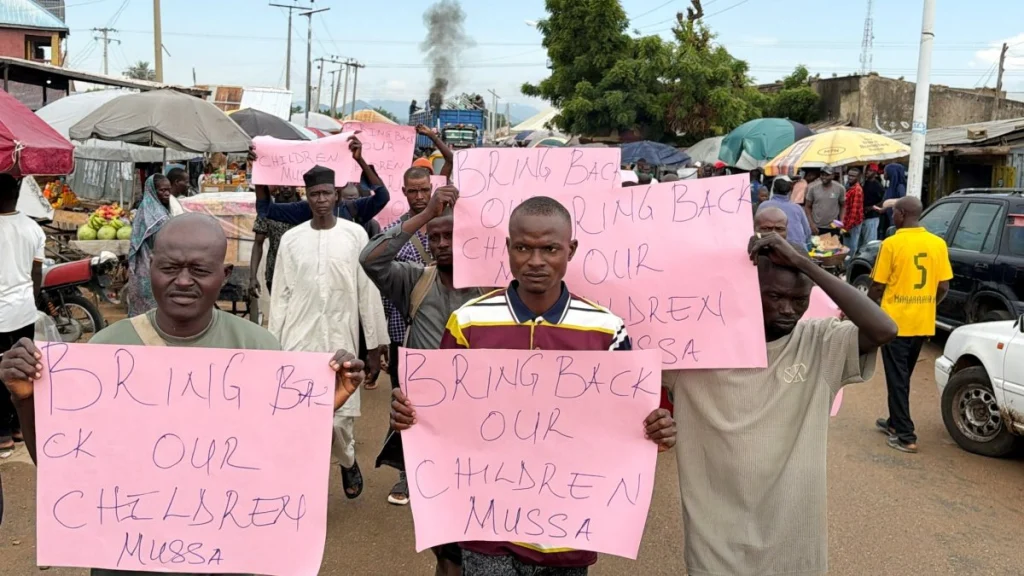
Suspected terrorists raided Woro, a village near Nigeria’s border with Benin, in February. At least 165 people were killed and scores were abducted.
Kidnapping has become a major source of revenue for criminal groups in Nigeria, including terrorist organizations and nonideological bandit gangs operating across the country’s north and central regions.
The hostages were taken to a forest camp where more than 100 other people abducted from nearby villages were also held, Woro village head Umar Bio Salihu told Agence France-Presse (AFP). Those villages included Kasuwan Daji and Konkoso in Niger state.
Thirteen Woro residents died in captivity, Salihu said. Another 13 remain missing and are believed to be held by their abductors.
Kidnapping crisis
Interviews with the survivors at the hospital were limited. Officials repeatedly sent AFP journalists from one office to another while they sought permission to speak with the victims.
The government has presented the rescue as a significant victory in its fight against insecurity. Yet kidnappings remain widespread, developing into a multimillion-dollar business across Nigeria, according to Lagos-based consultancy SBM Intelligence.
“We thank God we are out,” said Hajara, a gaunt survivor. “I do not wish that on even my enemies. It was like we just came back from hellfire.”
The captives said their daily meals consisted of tuwo, a thick porridge made from guinea corn, and a “soup” prepared with river water and salt. On rare occasions, their captors added seasoning cubes.
They sometimes received beef from cattle they believed had been stolen during raids.
“When they came, they were quite bad … severe malnutrition, lots of skin diseases, some had fractures, some mothers had just delivered,” Ahmed Bola Abdulkadir, the hospital’s chief medical director, told AFP. Many also require treatment for “psychological trauma,” he said.
Babies delivered by torchlight
Captives who left their designated areas to relieve themselves without permission were beaten, said 25-year-old nurse Amira Salihu. Her two brothers were killed in the February assault.
The daughter of Woro’s village head spoke to AFP from a police-guarded hotel where some of the freed abductees were being housed. Her gentle smile contrasted with the ordeal she described.
More than a dozen women went into labor during their captivity, Amira Salihu said.
With no proper lighting, she helped deliver the babies by the beam of battery-powered torches, using her bare hands.
“I borrowed a razor blade to cut the placenta,” she told AFP.
At the hotel, dozens of survivors, most of them young children, crowded around plastic tables and ate lunch in a noisy hall.
“I am happy seeing them like this,” Umar Bio Salihu, the village head, told AFP.
He has been traveling between Woro and Ilorin, about 200 kilometers (125 miles) away, to monitor the victims’ recovery while they remain under government care in the state capital.
Despite the violence, Woro is gradually returning to normal life, resident Isah Mogaji told AFP. The village market is operating again.
“The community is very happy now,” Salihu said. “They are waiting to receive their people.”