By Faisal AliSunday August 2, 2026
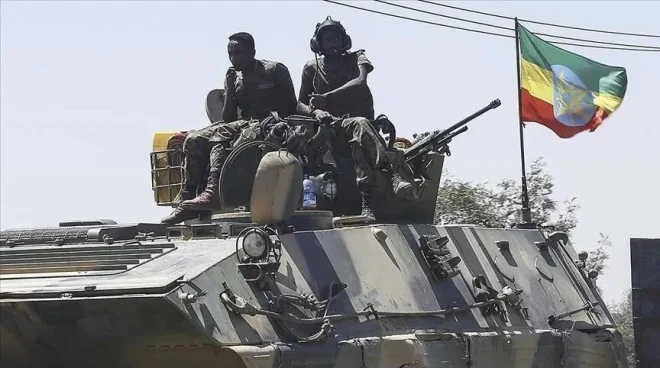
A new outbreak of fighting in western Tigray has delivered the sharpest blow yet to the fragile peace agreement that ended Ethiopia’s devastating northern war three years ago.
Tigray’s regional government said in a statement issued from the capital, Mekelle, that federal troops launched an attack at dawn on Saturday, moving from Shererina, near the border with Sudan.
Abraham Belay, a government minister who headed Tigray’s transitional administration during the war, confirmed that clashes had occurred but said forces loyal to Tigray People’s Liberation Front (TPLF) chairman Debretsion Gebremichael had initiated them.
“Enough war! Let us resolve our differences through dialogue,” he wrote in a Facebook post.
The violence follows months of worsening relations between Addis Ababa and the TPLF, the party that governed Ethiopia for almost 30 years before Prime Minister Abiy Ahmed took office in 2018.
The federal government and Tigrayan authorities have repeatedly accused one another of failing to carry out the terms of the 2022 peace agreement.
Tigray’s regional administration said Ethiopia’s ruling Prosperity Party had maintained a lengthy blockade and drone campaign against the region, and that the pressure had now turned into all-out war.
It called on Tigrayan forces, civil society groups and religious institutions to ready themselves for what it described as a fight for national survival, adopting the slogan “No to National Destruction”.
Getachew Reda, a former TPLF spokesman who now serves as an adviser to Abiy, issued a separate appeal to commanders of the Tigray Defence Forces to break with Debretsion. Reda accused the TPLF leader of depending on Eritrea and Amhara’s Fano militia in an effort to regain power.
Reda and Redwan Hussein, Ethiopia’s intelligence chief, signed the Pretoria agreement on behalf of the TPLF and federal government respectively in 2022. In a joint Al Jazeera opinion article published in June, they warned that another war was approaching.
Kjetil Tronvoll, an Ethiopia specialist at Oslo New University College, told Al Jazeera that the clashes were the “most serious incident” since the 2022 agreement. The accord stopped the fighting between the two sides, Tronvoll said, but did not resolve “the core reasons of conflict between Mekelle and Addis”.
In the days before the clashes, Ethiopian state media mounted a campaign that named Debretsion and accused him of mobilising Tigrayans for war.
The renewed violence comes after months of intensifying tensions since the Pretoria Agreement was signed in November 2022. That deal ended a conflict that had begun two years earlier and claimed hundreds of thousands of lives, but left key disputes over disarmament and the TPLF’s legal status unsettled.
In June, the United States imposed visa restrictions on people it described as TPLF “hardliners”, accusing them of obstructing the peace process. The TPLF said the action reflected an “incomplete and imbalanced” understanding of the standoff.
By the middle of July, the TPLF had declared the Pretoria agreement “effectively dead”. The statement came as US Ambassador Ervin Massinga visited Mekelle in an effort to keep the accord alive.
Faisal Roble, a regional analyst, told Al Jazeera that the outbreak of fighting showed that US-led attempts to settle the dispute had failed.
“Without a powerful international intervention,” he said, “we could be heading to a much larger war.”