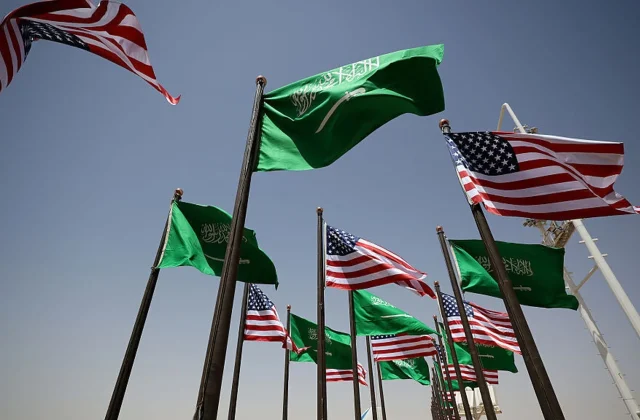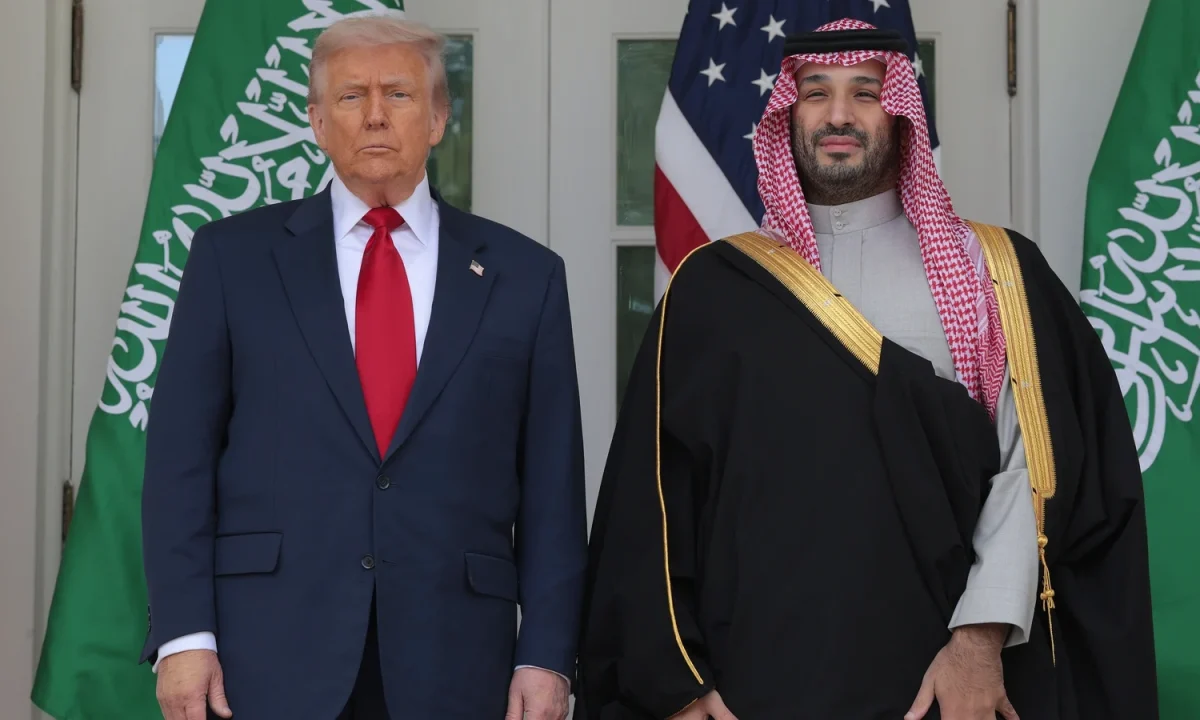
US President Donald Trump has thrown a newly signed nuclear agreement with Saudi Arabia into uncertainty, saying the deal hinges on the kingdom recognising Israel.
The condition appeared to mark a significant shift, as Riyadh has long resisted joining the so-called Abraham Accords with Israel and maintained that any normalisation must include a pathway towards a Palestinian state.
No such requirement was included in the civilian nuclear agreement announced on Wednesday. The accord had been seen as a major victory for Saudi Arabia, even as Mr Trump wages war on Iran over its nuclear program.
But in a post on his Truth Social network, Mr Trump caught the Saudis off guard by declaring that the deal “will be approved, but is totally subject to Saudi Arabia joining the very respected and successful Abraham Accords”.
“The president is always the final dealmaker. He has said if they don’t join the Abraham Accords, the deal is off,” Press Secretary Karoline Leavitt told reporters.
“The president has spoken directly with the Saudis about this in numerous conversations in the past, and the administration will continue to engage in those conversations.”
‘Historic leap’
Israeli Prime Minister Benjamin Netanyahu said recognition from Saudi Arabia — a regional power and the home of Islam’s holiest sites — would represent a “historic leap” towards peace in the Middle East.
Ms Leavitt said she was unaware of any calls between Mr Trump and Mr Netanyahu after the Saudi agreement was announced.
Riyadh did not immediately respond.
White House Press Secretary Karoline Leavitt speaks during a press briefing in the Brady Briefing Room of the White House yesterday
If implemented, the agreement to create a civilian nuclear program in Saudi Arabia could deliver billions of dollars in business to American companies.
Mr Trump’s latest intervention, however, has raised fresh doubts over whether the project will ever move forward.
If Washington “tries to force normalisation on Riyadh, it’s not likely to work out very well,” said H.A. Hellyer, senior associate fellow at the Royal United Services Institute (RUSI), a leading UK defense and security think tank.
“Would Saudi decide to do a complete 180 on what it has declared for the past three years, or 30 years? Quite dubious,” Mr Hellyer said.
Critics have also warned that the agreement risks igniting a nuclear race in a region already scarred by conflict.
One possible provision would allow US companies to construct a uranium enrichment facility in Saudi Arabia, The Wall Street Journal reported.
The US Energy Department did not refer to any such provision and declined to comment when questioned by AFP.
Mr Trump also appeared to rule out that possibility, writing on Truth Social that there would be “no enrichment of material!”
The agreement will now be sent to Congress for review.
Lawmakers from both US parties, along with Israeli officials, have previously opposed such a project amid concerns that Saudi Arabia could ultimately repurpose it to produce nuclear weapons.
Secretary of State Marco Rubio said any civilian nuclear agreement Washington signs with another country “is going to be one that will have safeguards in place to ensure that it can’t be turned into a weapons program”.
Proliferation concerns
Like Tehran, Riyadh has repeatedly asserted its right to develop a civilian nuclear program. Last year, it signed a mutual defense pact with nuclear-armed Pakistan.
Policymakers have long warned that the emergence of an Iranian nuclear weapon could trigger an arms race throughout the Gulf.
US Energy Secretary Chris Wright rejected those concerns, arguing that the agreement served Washington’s economic and strategic interests while meeting the “highest standards of nuclear safety and nonproliferation”.
The United States maintains agreements regulating nuclear cooperation with more than 50 countries.
The Saudi agreement also comes as Riyadh appears likely to be drawn deeper into the Middle East war, with Yemen’s Houthi rebels beginning attacks on ships in the Red Sea to impose what they describe as a blockade of Saudi Arabia.
Mr Trump pledged to punish both Iran and the Houthis if the attacks persist.
Read more:Latest developments in the Middle East from RTÉ News