US President Donald Trump has declared that the United States will impose a 20% charge on cargoes passing through the Strait of Hormuz.
The announcement follows the collapse of a ceasefire with Iran, as tensions deepen over Tehran’s campaign to retain control of the strategically crucial waterway.
Iran closed the 34km-wide strait — the primary route for a fifth of global oil supplies and other essential goods — after the US and Israel attacked it on 28 February, triggering a worldwide energy shock.
Here is why the dispute matters, where Mr Trump and Iran differ, and what the consequences could be for the wider world.
Has the US changed its position on charging Hormuz fees?
Mr Trump had previously raised the prospect of the US collecting tolls if an agreement with Iran collapsed.
“There will be NO TOLLS in the Hormuz Strait for 60 days during the Cease Fire Period, and there will be NO TOLLS after the 60 day period has expired, unless they are imposed by and for the United States of America, should the deal not be completed, for services rendered as the Guardian Angel to the countries of the Middle East for purposes of both past, present, and future reimbursement of costs,” he wrote in a social media post on 20 June.
Now that the ceasefire has unravelled, the president appears to have returned to that earlier position.
“The USA will be, from this point forward, known as ‘THE GUARDIAN OF THE HORMUZ STRAIT’, but as such, and as a matter of FAIRNESS, will be reimbursed, at the rate of 20% on all cargo shipped,” he said in a social media post yesterday.
Mr Trump has not set out how the charge would be collected or identified the legal authority that would allow Washington to demand payment for passage.
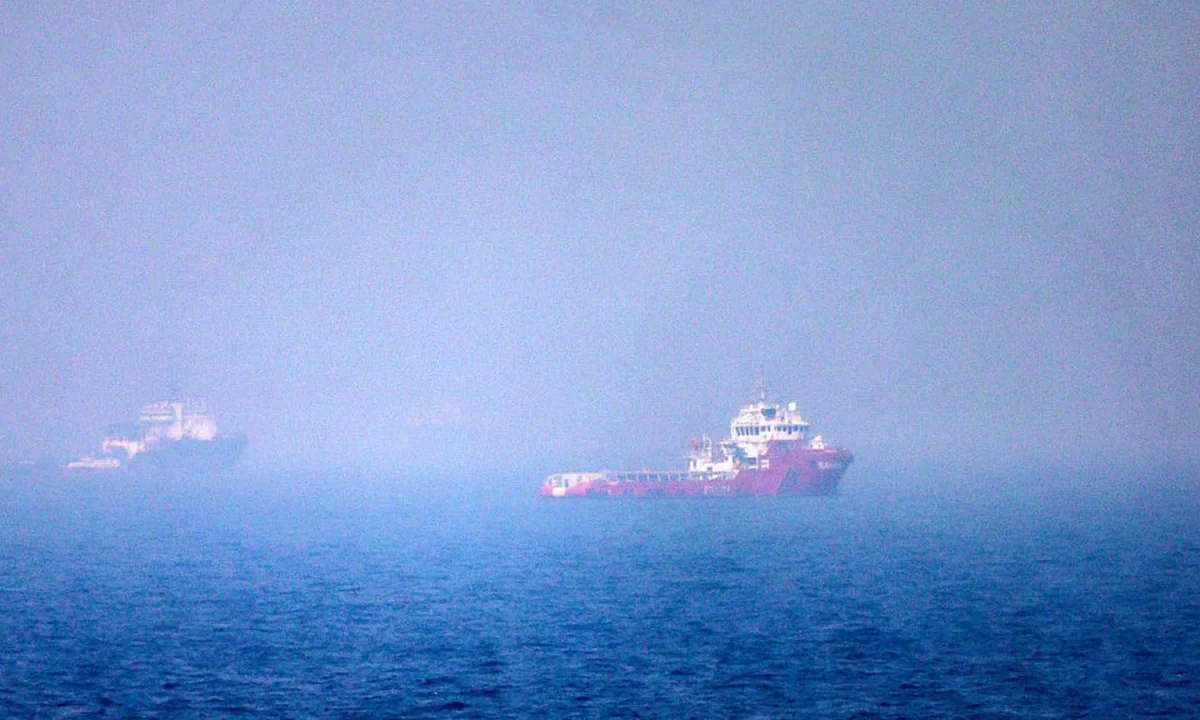
A vessel navigates near the Strait of Hormuz off the United Arab Emirates’ eastern coast
How does Trump’s proposed toll differ from Iran’s demand for fees?
Iran has made permanent control of the Strait, whose waters it shares with Oman, the central objective of negotiations. Tehran regards the waterway as its most powerful source of leverage abroad and its strongest safeguard against future attacks.
Iran believes Washington accepted that position in the wording of last month’s interim agreement, which said Iran “will make arrangements using its best efforts for the safe passage of commercial vessels with no charge for 60 days only”.
The US interpreted the same passage differently, viewing it as a commitment by Iran to help vessels travel safely without enforcing restrictions through military force.
During the war, Tehran established the Persian Gulf Strait Authority, which it says must coordinate with every vessel using the waterway. Iran also insists ships should pass close to its shoreline and has targeted vessels that attempted to travel along the Omani coast without seeking its permission.
Tehran has indicated that it could eventually levy passage fees, although it has not disclosed what those charges might be.
What were the rules before the war, and can anyone legally charge for using the Strait?
The Strait consists of Iranian and Omani territorial waters, divided by a maritime boundary running through its centre.
Under UNCLOS, the maritime convention governing international law at sea, countries bordering a strait cannot charge vessels merely for the right to pass through.
They may, however, collect limited fees for defined services, including piloting, tugging and port assistance. Such charges cannot discriminate by being imposed more heavily on ships from particular countries.
Neither Iran nor the United States has signed UNCLOS, but the convention is widely recognised as international maritime law, while Hormuz is generally considered an international strait.
Iran and Oman agreed in 1968 to a traffic system with the International Maritime Organization, under which large vessels would follow designated sea lanes through the middle of the Strait.
The IMO says Iranian mine-laying during the war has since made travel through those lanes unsafe.
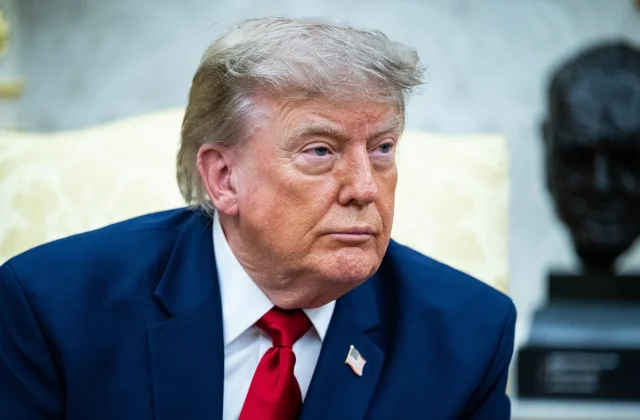
US President Donald Trump leaves the White House last weekend
Would other countries accept tolls or fees for crossing Hormuz?
Shipping industry officials say no country in modern history has made a comparable unilateral attempt to charge vessels for crossing a strait.
Oman has discussed the matter with Iran.
Last month, it issued guidance for vessels navigating the Strait through Omani waters without requiring them to pay fees.
Gulf countries are especially uneasy about possible charges because the Strait provides their main route to the high seas for vital energy exports.
Major buyers of Gulf energy products and fertilisers may also be concerned, particularly by Mr Trump’s proposal to add a 20% surcharge to cargoes.
Such a levy could drive global oil prices sharply higher.
Read more:Iran and US exchange new attacks as struggle for control of Strait of Hormuz intensifiesLatest Middle East stories