US forces struck Iran for a fourth consecutive day as Washington reinstated a naval blockade aimed at stopping ships from entering or leaving the country’s ports.
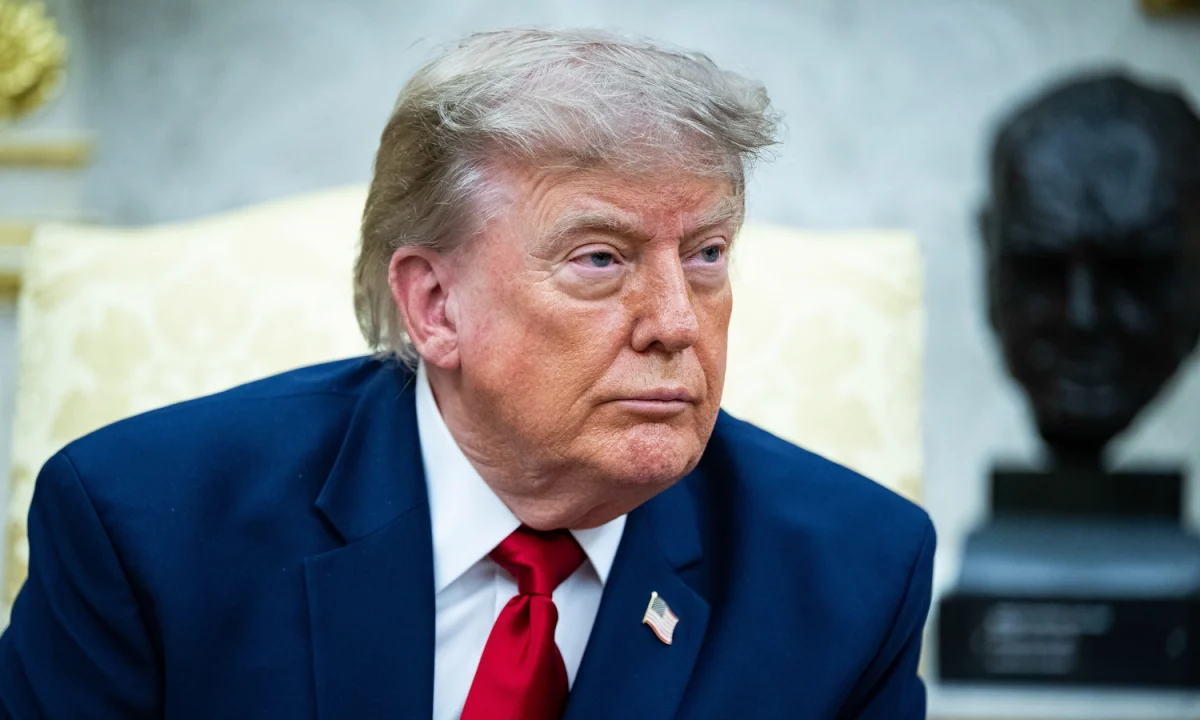
US President Donald Trump stepped back from his threat to impose steep charges on vessels using the Strait of Hormuz, but warned that the campaign could widen next week to include Iranian power stations and bridges unless Tehran agrees to negotiate.
“Next week it gets really bad for them because next week comes the power plants. Next week comes the bridges,” Mr Trump said in an interview on Fox News.
“We’re going to knock out all their power plants. We’re going to knock out all their bridges unless they get to the table and negotiate,” he added.
The renewed US naval blockade on Iranian ports took effect soon after another wave of strikes began [file image]
Iranian state media reported blasts near the Gulf port of Bandar Abbas, on Qeshm island close to the Strait of Hormuz, as well as in several other areas.
Reports this morning also indicated that Iran’s army and the Revolutionary Guards had mounted separate attacks against US targets in Jordan and Kuwait.
The army said drones were used to strike the Al-Azraq base in Jordan, according to state broadcaster IRIB.
In a separate statement, the Revolutionary Guards said cruise missiles were launched at a US military logistics centre in Mina Abdullah, Kuwait. The force insisted the Strait of Hormuz would remain closed “until the United States ends its acts of aggression”.
Iran’s Revolutionary Guards further claimed to have hit facilities in Bahrain used by the US Fifth Fleet.
The restored US naval blockade began at 9pm Irish time, one hour after the latest strikes started. A senior Iranian official said the decision had effectively destroyed an earlier agreement intended to suspend the fighting while peace talks proceeded.
Deputy Foreign Minister Kazem Gharibabadi said Washington’s move to reinstate the blockade “has, in a way, dismantled the Islamabad memorandum”.
Admiral Brad Cooper, the head of CENTCOM, said yesterday that during the previous week, “Iran has intentionally targeted civilians across the region by attacking seven commercial ships resulting in nearly a dozen civilian crew members killed, missing, or injured.”
Israeli Prime Minister Benjamin Netanyahu cautioned Iran’s leaders against attacking Israel
“US forces are holding Iran accountable for unwarranted aggression that continues to endanger innocent lives,” he added.
Iran had previously said US strikes hit Qeshm. Local authorities also reported attacks on “four points” in Bushehr, home to the country’s only civilian nuclear power plant, along with an Iranian border district near Iraq and Kuwait.
Trump abandons levy
Iran subsequently struck two vessels in the Strait of Hormuz, killing two crew members, according to the International Maritime Organisation.
A Norwegian tanker was also damaged in an explosion caused by an unidentified device off Oman’s coast early yesterday, crisis response company MTI Network said.
Kuwait reported that one of its naval ships was hit during an Iranian missile-and-drone assault, leaving four crew members wounded.
Meanwhile, Mr Trump said he had dropped the levy on ships crossing the Strait of Hormuz that he unveiled on Monday, opting instead for trade agreements with Gulf partners.
“I have decided to replace the 20% United States Reimbursement Fee with Trade and Investment Deals that the various Gulf States will be making into the United States,” Mr Trump wrote on his Truth Social platform.
At least 28 people have been killed in Iran by renewed US attacks since last week, according to an AFP count compiled from Iranian media reports and official statements.
Bahrain said it intercepted “several treacherous aerial attacks launched by Iran” and accused Tehran of endangering civilians, after sirens and explosions were heard repeatedly across Manama.
Israeli Prime Minister Benjamin Netanyahu, a staunch critic of Iran’s alleged nuclear ambitions, warned Tehran’s leadership that any assault on Israel would draw a powerful response.
Addressing Iran’s leaders from Dimona, he said: “Do not count on things remaining quiet if you attack us.”
“The days are over when someone strikes us and we don’t hit back with a decisive blow,” he added.