
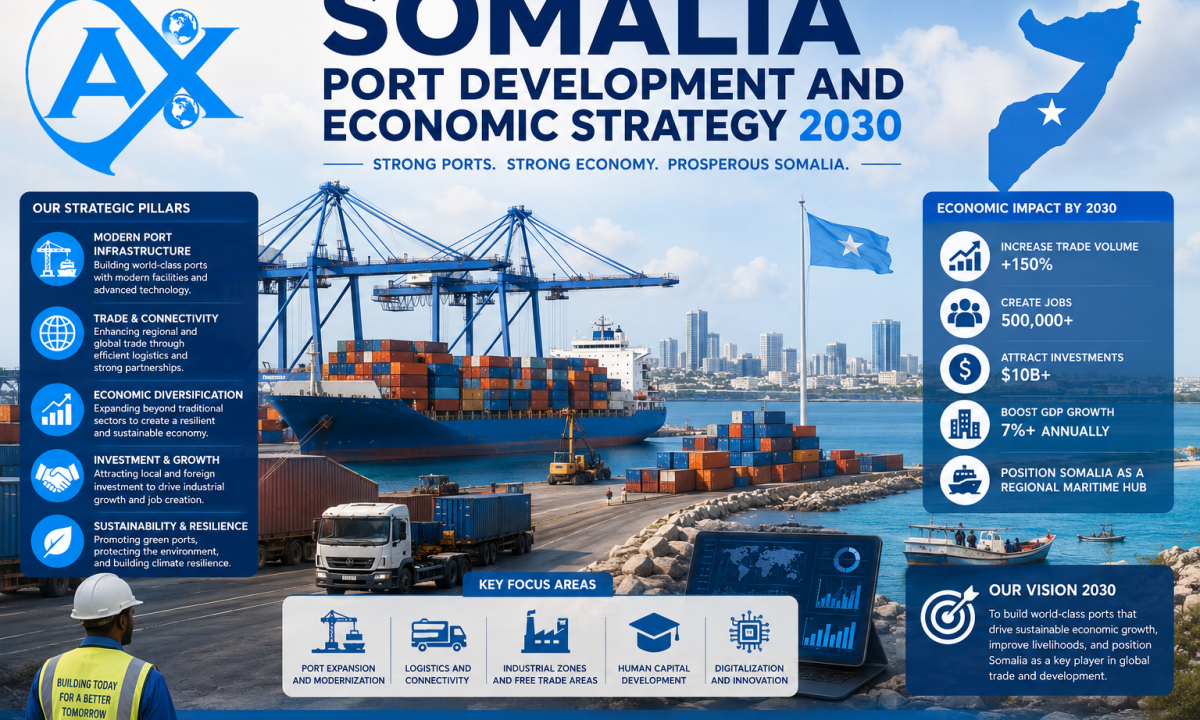
Somalia is pushing to expand and modernise its maritime trade routes in 2026, with new port infrastructure plans in Mogadishu and continued investment support aimed at improving connectivity in the Horn of Africa. The effort is tied to a broader economic strategy that links seaports to customs systems, trade corridors, and investment rules.
What Happened
- Advertisement -
In 2026, Somalia’s port development agenda is combining new-build plans with infrastructure and institutional work designed to reduce delays and increase cargo capacity.
One of the central items is the New Mogadishu Maritime Port (NMMP), described as a greenfield project developed through the New Mogadishu Development Corporation (NMDC). The planned location is about 35 kilometres north of Mogadishu, with the aim of attracting long-term capital and operators. ([axadletimes.com](
Alongside the NMMP work, Somalia and partners are also advancing transport-and-trade infrastructure planning through the Somalia – Horn of Africa Infrastructure Integration Project (SHIIP). UNOPS said the project is World Bank-financed and focuses on improving regional connectivity, including feasibility studies, environmental and social assessments, and corridor master plans. ([unops.org]
At the policy and budget level, Somalia’s 2026 budget strategy highlights ports and related capacity-building as a focus area. It also points to plans for upgrading and resourcing ports in Mogadishu through a PPP arrangement, plus a maritime training institution. ([mof.gov.so](
Why It Matters
Ports are a major economic gateway for Somalia, supporting imports, exports, and regional trade. In 2026, the practical challenge is not only building or expanding terminals, but also improving how cargo moves from ships to inland routes through customs, logistics systems, and corridor access.
- Higher capacity can reduce congestion pressure: officials and partners have pointed to constraints at existing facilities, including limited space and operational bottlenecks.
- Trade corridors can expand market reach: Somalia’s strategy emphasizes connecting ports to regional routes, including corridors linking major cities and trading partners.
- Energy and business costs affect competitiveness: the World Bank said Somalia’s growth faced shocks, including fuel-price pressures, and highlighted electricity access as a structural constraint for households and firms. ([worldbank.org](
- Institutional reforms can affect investor confidence: port projects depend on clear procedures and predictable oversight for customs and cargo handling.
In this context, the 2026 port agenda is aimed at strengthening maritime commerce as part of broader economic governance and integration efforts.
Key Facts
NMMP location: planned at about 35 kilometres north of Mogadishu. ([axadletimes.com]
Port development approach: NMMP is described as a greenfield project developed through the NMDC. ([axadletimes.com]
Investment and capacity targets (as described): the NMMP plan references capacity for roughly 1.2 million TEUs and 5 million tonnes of general cargo, with Phase One described as designed to handle 600,000 TEUs and 1.5 million tonnes per year. ([axadletimes.com](
NMMP Phase One cost (as described): estimated at about $718 million for the first phase, including breakwater works and associated facilities. ([axadletimes.com]
Transport and trade infrastructure support: UNOPS said SHIIP is a World Bank-financed programme focused on regional integration through strategic transport infrastructure and corridor master planning. ([unops.org](
Budget strategy focus for 2026: the 2026 strategy highlights capacity building for ports, including upgrading and resourcing Mogadishu ports via PPP and establishing a maritime training institution. ([mof.gov.so]
Macroeconomic backdrop: the World Bank said Somalia’s growth moderated to about 3% in 2025, citing declining foreign aid, drought conditions, and rising living costs. ([worldbank.org]
Background: Somalia’s Port System and Economic Integration
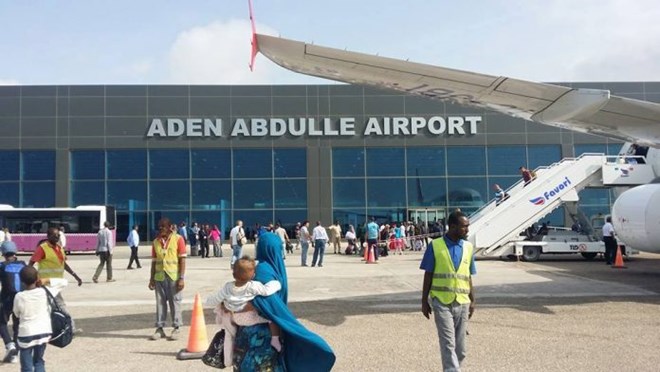
Somalia’s port system includes major gateways such as Mogadishu, Berbera, Kismayo, and other coastal nodes. The Somali Ports Authority describes these ports as key maritime trade infrastructure for domestic and international commerce. ([spa.gov.so](
For 2026 planning, the economic logic is straightforward: ports are most effective when they are connected to reliable inland transport and when customs and cargo-handling systems function predictably. Somalia’s 2026 budget strategy also frames port and trade infrastructure within wider regional integration goals. ([mof.gov.so]
Three Questions
1) What is the main port project highlighted for 2026?
Reporting and project descriptions in 2026 point to the New Mogadishu Maritime Port as a major new-build plan, developed through the New Mogadishu Development Corporation. ([axadletimes.com](
2) How is Somalia’s 2026 strategy linking ports to the wider economy?
Officials and partners tie port planning to transport and trade infrastructure, including corridor feasibility work and environmental and social assessments under the World Bank-financed SHIIP programme. ([unops.org](
3) Why are reforms and costs part of the port story?
Because port performance depends on logistics systems, energy costs, and predictable administration. The World Bank highlighted electricity access as a key structural constraint affecting competitiveness and household welfare, in a context of fuel-price and aid-related shocks. ([worldbank.org]
Outlook for 2026: What to Watch
For 2026, the measurable focus is likely to be on implementation steps—planning, studies, and procurement pathways—along with upgrades linked to governance and capacity building.
- Feasibility and design work: SHIIP activities include feasibility studies and master planning for corridors and infrastructure. ([unops.org]
- Port upgrades via partnerships: the 2026 strategy indicates an approach for upgrading and resourcing ports in Mogadishu through PPP arrangements. ([mof.gov.so]
- Training and skills development: plans include a maritime training institution, aimed at supporting port operations. ([mof.gov.so](
- Trade facilitation: policy directions in the strategy emphasize strengthening frameworks needed for trade capacity and integration. ([mof.gov.so]
As Somalia advances these steps, the effect on trade volumes will depend on how quickly infrastructure upgrades combine with operational improvements in shipping, logistics, and customs processes.