

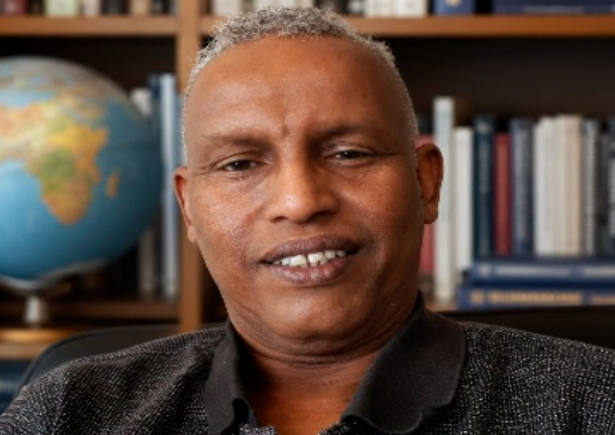
By Omar M. ElmiSunday June 14, 2026
With President Ismaïl Omar Guelleh now embarking on a sixth term, Djibouti finds itself at a turning point. On paper, the country can point to strong growth powered by its ports, logistics hubs, free trade zones and the strategic value of its location. But the headline numbers mask a more fragile reality: the economy remains narrow, unevenly shared, heavily indebted and highly vulnerable to shocks far beyond its borders.
- Advertisement -
War in the Middle East and the continuing strain around the Strait of Hormuz offer a sharp reminder of just how exposed Djibouti is to global turbulence. The strait is among the world’s most critical energy arteries, and recent tensions have rattled oil markets while stoking fears over supply. For a nation that brings in most of its energy, food and manufactured goods, any sustained rise in oil prices, shipping expenses or marine insurance costs feeds quickly into everyday hardship.
In this particularly tense environment, the recent visit and several-day stay in Djibouti by French Minister for the Armed Forces and Veterans Affairs, Catherine Vautrin, underscores France’s renewed strategic interest in the Horn of Africa and the Red Sea region. This political and military engagement comes at a time when the French aircraft carrier Charles de Gaulle and its carrier strike group are operating in regional waters amid escalating tensions in the Middle East and efforts to secure vital international shipping routes.
France, long established in Djibouti, is once again focusing on the strategic weight of this territory near the Bab el-Mandeb Strait, a vital maritime passage connecting the Red Sea and the Indian Ocean. But France is hardly alone. The wider region has become a theater of intensifying competition, with the United States, China, France, Japan, Turkey and Gulf states all deepening their footprint and seeking leverage.
For Djibouti, the shifting landscape is double-edged. More international military and commercial attention can reinforce the rents the country already draws from its strategic position. Yet that same attention also increases the risk that Djibouti becomes a stage for regional conflict or great-power rivalry playing out on its own soil.
Strong Growth, Limited Social Impact
Djibouti’s economy, valued at approximately USD 4.3 billion in 2024, is small by global standards but outsized in influence because of where it sits. Growth continues to come mainly from services — especially port activity, logistics, transit trade and re-exports to Ethiopia. The World Bank has repeatedly warned that this model leaves the economy overly reliant on port operations and therefore highly susceptible to geopolitical and commercial disruption.
Even so, the gains have not translated into broad improvements in daily life for most people. Over the past 20 years, the government has poured resources into major infrastructure, including modern ports, the Djibouti-Addis Ababa railway, free trade zones, water projects and logistics facilities. Much of that investment has been financed through borrowing abroad, and the projects have created relatively few jobs while doing little to widen the country’s productive base.
The contradiction is hard to ignore: the economy expands, yet poverty remains entrenched; port capacity rises, yet unemployment stays stubbornly high; modernization advances, yet schools, hospitals, housing, water systems, sanitation and other public services remain under severe pressure.
After more than 25 years of uninterrupted rule, Djibouti’s economic model is still best understood as one built on strategic rent, transit services and state-controlled monopolies. Income from foreign military bases, port operations and public enterprises has sustained growth without fundamentally reshaping the country’s social or economic order.
The Economic Record of the Previous Five Terms
The private sector at home remains limited and often tied either to state contracts or to business networks with close political connections. In strategic areas such as ports, electricity, water, telecommunications and free zones, state-owned enterprises remain dominant.
That arrangement has helped produce annual growth rates that frequently topped 6 percent, but it has not delivered growth that is broadly shared. Youth unemployment remains especially serious. In a country where young people make up a large portion of the population, weak job creation is not only an economic problem but also a social and political one.
Poverty continues to affect large parts of the population. Rising living costs are squeezing families, particularly in working-class districts of Djibouti City, where rent, electricity, water and food now take up a growing share of household budgets.
Dependence on imported food makes the situation even more precarious. According to the World Food Programme, Djibouti brings in about 90 percent of its food needs, leaving households directly exposed to swings in global commodity prices.Djibouti’s growth remains largely a growth of flows, corridors, and transit activities rather than one based on domestic production, industrial transformation, and large-scale employment creation.
A Dangerous Economic Environment: The Red Sea, Hormuz, Oil, and Freight Costs
The war in the Middle East has changed the regional calculus. Djibouti initially benefited from some of the Red Sea disruptions as shipping routes shifted and transshipment activity increased. But those gains are fragile.
Any prolonged disruption in the Strait of Hormuz or broader security deterioration in the Red Sea could quickly turn advantage into liability. Higher oil prices would ripple through fuel, electricity generation, road transport, food costs, freight charges, insurance premiums and state finances.
Official inflation figures remain relatively contained, helped by the Djiboutian franc’s peg to the U.S. dollar and by administrative price controls. But households tell a different story. For many citizens, the cost of living is climbing in ways that are visible and immediate.
Djibouti may continue to profit for a time from its role as a logistics crossroads, but it also stands exposed to shocks it cannot control.
An Unsustainable Debt Burden
Public debt is perhaps the most urgent threat. The International Monetary Fund judges Djibouti to be at high risk of debt distress, and debt sustainability remains a major concern.
Much of that debt stems from infrastructure projects funded through external borrowing, especially from Chinese lenders. The issue is not only the amount owed, but also the modest economic and social returns delivered by some of those investments.
When major projects fail to generate enough revenue, when state-owned firms contribute little to the national budget and when tax collection remains weak, debt turns into a structural trap.This situation narrows fiscal room, constrains social spending and leaves the government dependent on ongoing talks with creditors.
A Necessary Roadmap for Reform
Djibouti needs more than growth. It needs a new economic, social and institutional settlement. The first task is transparent debt restructuring and management. Authorities should publish a full accounting of sovereign debt, state guarantees and future financial commitments.
The second task is reforming state-owned enterprises. Ports, electricity, water services, telecommunications and free zones must serve as drivers of development, not just as sources of rent and market power.
The third task is diversification. Djibouti can no longer depend almost entirely on Ethiopian transit trade, foreign military bases and port activity. Investment should shift toward renewable energy, digital services, fisheries, value-added logistics, regional tourism, light manufacturing and vocational training.
The fourth task is social investment. A greater share of national wealth should go to education, healthcare, housing, water infrastructure, sanitation and urban development.
Finally, governance reform cannot be postponed. Without transparency, accountability, anti-corruption action, real competition and modern public administration, economic change will struggle to take root.
Conclusion: Moving Beyond the Rentier Economy
Djibouti has real strengths. Its location, its logistics role, its proximity to Ethiopia, its place in Red Sea traffic and the presence of foreign military bases all give it weight well beyond its size.
But too often those advantages have been converted into strategic rent instead of broad-based development.President Guelleh’s sixth term cannot simply be a continuation of the previous five. It must become a period of genuine economic transformation capable of reducing debt, creating jobs, improving public services, and strengthening national resilience against global crises.
The war in the Middle East and tensions around the Strait of Hormuz should be read as a warning. A country that leans too heavily on ports, imports, foreign military rents and external debt remains dangerously exposed to international shocks.Djibouti must now transition from an economy of position to an economy of production, from rent-based growth to transformative growth, and from a rentier state to a genuine developmental state.
_______________
Omar M. ElmiDjiboutian Economist and Independent Geopolitical AnalystFranc
