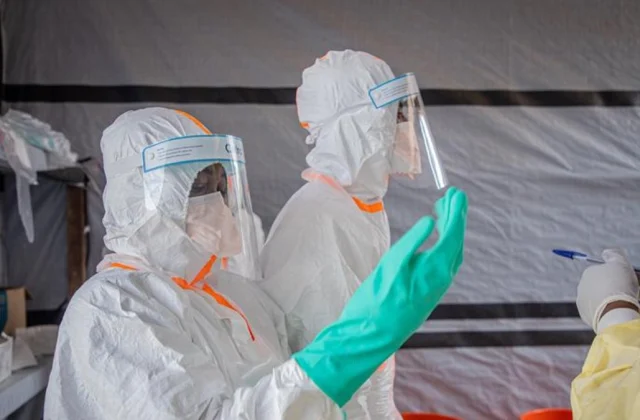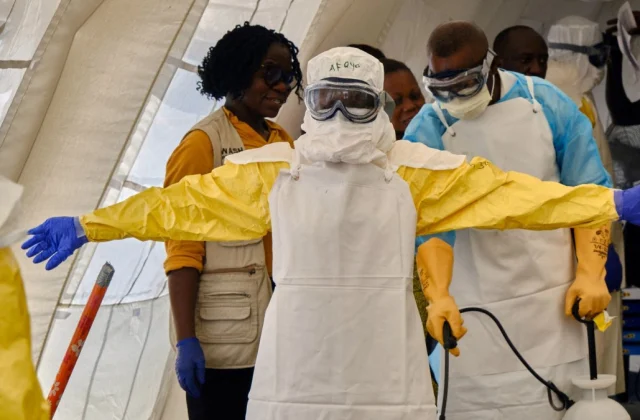

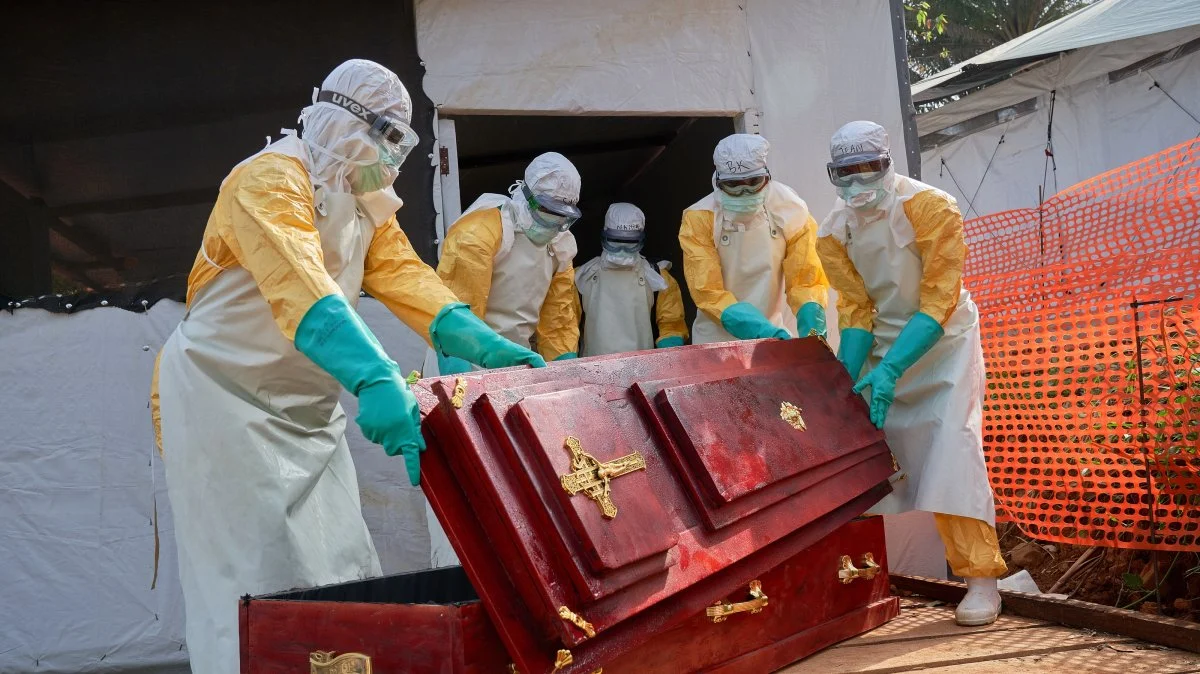
The Ebola outbreak in the Democratic Republic of the Congo (DRC) has escalated into the most rapidly spreading occurrence of the disease in recorded history, according to African health authorities. The World Health Organization (WHO) announced Thursday that the death toll has reached 600.
The latest data from the U.N. health agency indicates 1,759 confirmed Ebola cases since the outbreak began in mid-May, with 600 fatalities confirmed.
Wessam Mankoula, head of emergency preparedness and response at the Africa Centres for Disease Control and Prevention, highlighted the unprecedented speed of the outbreak’s spread, surpassing all previous Ebola outbreaks, including the devastating West African epidemic from 2013 to 2016.
During the initial six weeks of the previous epidemic, 994 cases were reported, whereas the current outbreak has recorded 1,596 cases in the same period.
“Regrettably, the virus is advancing more swiftly than our efforts can counteract,” Mankoula stated. He noted that cases appear to be doubling every 28 days and that $1.4 billion is required for the comprehensive disease response and humanitarian initiatives.
“We need an urgent escalation of our response, which demands resources — both financial and human,” Mankoula urged, calling on partners and donors to expedite the release of necessary funds.
One in three patients dying
Transmitted through close contact and bodily fluids, Ebola currently poses a challenge as the Bundibugyo virus strain involved lacks an approved vaccine or treatment. Health authorities suspect the virus circulated undetected for some time.
According to WHO data from DRC health officials, the outbreak’s case fatality rate stands at 34%. Thus far, 285 patients have recovered, while 304 suspected cases remain under investigation.
The epidemic has impacted four northeastern provinces of the DRC, with Ituri province being hardest hit. A clinical trial for two potential treatments — the monoclonal antibody MBP134 and the antiviral drug remdesivir — began on July 2 to evaluate their effectiveness against the Bundibugyo virus.
Funding cuts hamper response
The DRC declared its 17th Ebola outbreak on May 15 following deaths in Ituri, a region rich in minerals yet troubled by ongoing conflicts.
Anne Ancia, WHO’s representative in the DRC, cited issues such as population movements, persistent instability, and a fragile healthcare system as significant obstacles to controlling the outbreak. She mentioned that out of the roughly 700 beds available across 22 treatment centers, which are around 90% full, another 300 beds are planned.
Monitoring includes over 10,000 contacts of infected individuals, achieving an 82% follow-up rate, while WHO emphasizes the necessity of a 95% rate to effectively manage the situation. Enhanced laboratory capabilities now allow for over 2,000 tests daily in affected regions, up from 30 tests a day in Kinshasa.
South Kivu is one of the afflicted areas, where clashes persist between Congolese forces and the M23 group backed by Rwanda.
Prior to the Ebola crisis, the DRC faced significant challenges, including conflict, hunger, displacement, and inadequate healthcare, remarked Tom Fletcher, head of U.N. humanitarian operations. He expressed concern over the recent reductions in humanitarian aid, further complicating the response efforts in what he described as “one of the world’s most complex humanitarian crises.”