Escalating Anti-Immigration Protests in South Africa Stir Fear and Mass Exodus
Anti-immigration demonstrations across South Africa intensified on Thursday, with protesters going door-to-door in several neighborhoods to forcibly evict suspected undocumented migrants. This surge in activity has heightened fears among foreign nationals, prompting thousands to flee the country.
In the Johannesburg township of Alexandra, demonstrators broke into homes, targeting suspected undocumented immigrants. They escorted those apprehended to police vehicles, including a Malawian woman and her child. Total Mhlanga, a Zimbabwean national and Zimbabwean Exemption Permit holder, was also detained despite asserting his legal residency in South Africa.
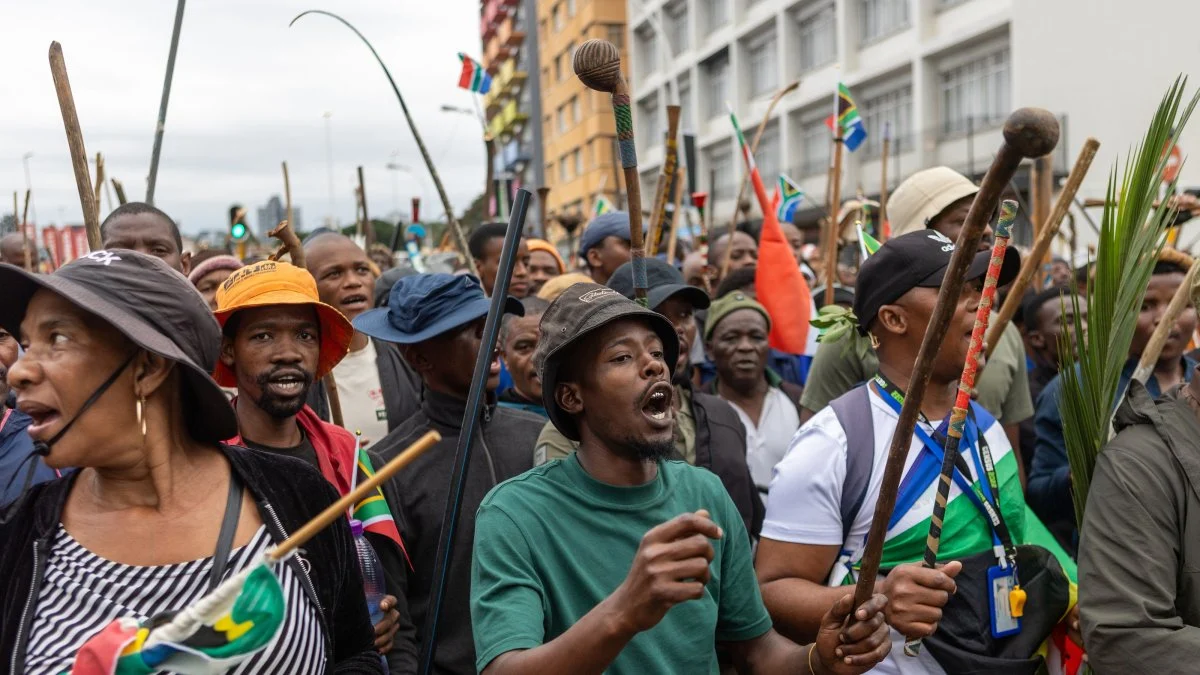
In Soweto, protesters brandishing sticks and South African flags swept through neighborhoods with similar intentions. Advertised as a “peaceful march,” their rally quickly turned into a search for undocumented migrants, mirrored by protests in Durban.
These events mark a significant uptick in an anti-immigration movement spurred by economic frustrations and high unemployment rates.
Protest Momentum Builds
The movement has gained traction since a nationwide demonstration on June 30, which activists marked as a deadline for undocumented migrants to leave.
Led by Jacinta Ngobese-Zuma, a former radio presenter, the group March and March has promised continued protests every Thursday until their demands are met. They argue undocumented migrants exacerbate South Africa’s economic issues and have called for stricter border controls and mass deportations.
A striking image shows a man attempting to force open a shop in Alexandra, believed to belong to an undocumented foreigner, reflecting the intensity of the protests.
President Cyril Ramaphosa has consistently warned against scapegoating immigrants for South Africa’s economic woes. While law enforcement has intensified actions against undocumented individuals, officials stress that only the state should handle immigration enforcement. Johannesburg police were not available for immediate comment on citizens detaining migrants before police arrival.
Mass Departures
The unrest has already led to a significant exodus of migrants. The Malawian government reported over 38,000 citizens have returned recently due to safety concerns, while more than 60,000 Zimbabweans have also retreated home. Though earlier demonstrations were peaceful, fears of escalating violence have accelerated departures across the region.
Economic Repercussions
Despite claims by anti-immigration advocates that expelling foreigners will open up jobs, economists caution of adverse effects. Migrant labor fills essential gaps in agriculture, construction, hospitality, and more. Mpho Lenoke from North-West University highlights how foreign workers are integral to sectors struggling with labor shortages. Statistics from the United Nations in 2024 indicate migrants comprised about 5% of South Africa’s population, contributing significantly to the GDP.
Research by the International Labour Organization suggests higher immigrant representation can increase job opportunities for local workers, contradicting anti-immigration assertions.
Impact on Business
The protests are already affecting the economy. Foreign-owned spaza shops, essential to the informal sector, are under pressure. Shoprite Group’s grocery delivery service Sixty60, heavily reliant on migrant workers, also faces disruptions. Analysts warn that ongoing unrest could compromise supply chains and limit access to goods and services.
Market observers note that these tensions introduce new uncertainties. “Supply chains are disrupted, jobs are lost, and access to goods and services is curtailed when tensions escalate,” said Susanna Deetlefs of ACLED.
Underlying Economic Struggles
The platform for this discontent is a strained economy. The World Bank slashed South Africa’s 2026 growth forecast to 1.0%, with recent unemployment figures nearing one-third of the workforce. These challenges intensify public frustration, fueling support for anti-immigrant campaigns.
Regional Impact
The effects of these protests reverberate beyond South Africa. As a key location for migrant workers and remittances, disruptions have widespread implications. A joint report by FinMark Trust and the South African Reserve Bank revealed that remittances surged to over 19 billion rand in 2024, with Zimbabwe receiving a significant share.
While investors remain cautiously calm, experts acknowledge the escalating protests introduce a potential risk. “It is a significant social problem in South Africa that investors keep hearing about,” said Kaan Nazli of Neuberger Berman. With the protests swelling, this risk now looms larger.