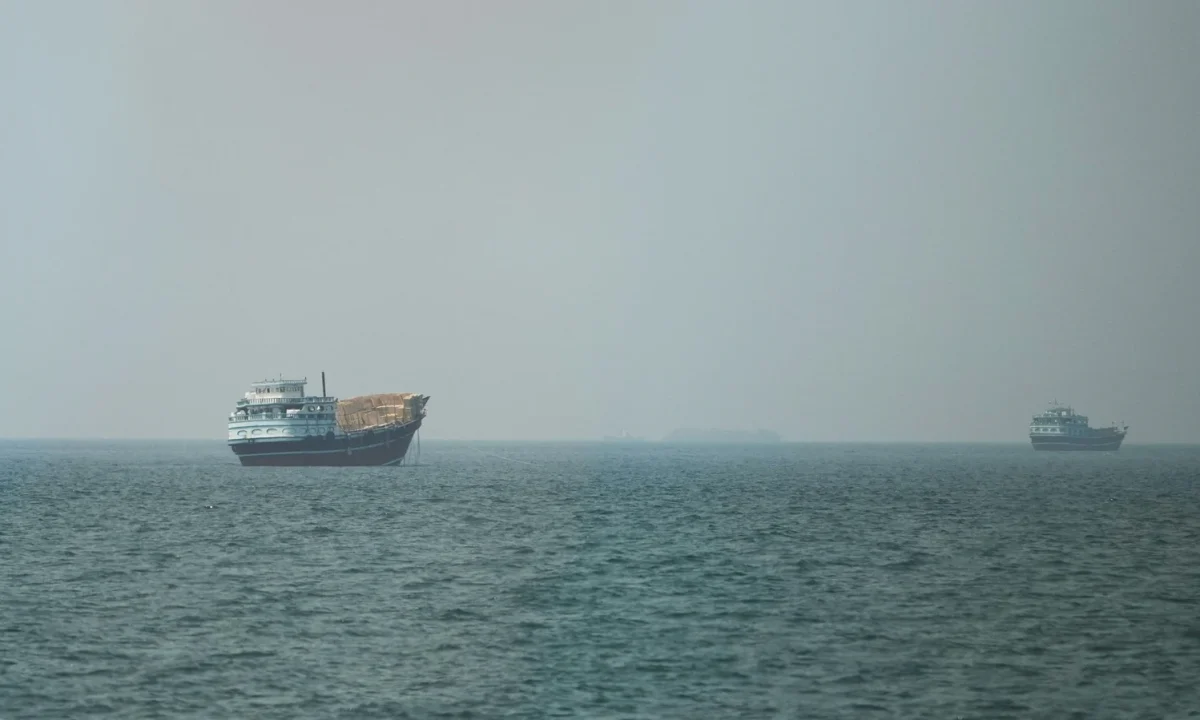
An Indian crew member was killed and eight others injured after Iranian cruise missiles struck two Emirati oil tankers in the Strait of Hormuz, the United Arab Emirates Ministry of Defence said, sharply escalating tensions in one of the world’s most critical shipping corridors.
ADNOC L&S, the shipping arm of Abu Dhabi National Oil Company, later confirmed that the very large crude carriers (VLCCs) Mombasa B and Al Bahiyah were hit while transiting Hormuz, leaving both vessels with “significant damage”.
UAE state oil company ADNOC has played a leading role in a US military-led effort to transport Gulf crude to international buyers through ship-to-ship (STS) transfers beyond the Strait of Hormuz, Reuters reported last month.
US Central Command has not confirmed the STS operations, but said on 12 July that it had helped more than 800 vessels carrying over 400 million barrels of crude pass through the strait during the previous two months.
Four of the eight wounded crew members suffered serious injuries. The ministry said six of those hurt were Indian nationals and the remaining two were Ukrainian nationals.
Fires erupted aboard both tankers following the strikes, causing material damage. The blazes were subsequently brought under control, according to the ministry.
Condemning the incident as a “blatant attack”, the ministry said the UAE reserved “its full right to respond to this escalation”.
Iran’s Islamic Revolutionary Guard Corps (IRGC) said it had struck and disabled two “offending” supertankers in the Strait of Hormuz after they allegedly ignored repeated warnings, switched off their navigation systems and tried to cross what the guards called a mined route.
The IRGC did not identify the vessels, leaving it unclear whether its statement concerned the same tankers named by the UAE Ministry of Defence.
The guards also accused Washington of “inciting vessels to use an illegal route”, warning that cooperation with the “aggressor enemy” would bring only damage, prolong the delay in reopening the Strait of Hormuz and deepen a global energy crisis.
In a separate report, the United Kingdom Maritime Trade Operations agency said a tanker had been struck by an unidentified projectile while sailing 40 nautical miles northeast of Qalhat, Oman.
According to UKMTO, the vessel’s master said the projectile hit the starboard-side engine room. All crew members were reported safe.
Reuters was unable to immediately establish whether the UKMTO alert concerned the same attack reported by the UAE’s Ministry of Defence.
The incidents follow weeks of mounting danger in the waterway since war erupted on 28 February, when the United States and Israel launched attacks against Iran.
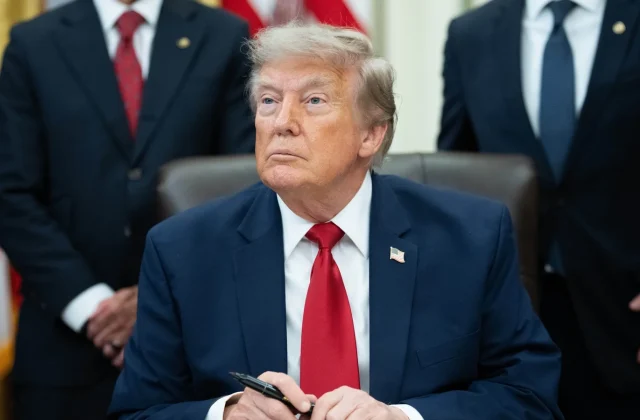
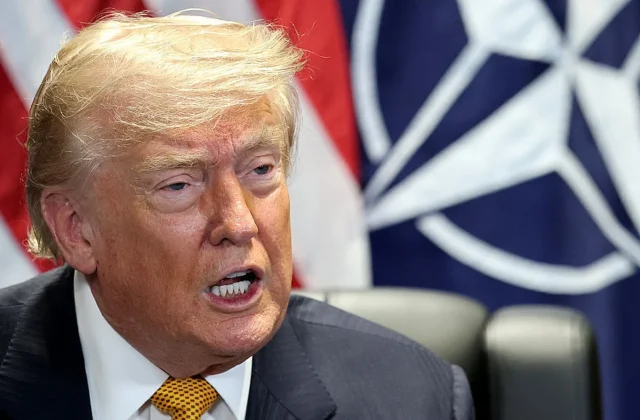
The US military carried out strikes on Iran for a third consecutive night as President Donald Trump restored a blockade on Iranian shipping and floated a 20% fee for guarding the Strait of Hormuz.
Iran’s senior joint military command rejected any US role in deciding the waterway’s future and said Washington would not be permitted to intervene.
The war has unsettled the Gulf and spilled across the wider region, with Iran striking US bases in several countries. The violence has also cast doubt over an interim US-Iranian agreement signed last month to reopen the strait and suspend hostilities.
Before fighting began in February, roughly one-fifth of global oil and gas traffic moved through Hormuz each day, carrying more than 15 million barrels of fuel to world markets with a value of at least $1.2 billion.
New wave of attacks targets Iran
The United States unleashed another round of strikes on Iran, intensifying the renewed hostilities even as Mr Trump maintained that an agreement with Tehran remained within reach.
“We’re going to hit them very hard tonight, and we’re going to hit them hard tomorrow,” Mr Trump told radio presenter Hugh Hewitt.
Not long afterwards, US Central Command (CENTCOM) said the attacks had started at 9.45pm Irish time, marking the third straight night of strikes.
“These strikes will continue imposing a heavy cost on Iranian forces and degrade their ability to attack innocent civilians and commercial shipping in the Strait of Hormuz,” CENTCOM said.
The White House confirmed to AFP that Mr Trump formally informed Congress last week of the resumption of US military action against Iran, providing the Pentagon with another 60 days to operate in the region without congressional authorisation.
The US military said dozens of targets were struck early yesterday, while Iran’s Revolutionary Guards reported fresh attacks against Bahrain, Jordan, Kuwait and Oman.
Mr Trump also warned that the US could destroy Pickaxe Mountain, a deeply buried nuclear site near Natanz where Western intelligence agencies suspect Iran is constructing an undeclared uranium-enrichment facility.
“Tell the Iranians to be ready. Let them know we’re coming, there’s not a damn thing they can do about it,” he told Mr Hewitt.
‘Guardian of the Hormuz Strait’
Acting on Mr Trump’s instructions, CENTCOM said a blockade of Iranian ports would be restored from 9pm Irish time today. Oil prices surged by more than 9% as fears of renewed conflict swept markets.
Writing on Truth Social, Mr Trump said the United States would be “‘known as ‘THE GUARDIAN OF THE HORMUZ STRAIT'” and would impose a 20% fee on every cargo shipment passing through the waterway.
Although Iranian ports would once more face a blockade, Mr Trump said “all other countries will have fair and open use of the strait”.
Iranian Foreign Minister Abbas Araghchi swiftly ridiculed President Trump’s proposed toll, writing on X that “POTUS is absolutely right” to say that whoever ensures safe passage deserves payment — while suggesting Iran would demand a lower rate.
“20% is of course too much,” he added.
Iranian Foreign Minister Abbas Araghchi derided US President Donald Trump’s proposed toll
Washington has strongly resisted Iran’s ambition to levy tolls in the strait, a practice generally prohibited under international law.
Lebanon and Israel meet in Rome as regional conflict intensifies
Lebanon and Israel are beginning a new round of US-sponsored negotiations in Rome today, with the talks unfolding as tensions between Washington and Tehran reverberate across the region.
Lebanon’s presidency said yesterday that its representatives in Rome had been directed “to demand the immediate start of Israeli forces’ withdrawal from the two pilot zones before any further discussion”.
A Lebanese diplomatic source briefed on the negotiations said “the Lebanese army is ready to gradually take control of the localities from which the Israeli army would withdraw”.
Read more: Oil climbs more than 4% after Trump announces renewed US naval blockade of Iran