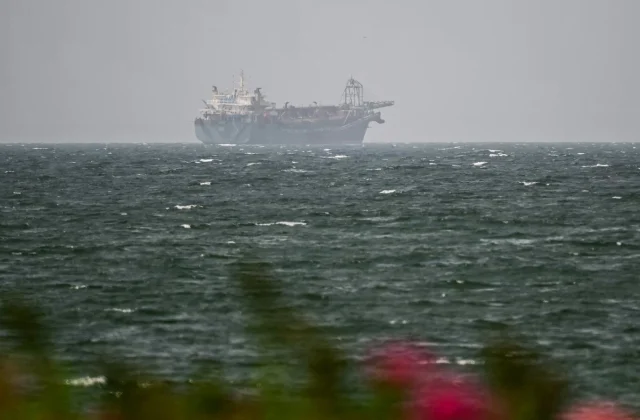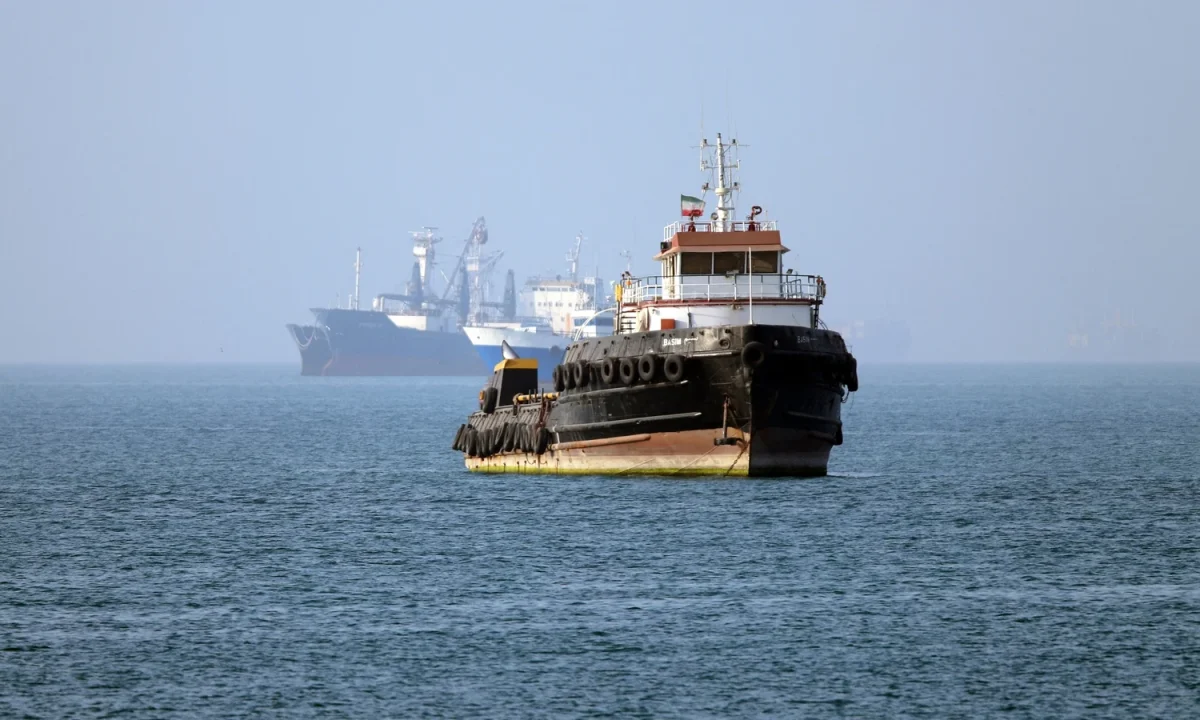
A proposed agreement between Iran and Oman aimed at ending five months of war between Iran and the United States would give Tehran authority over ships entering the Gulf through the Strait of Hormuz, according to a senior Iranian source and two regional officials. The arrangement would represent one of the most significant concessions yet made to Iran.
The United States did not immediately comment on the proposal. Although US President Donald Trump has said an agreement to reopen the strait is close, American officials have repeatedly maintained that Washington would never accept Iran controlling access to the world’s most important energy trade route.
Any deal granting Iran authority over passage through the strait would suggest that the war launched by the United States and Israel in February had dramatically altered the regional balance of power in Tehran’s favour.
Before the conflict, the waterway was open to all vessels without fees.
Unresolved issues
Yet the Iranian and regional sources who spoke to Reuters warned that major questions remained unsettled. They also disputed Mr Trump’s claims that an agreement to reopen the strait was imminent.
“The concession has already been made regarding some form of control over Hormuz,” one regional source said.
A second regional source said negotiators had yet to agree on what “control” would mean in practice. Gulf countries want regional authorities to oversee ship inspections and insist that any fees be paid voluntarily.
The senior Iranian source said the draft agreement already under discussion would give Iran control over vessels entering the Gulf through the strait. One of the central disputes, the source said, was how much authority Tehran would have over ships travelling in the opposite direction.
An Iranian schoolboy aims a bow at a target depicting US President Donald Trump in Tehran
Iranian Deputy Foreign Minister Kazem Gharibabadi told the country’s official IRNA news agency that the proposed arrangement was “designed in such a way that commercial ships will pass through Iranian territorial waters, both on the inbound and outbound legs of their journey”.
He said negotiations with Oman had “reached fundamental understandings”, adding: “This progress is on the verge of being finalised.”
Mr Gharibabadi said Iran had also received messages from the United States suggesting Washington was “fully prepared to return to its commitments” under a mid-June memorandum of understanding that called for an immediate halt to military operations.
He described that commitment as a condition for reopening the strait, though not a sufficient one on its own. He added that there had been no direct talks with the United States in recent days.
Trump faces voter pressure
Mr Trump began the war by demanding Iran’s “unconditional surrender” and saying he would approve the choice of its leader. He is now under mounting pressure to find a way out of a conflict opposed by US voters by a two-to-one margin, with crucial midterm elections due in November.
Months of American military action, including a two-week bombing campaign in July, have failed to loosen Iran’s hold over the strait.
US commanders told Mr Trump in July that supplies of some types of munitions were running low.
Reuters reported that the US Army had exhausted nearly all of its long-range precision missiles.
Crude prices fell sharply over the past two days after Mr Trump cancelled planned new attacks on Iran, citing talks that he said could bring the conflict to an end.
Losses were limited, however, by a maritime embargo announced by Yemen’s Iran-aligned Houthis against Saudi ports and vessels, increasing the danger facing shipping in the Red Sea.
The Houthis said they had fired a missile at a Saudi oil tanker near the Red Sea port of Yanbu and launched another missile attack against a Saudi oil tanker in the Gulf of Aden.
Saudi Arabia did not confirm either incident.
Mr Trump told Fox News yesterday that negotiations were “moving along nicely” and that an “all-day negotiation” had taken place.
He said the strait “is going to be open very soon”.
US President Donald Trump said the war would end in Iran’s ‘unconditional surrender’ (file image)
Over the weekend, Mr Trump said the negotiations had prompted him to abandon plans for “massive attacks” on Iran, a justification he has offered repeatedly during the war.
An Iranian source cautioned: “The devil is in the details. A single tweet from Trump could cause the whole thing to collapse.”
At a routine briefing in New York, Farhan Haq, the UN deputy spokesperson, said the United Nations had received no first-hand information about a potential reopening of the Strait of Hormuz. He added: “We certainly encourage the parties to move forward with any effort to have a negotiated solution to the issue.”
The senior Iranian official said Tehran was seeking fees equivalent to between 5% and 7% of the value of cargoes carried by ships using the strait.
Oman is proposing a lower rate of about 3%, while Washington is demanding that no fees be charged.
Allowing fees to remain voluntary, at least formally, could offer a way around the dispute. But an implied threat of Iranian attacks might leave shippers unwilling to use the route unless they paid.
Iran has warned Gulf states that any fresh US attack on its territory would bring retaliation against vital energy infrastructure across the region, according to five sources. Tehran is seeking to increase the potential cost of military action by threatening Washington’s closest regional allies.
The warning was delivered through a series of high-level diplomatic contacts after Mr Trump threatened on 28 July to attack Iran’s energy network and infrastructure, the sources said.
Two senior Iranian officials, two Gulf sources and a senior regional diplomat familiar with the discussions said Iranian Foreign Minister Abbas Araqchi had spoken with his Saudi, Turkish and Qatari counterparts, as well as Pakistan’s army chief.
All the sources spoke anonymously because of the sensitivity of the discussions.
Mr Araqchi urged Gulf governments allied with Washington to use their influence with Mr Trump to discourage any renewed strikes. The senior diplomat said he warned that an attack on Iran would trigger retaliation against US assets and energy facilities throughout the Gulf.
Iranian-made Zolfaghar missiles are displayed at Azadi Square in Tehran
The diplomat said Mr Araqchi delivered the same message in every conversation: “We’re ready to retaliate, but finding a diplomatic solution is the best way to avoid wider escalation and destruction across the region.”
“The Iranian warning was unequivocal: if America targeted Iran’s infrastructure, they would retaliate by striking Gulf energy facilities and other regional targets,” one Gulf source said.
The diplomatic push shows how Iran is trying to turn the prospect of a broader regional conflict into leverage against further US attacks. It also places Gulf states that host American military bases and rely on energy exports in an increasingly difficult position between Washington and Tehran.
Saudi Crown Prince Mohammed bin Salman later spoke with Mr Trump, urging him to postpone military action, resume negotiations, establish a ceasefire and seek a diplomatic settlement, according to the senior diplomat and Gulf sources.
The warning was directed at every Gulf state, another Gulf source said, although it was conveyed mainly through Saudi Arabia and Qatar. In recent years, Iran has rebuilt relations with several Gulf neighbours, including its former regional rival Saudi Arabia.
Iranian President Masoud Pezeshkian said communication with the country’s supreme leader, Mojtaba Khamenei, was currently extremely “difficult”.
Khamenei was wounded in the US-Israeli strike that began the Middle East war and has not appeared publicly since taking over from his father, who was killed in the same attack.
“It is very difficult to communicate with him at the moment, but in any case, his presence is a very great source of strength for us so that we can continue,” Mr Pezeshkian said.
Read more:Latest Middle East stories