Tuesday July 7, 2026
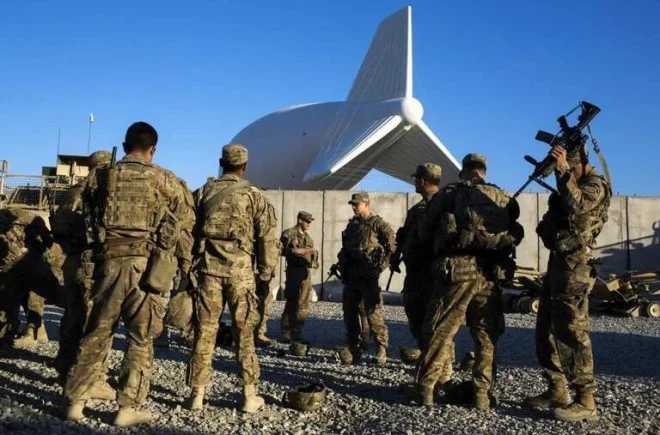
FILE photo of US troops
The United States has pulled back most of the troops it sent for a recent mission targeting Islamic State militants in Nigeria, shifting instead to intelligence assistance requested by Abuja, the head of U.S. Africa Command (AFRICOM) said.
U.S. and Nigerian forces carried out operations in northeastern Nigeria in May that killed Abu-Bilal al-Minuki, the second-in-command of ISIS worldwide. The mission came after a Christmas Day U.S. strike against the militants ordered by President Donald Trump, who said they had been targeting Christians in the African country.
Speaking at a gathering of African defence chiefs in Angola on Thursday, AFRICOM Commander General Dagvin Anderson said the May joint U.S.-Nigerian operation offered a template for future security partnerships across the continent.
“We have withdrawn much of our forces that were just there for that operation, but are continuing the partnership that Nigeria has asked for to help continue with the intelligence sharing,” Anderson told journalists during a U.S. State Department-hosted briefing after the conference.
Anderson said the mission in Nigeria’s Lake Chad Basin region reflected Washington’s strategy of contributing specialised capabilities while African partners remain in charge of security operations.
Cooperation with Nigeria, he said, had sharply weakened Islamic State’s leadership structure, with effects reaching beyond West Africa because of the militant organisation’s wider international network.
The operation interfered not only with local commanders but also with broader Islamic State communications and operations, he added.”Nigeria has been very active since that operation in May,” Anderson said. “They continue to prosecute targets themselves.”
Anderson said sustained Nigerian military pressure, together with efforts to draw attention to the operation, had helped spur further defections and surrenders by ISIS fighters in northeastern Nigeria.
The three-day conference in Luanda, Angola’s capital, brought together military leaders from 35 African countries, along with representatives from the U.S. and Brazil.
Reporting by Chijioke Ohuocha; Editing by Helen Popper