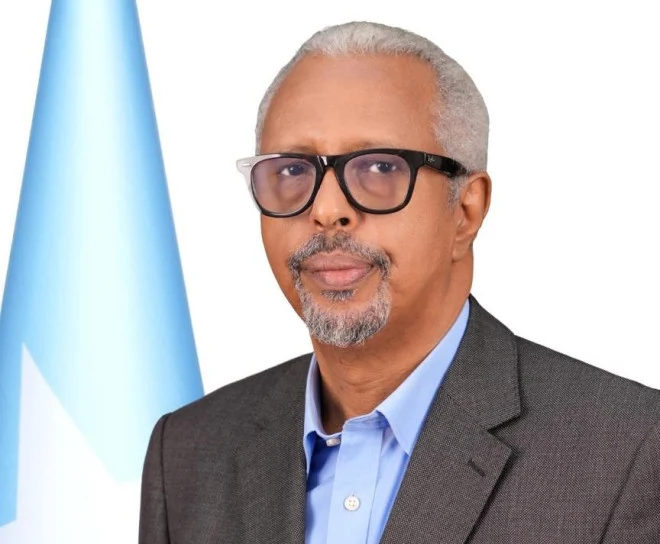
Somalia cannot afford another period of squandered wealth, former Prime Minister Hassan Ali Khaire wrote recently, urging citizens to measure leaders by what they deliver rather than what they promise. On that point, I agree with him.
But the same measure must apply to anyone seeking to govern Somalia again.
- Advertisement -
Khaire served as Prime Minister from 2017 to 2020. Before presenting himself as the solution to Somalia’s challenges, he should be judged on his own record in four critical areas: security, state authority, federalism and democratic transition. This is not an attempt to deny him the right to criticize. It is a demand that he accept the same scrutiny he directs at others.
The security record cannot be forgotten
Just months after Khaire assumed office, al-Shabaab struck the Pizza House and Posh Treats complex in Mogadishu on 14 June 2017. A vehicle bomb exploded before gunmen entered the restaurant. Thirty-one people died and nearly 40 others were wounded.
On 14 October 2017, a massive truck bomb tore through Zoobe/K5 Junction in Mogadishu in what became Somalia’s deadliest terrorist attack. The United Nations later recorded at least 587 deaths, with hundreds more people injured. Khaire declared war on al-Shabaab, yet the attacks persisted.
On 28 October 2017, al-Shabaab targeted the Naasa Hablood Two Hotel in Mogadishu, killing and injuring dozens. Vehicle bombs struck central Mogadishu on 23 February 2018, including areas near the presidential palace, leaving 38 people dead. On 7 July 2018, bombers and gunmen attacked the compound housing the Interior and Security Ministries, killing and injuring civilians and government employees. On 9 November 2018, vehicle bombs and gunmen hit the Sahafi Hotel area, killing more than 50 people and wounding more than 100.
On 28 February 2019, a car bomb followed by a lengthy armed siege struck Maka Al-Mukarama Road, one of Mogadishu’s busiest commercial routes, killing and injuring scores. On 23 March 2019, al-Shabaab attacked the Ministries of Labour and Public Works, killing a deputy minister and other civilians. Five days later, another lunchtime blast hit a restaurant on Maka Al-Mukarama Road, killing at least 15 people.
On 12 July 2019, the Asasey Hotel in Kismayo came under attack, leaving 26 people dead and 56 wounded. On 22 July 2019, a suicide car bomb struck Mogadishu’s crowded KM4/airport-road area, killing at least 17 people and injuring 28. Two days later, a suicide bomber attacked the Banadir Regional Administration headquarters. Mogadishu Mayor Abdirahman Omar Osman “Yarisow” suffered critical injuries and later died.
Another disaster followed on 28 December 2019, when a bomb struck Ex-Control Afgoye Junction in Mogadishu. Scores were killed and many more wounded, among them university students and other civilians.
These were not casualties from some remote battlefield. Somalis were dying in restaurants, hotels, government offices, busy commercial streets and crowded junctions. Al-Shabaab was also assassinating government employees, electoral delegates, elders and civilians. Every figure in a death toll represented a Somali family forced to bury someone.
If, as Khaire argues in his op-ed, the experience of ordinary families should determine how a government is judged, then the families who lost relatives during these attacks must be part of that assessment. The central question remains: how safe were ordinary Somalis while Khaire led the government?
Al-Shabaab was not only killing Somalis. It was taxing them
During Khaire’s premiership, al-Shabaab built an expansive parallel taxation network. Through intimidation and threats of violence, it demanded money from businesses, traders and markets. More troubling still, al-Shabaab reportedly obtained information on imports and importers using Mogadishu Port, enabling the group to identify businesses, assess their activity and impose payments.
The implications were profound. The Federal Government was collecting lawful taxes while a terrorist organization was demanding money from some of those same businesses. The government had tax and customs officials; al-Shabaab, in effect, had its own tax collectors. This went beyond ordinary criminal activity. It represented a direct challenge to state sovereignty.
An organization that could bomb the capital, assassinate civilians, identify businesses, evaluate their commercial operations and force them to pay was contesting the government in two core areas of state responsibility: protecting citizens and exercising lawful authority over taxation. Any honest assessment of state capacity during Khaire’s tenure must address that reality.
Federalism became political confrontation
Khaire now speaks of governance and institutional integrity. My own experience presents a different account. As Hirshabelle State’s first elected President, after my unlawful removal from office in August 2017, I publicly accused Prime Minister Khaire of interfering in the state’s internal affairs and backing the parliamentary campaign against my administration. At the time, I said Khaire had been behind the effort and had deployed members of his government to support it. I also accused his government of withholding federal resources and applying financial pressure to Hirshabelle.
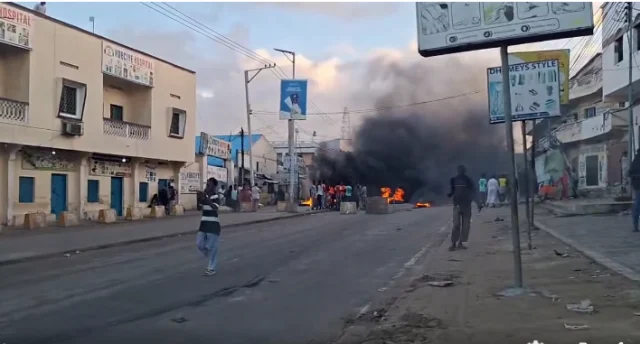
Hirshabelle, however, was not the only example. In Baidoa in December 2018, the Federal Government became heavily involved in the South West presidential election. Former presidential candidate Mukhtar Robow was arrested shortly before the vote, prompting demonstrations. The aftermath was deadly. A UN Panel of Experts investigation later verified that 15 civilians died during the unrest after federal and regional security forces used lethal force. Somali civilians lost their lives amid a political confrontation over a Federal Member State election.
Galmudug soon became another arena of conflict. President Ahmed Duale Gelle “Haaf” entered a prolonged dispute with the Federal Government as political efforts sought to restructure the state and rival groups advanced competing claims over its leadership and electoral process. Instead of allowing federal institutions to mature through political accommodation, Khaire’s government became deeply involved in Galmudug’s politics. Banadir faced comparable tensions. Governor and Mogadishu Mayor Thabit Abdi Mohamed was removed in January 2018 amid disputes over Banadir’s political status and representation. For me, this is not an abstract debate about federalism. I lived through it.
The democratic transition was not delivered
Khaire also remains accountable for the democratic transition his government promised. His administration committed Somalia to preparing for one-person-one-vote elections, which would have been the country’s first direct national elections in decades. Drafting the necessary laws, establishing electoral institutions, organizing security and building the administrative systems for that transition were among the government’s central duties. Khaire had more than three years to help make it happen. Yet when his premiership ended in July 2020, Somalia still had no workable route to hold the promised direct elections on schedule.
On 25 July 2020, the House of the People withdrew confidence from Khaire’s government. Parliamentary Speaker Mohamed Mursal specifically pointed to security concerns and the government’s failure to produce an adequate plan for the promised elections. Khaire now calls for accountable government. He should therefore answer a straightforward question: what became of the democratic transition his own administration pledged to deliver?
The same standard must apply to Khaire
I am not invoking this record simply to reopen old political disputes. I raise it because Hassan Ali Khaire is seeking Somalia’s highest office while asking voters to judge leaders by their results. I accept that standard.
If security is the benchmark, then the civilians killed at Zoobe, Pizza House, Sahafi, Maka Al-Mukarama, Kismayo, KM4 and Ex-Control Afgoye must remain part of the record. If state capacity is the test, then al-Shabaab’s ability to tax businesses and obtain commercial information in Mogadishu must be considered. If good governance and federalism matter, then Hirshabelle, Baidoa, Galmudug and Banadir cannot be overlooked. If democratic accountability is required, then the failure to complete the promised electoral transition must be remembered. And if leadership itself is under examination, Parliament’s eventual withdrawal of confidence from Khaire’s government must also be included.
Somalia cannot afford selective memory
Khaire ends his argument by saying leaders should be judged not by promises but by what ordinary Somali families encounter in their daily lives. Once again, I agree. The test, however, must be applied consistently.
Ask the families who buried loved ones after Zoobe. Ask those whose children died at Ex-Control Afgoye. Ask the civilians who survived attacks on restaurants, hotels and commercial streets. Ask the businesses that paid taxes to the government while also facing al-Shabaab threats for money. Ask the families of those killed during the political violence in Baidoa. Ask those of us who directly experienced federal political interference. And ask the Somali people who were promised one-person-one-vote elections but never received them.
Hassan Ali Khaire has every right to seek the presidency. But he is not returning as an untested candidate. He is a former prime minister seeking another mandate, and his record will necessarily accompany him.
Somalia needs leaders capable of protecting citizens, restoring state authority, respecting federal institutions, advancing democratic government and accepting the accountability they demand of others. Khaire says Somalia cannot afford to lose another term of wealth. There is something even more valuable the country cannot afford to lose again: its people, its security, its institutions and its opportunities.
Before Somalia decides whether Hassan Ali Khaire deserves another opportunity to lead, it should take a clear-eyed look at what happened when he was given his first one.
______________________________________
Ali Abdullahi Osoble is the former President of Hirshabelle State.