
OP-ED | Ethiopia’s National Dialogue Through the Lens of Medemer: Building Hope for Consensus and Reconciliation
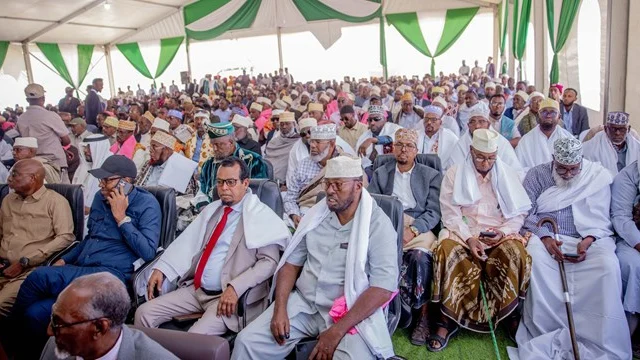
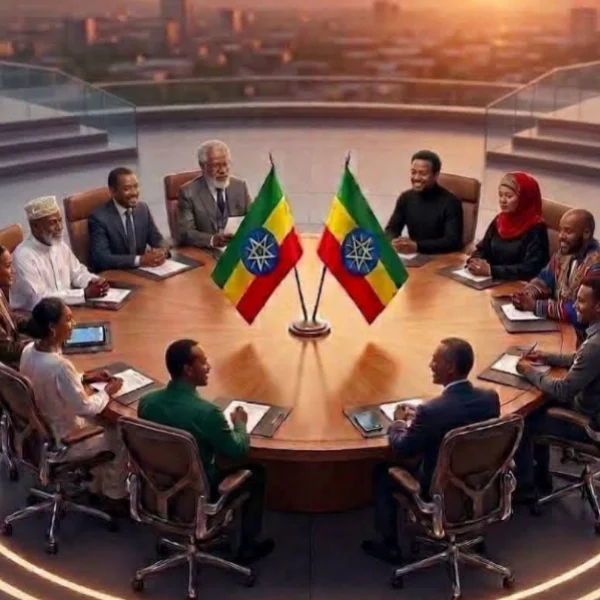
Ethiopia’s history is marked by a deep-rooted civilization, statehood, sovereignty, and a longstanding tradition of collective action. Its people have joined forces to defend the country against colonial rule and to pursue national undertakings such as the Grand Ethiopian Renaissance Dam (GERD). Yet the country has rarely brought its many constituencies together in a nationwide forum to confront the political disputes and social divisions that have weakened unity and national consensus. Today, Ethiopians are drawing on the spirit of Adwa and the determination behind major national projects as they gather around the table for dialogue beneath the roof of the Addis Ababa Convention Hall.
- Advertisement -
At the same time, Ethiopia’s record of resolving political differences through formal, inclusive, nationwide dialogue remains limited. Governance was historically centralized, social inequalities endured, and political disputes were frequently settled through force. Many political parties and fronts were formed outside the country along identity-based lines, focusing primarily on the grievances of particular ethnic groups rather than advancing an inclusive national framework. Political voice, rights, and privileges were also concentrated among a relatively small number of groups, leaving much of the public with few avenues to participate in national decision-making and state-building.
Ethiopia has also yet to adopt a constitution forged through broad national agreement among its diverse communities. That unresolved history is among the central reasons a National Dialogue is necessary.
After the successful conclusion of the Seventh National General Election, Ethiopia invited its citizens to discuss the country’s future and the direction it should take.
Every nation that has endured civil war, political conflict, social division, or external pressure carries lessons about how it survived those tests. Such challenges often include competing interpretations of history, entrenched political and social divisions, and the absence of a shared national consensus.
The need for such a consensus is especially clear in Ethiopia, a country of more than 80 nations, nationalities, and peoples with distinct identities. Mutual understanding, social cohesion, and agreement on national priorities are essential to preserving unity and solidarity. For years, unresolved differences have continued to test both.
The National Dialogue has been in preparation for four years and is organized around eight major agenda items to be considered over one month. Its process is divided into three phases. The first two—Divergence, during which grievances and opposing views were openly presented, and Convergence, in which participants sought common ground and reduced their differences—have been completed. The process has now entered the Consensus phase, aimed at producing mutually acceptable and agreed solutions.
The initiative seeks to address longstanding political and social disputes, establish national consensus, advance reconciliation, and develop constitutional responses to major national challenges. Its work is guided by inclusivity, freedom from undue pressure, and a commitment to placing Ethiopia at the center.
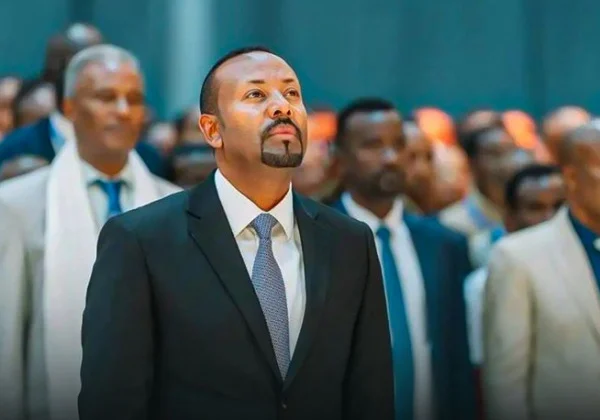
At the official launch, Prime Minister Abiy Ahmed underscored that dialogue must be pursued in the country’s interest, saying it is preferable to spend twenty years in dialogue than two years at war. In broader terms, war should be regarded as legitimate only when it is necessary to protect Ethiopia’s sovereignty, territorial integrity, and national interests.
A defining feature of the current Ethiopian government, shaped by the philosophy of Medemer, is its acknowledgment of the country’s entrenched political and social divisions. Just as significant is its recognition that these are shared national challenges that demand inclusive, peaceful, and lasting solutions.
Medemer is a philosophy of unity and inclusion centered on togetherness, cooperation, and synergy. It holds that Ethiopia’s differences can exist within a shared national framework. In that sense, Medemer offers a philosophical basis for addressing political and social divisions through cooperation and inclusion instead of further separation.
The Ethiopian National Dialogue is intended to bring together communities, political actors, and other groups to examine disagreements openly, respond to grievances, and identify areas of shared understanding and potential solutions.
A core idea in Medemer is the rejection of winner-takes-all politics in favor of cooperation and shared responsibility. The National Dialogue gives practical expression to that idea by creating space for competing positions, historical grievances, and negotiated solutions to be considered peacefully. It therefore signals a movement away from confrontation and toward dialogue.
Medemer also places emphasis on reconciliation, forgiveness, and the restoration of trust among Ethiopians. Under this understanding, Medemer supplies the philosophical foundation, while the National Dialogue offers the organized platform through which reconciliation and national healing can be pursued.
Another central principle is the reconciliation of diversity with national unity. Medemer argues that Ethiopia’s future rests on combining the contributions of its different peoples, rather than allowing their differences to erode the country. That principle directly supports the National Dialogue’s goal of building agreement on matters of national importance.
In broad terms, Medemer provides the philosophical foundation of unity, inclusion, reconciliation, cooperation, and shared responsibility. The National Dialogue serves as the structured mechanism for putting those principles into practice through dialogue, consensus-building, reconciliation, and national healing.
The idea of shared national objectives is likewise embedded in the National Dialogue. By giving different groups an opportunity to examine national challenges and identify points of agreement, the process aims to foster a more stable political and social environment in which Ethiopians can pursue common interests.
The value of national dialogue can be seen in lessons drawn from human society, engineering, the experiences of nations, and the natural world.
Every skyscraper depends on a powerful foundation buried beneath the ground. Although unseen, that foundation bears the structure’s weight and provides its stability. National dialogue plays a similar role, creating the largely invisible basis for durable peace, national unity, and state-building. This is why Ethiopians have gathered under one roof: to move beyond their differences through dialogue and lay a firm foundation for the country’s future.
The human body consists of different organs, none of which can replace or dominate the others by placing them in danger. Nations function in much the same way. They prosper when their diverse communities understand their interdependence and cooperate for the common good.
Bamboo withstands powerful winds because it bends instead of breaking. Its flexibility and readiness to accommodate pressure reflect resilience, not weakness. National dialogue similarly calls for adaptability, compromise, and mutual accommodation grounded in reality and common sense.
The history of nations offers the same lesson. Countries that have recovered from profound division have done so by choosing dialogue, reconciliation, and national consensus over prolonged conflict. Their experiences demonstrate that dialogue is indispensable to healing divisions, rebuilding trust, and reinforcing national institutions.
Together, these lessons convey a clear message: enduring nations are not created by erasing differences but by transforming them into a shared foundation for unity, stability, and sustainable development. National dialogue offers the means to turn diversity into collective strength and national consensus.
In conclusion, despite coordinated false propaganda by Ethiopia’s adversaries, participants in the National Dialogue Conference have so far reached broad agreement on most agenda items. The hope is that they will build on this progress and eventually achieve consensus on the issues that remain.
By Yohannes Gashama, an Ethiopian Diplomat serving at the Ethiopian Consulate Office in Puntland State State of Somalia of Somalia.
DISCLAIMER: The views expressed in this article are the author’s own and do not necessarily reflect Axadle’s editorial stance