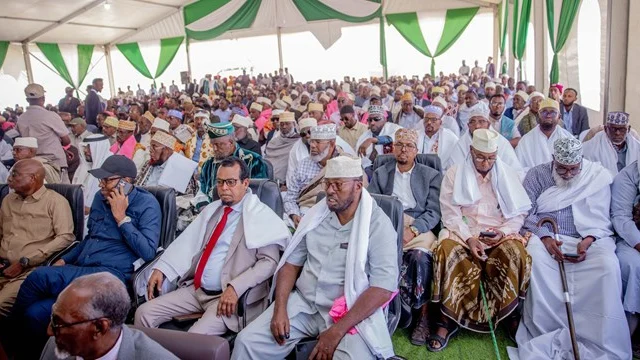

Pakistan, acting as mediator, said diplomacy had not been extinguished even as the United States unleashed what it called a “heavy wave of strikes” on Iran, retaliating for renewed attacks aimed at Jordan.
Across a volatile 48 hours, the conflict widened sharply: Saudi Arabia joined US operations against militant groups in Iraq, while Egypt was struck for the first time when a drone hit a Mediterranean port, prompting its president to warn that the region was sliding into a dangerous new phase.
Jordan said yesterday it had intercepted Iranian missiles for the second consecutive day, while Kuwait reported that one person was killed when an Iranian strike hit a building owned by a Chinese company.
The fresh eruption of direct fighting ended a short-lived lull that had been intended to create space for negotiations.
An infographic titled ‘Red Sea tensions expose the vulnerability of alternative oil corridors to Strait of Hormuz’
Pakistan had helped broker an understanding between the adversaries to prepare the ground for talks on a lasting settlement, and Mr Andrabi said Islamabad was doing its “utmost to bring all parties back” to technical discussions under that framework.
Earlier negotiations after an April truce had foundered, and the ceasefire broke down at the start of this month as Iran once again sealed the Strait of Hormuz, one of the world’s most important channels for oil and gas shipments.
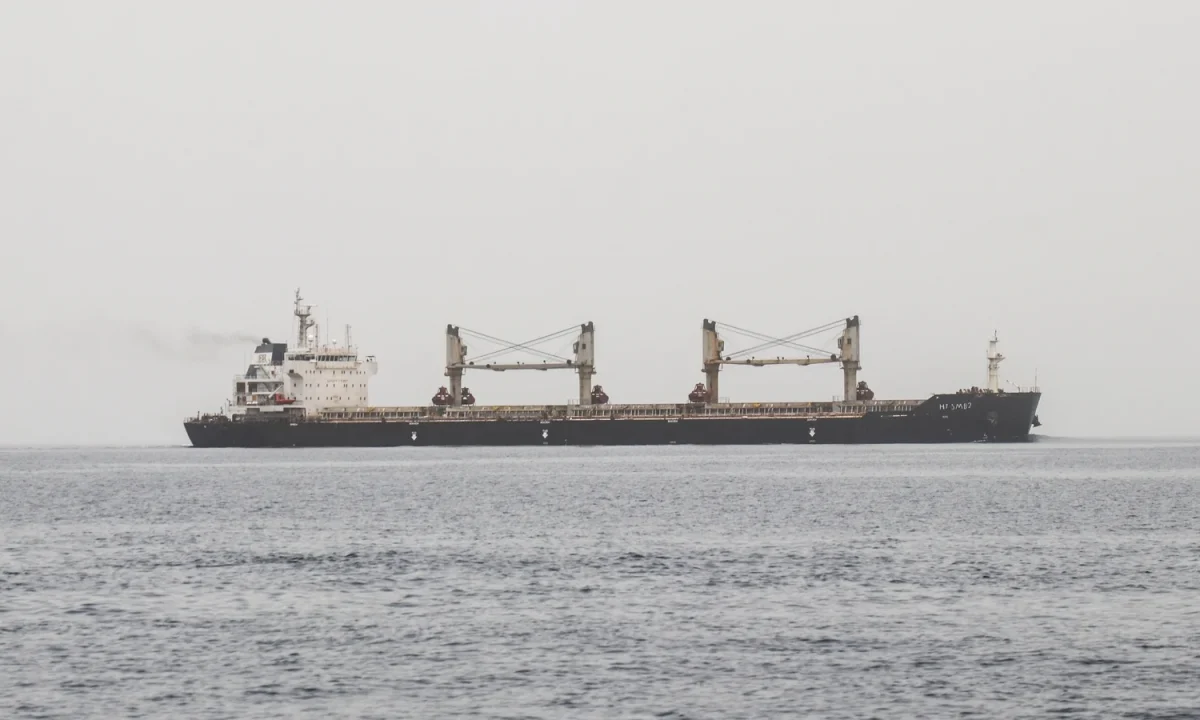
Iran’s Revolutionary Guards said two oil tankers trying to pass through the strait with US backing were forced to turn around after one of the vessels caught fire.
Saudi Arabia said it had formed a maritime defence coalition of 14 regional countries to protect shipping near the strategically vital Bab al-Mandab Strait.
The announcement followed a declaration last week by Yemen’s Iran-backed Houthis that they were imposing a maritime embargo on Saudi Arabia, as they claimed attacks on Saudi oil tankers in the Red Sea.
The narrow sea lane has become even more crucial for moving large volumes of Saudi crude to global buyers since the US-Iran confrontation effectively squeezed energy exports through the Strait of Hormuz.
Strikes in Iran
Earlier, the US military said it had “successfully completed a heavy wave of strikes against Iran”, targeting dozens of Revolutionary Guard sites, among them military command centres.
US President Donald Trump had promised to strike Iran “hard” after Tehran’s earlier attack on Jordan, its first such regional assault in several days.
US President Donald Trump previously said that the United States would hit Iran ‘hard’
The Guards’ unit in the northwestern province of Zanjan said three of its members were killed in a US strike there.
Iran’s state news agency IRNA also said several cities in the southwestern province of Khuzestan were hit, along with Qeshm island in the Gulf.
Provincial authorities told the agency that areas around Abadan, Shadegan, Arvandkenar and Ahvaz, all in Khuzestan, had come under attack.
Iran’s military said it had launched drone strikes against US military facilities in Kuwait.
In a statement, the army said it targeted “fighter aircraft shelters, satellite communications systems and equipment storage facilities at Ahmad al-Jaber Air Base in Kuwait”.
There was no immediate response from US Central Command (CENTCOM).
The Iranian army said the attacks were carried out “in response to the recent aggression by the terrorist US military against our country and its brutal attack on a residential home on Qeshm Island”.
Local media said yesterday that three members of one family were killed in US strikes on Qeshm Island, which sits in the Strait of Hormuz, the waterway central to oil and gas trade.
The route ordinarily handles about 20% of global oil shipments and has been effectively shut by Iran since the war began on 28 February.
The US has repeatedly struck Iran’s southern coastal provinces as part of an effort to erode Tehran’s grip on the waterway.
Egypt hit
Since the war began in February with US-Israeli strikes on Iran, the conflict has drawn in every country in the Middle East, as well as some beyond the region.
Energy infrastructure in several countries has repeatedly been targeted by drones and missiles, but Egypt had avoided direct impact until Wednesday, when an attack on a gas import hub ignited a fire and damaged two vessels.
Read more:
Latest Middle East stories
The government confirmed yesterday that a drone caused the blaze and said no group had claimed responsibility.
Yemen’s Houthi rebels denied playing any role.
Writing on X, Iran’s foreign minister Abbas Araghchi described Egypt as “an important friend and partner” and suggested the drone strike may have been an Israeli false-flag operation.
Egypt’s government said an investigation was continuing “to determine the circumstances of the incident and to take the necessary measures to preserve Egypt’s interests and national security.”
In a call with Spain’s Prime Minister Pedro Sanchez, Egypt’s President Abdel Fattah al-Sisi underlined the need for “the international community to work together to halt this escalation”, according to his spokesman.
Maritime trade tracking company Kpler identified the damaged vessels as the Energos Winter storage and regasification vessel and the GasLog Salem tanker, and said both had been moved offshore after the incident.
Ambrey, a UK-based private security monitor, said the US-owned-and-operated floating storage vessel had been struck by at least one drone.
The port authority said operations were continuing as normal.